

As part of ACA’s ongoing reflection on the people and places that shape the artist residency field, we remain guided and inspired by the practitioners who create spaces for artists to gather, work, and exchange. In this column, we speak with members and colleagues whose perspectives illuminate the evolving possibilities of artist communities. For this issue, we talk with Marina Merli, founder and director of Arte Studio Ginestrelle in Assisi, Italy, about hospitality, the relationship between residency and place, and what she has learned from welcoming artists from around the world.
On Hospitality at Arte Studio Ginestrelle
Assisi, June-July 2026
I went to see Giotto's frescoes every day, or almost every day. From the apartment where I stayed on Maria Santa Della Rosa, I walked down the hill to the Basilica of Saint Francis, entered the Upper Church, and began again with twenty-eight frescoes depicting the life of Francis. In Assisi, I walked constantly. The city is made from pink limestone, Scaglia Rossa, which changes with the light. I walked up toward Mount Subasio and the Eremo delle Carceri; down through the Bosco di San Francesco; up to Rocca Maggiore; down again to the basilica. There were swallows and cicadas and empty snail shells along the paths. It was hot. There were tourists everywhere. I ate gelato every day.
I had come to Assisi for a residency, but I was also in Assisi to think about Francis and especially, about renunciation—his movement away from property, hierarchy, and violence, toward something like care. I had spent nine years being taught by Franciscan nuns without thinking very much about Francis or what that education had given me until years later.
At the Basilica, I was particularly intrigued by The Renunciation of Worldly Goods, the scene in which Francis strips himself naked before his father, Pietro di Bernardone, renouncing his inheritance and, with it, the life his father imagined for him. The scene seemed to contain several emotions at once: holiness, embarrassment, rage, pity, devotion. It was a funny feeling to hold all of these emotions together while being in residency.
At Artist Communities Alliance, I spend much of my working life thinking about artist residencies: how they function, what they offer artists, how they sustain themselves, what the people who run them need. At Arte Studio Ginestrelle, an ACA member program, I was suddenly on the other side. I was provided with a room and a reason to work on my writing.
Maybe this is the most basic gesture of a residency: Here is a room. You can be in it for a while. The rooms Marina Merli gave me were unusual ones. The floor of my apartment was made from old natural stone. There was a deep green-painted wall, completed by someone long before I arrived. The furniture didn’t quite match. There were old farmstyle tables and chairs, objects Marina told me she had found and kept, but almost nothing decorative. Nothing that signaled a particular aesthetic.
Near the end of my stay, I asked Marina about this. “I like to keep you free to think and to decide,” she said. “You are the creative mind. I don’t really need to give you other images.” She had wanted the rooms to remain, in some sense, unfinished. “It’s like a white canvas, and you can fill it with your interests, with your ideas.”
It occurs to me now that this is also one way to describe hospitality: not as giving someone everything, but as leaving something open for them.
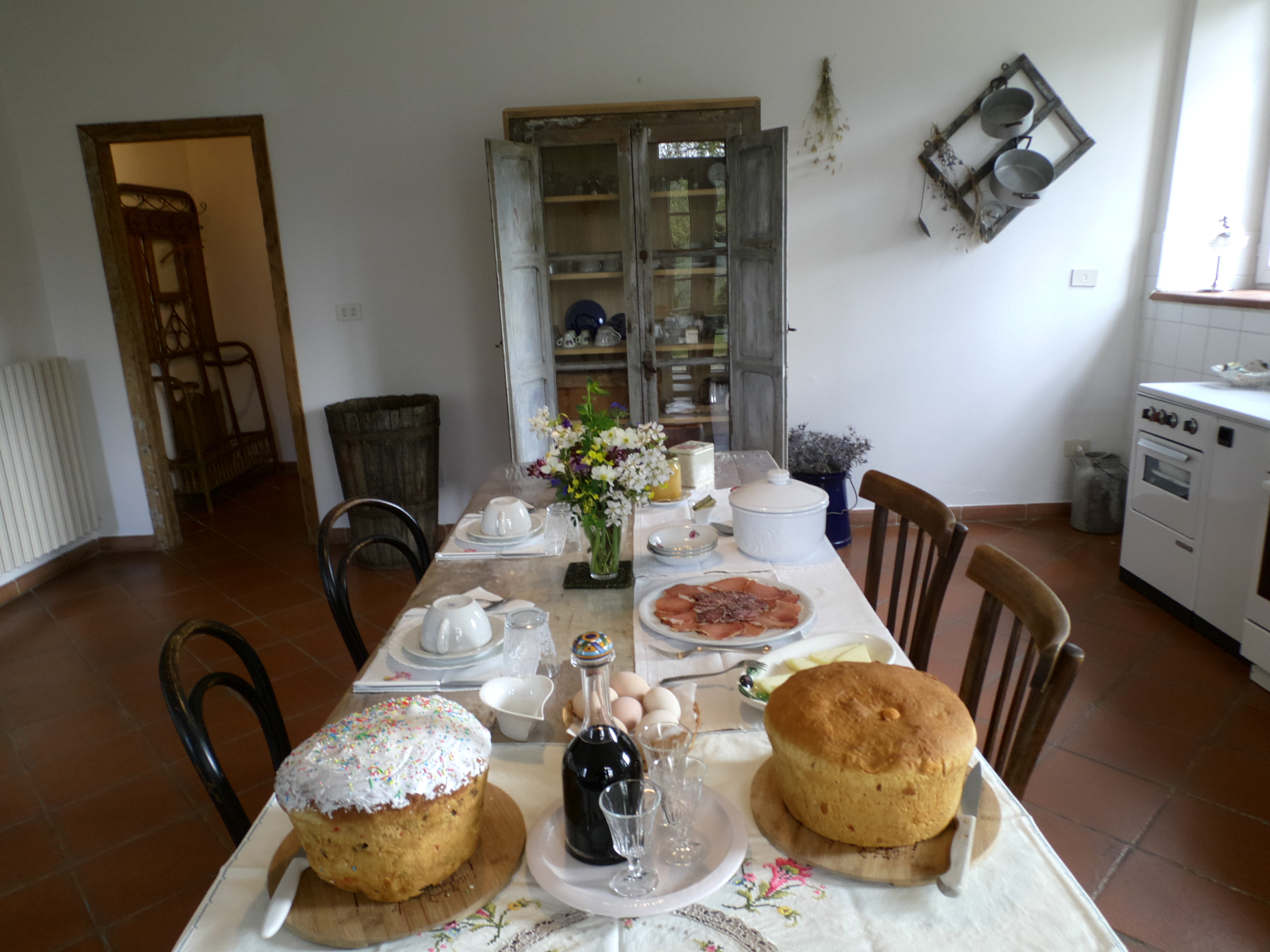
Marina grew up in Assisi. When she was a teenager, she wanted to leave. “I was interested in traveling and also living in other beautiful countries or big cities.” Instead, she studied the economics of international tourism.
Assisi presented a peculiar case study: Millions of people have come to this small Umbrian town for its history of saints: Francis, Claire, and most recently, the millennial saint Carlo Acutis. Tourists and pilgrims who travel all the way here because another young person once wanted to leave the life allotted to him. Saint Francis is impossible to escape in Assisi, and also strangely difficult to find. His image is everywhere. His name is on everything. Pilgrims arrive by busload to encounter a man who gave his possessions away. Around them, the town continues with the ordinary transactions of a tourist economy.
Marina became interested in what another kind of visitor might do here. While studying tourism, she began imagining a program centered on art, culture, and literature. She wanted to meet people from other countries, but she also found that the prospect of inviting them to Assisi changed her own relationship to the place. “I thought of a new approach,” she said. “Meeting all of you from around the world, and at the same time, appreciating the place where I was born.”
In 2008, she opened Arte Studio Ginestrelle in Santa Maria di Lignano, in the mountains outside Assisi. The original residency was considerably more isolated than the one I experienced. Artists and writers lived together on Mount Subasio, surrounded by silence and forest. The Franciscan values surrounding her—nature, animals, simplicity, and community–which seemed, to me, to have influenced the creation of this residency, were almost invisible to her as a child. “Since I was very young, I grew up with these values in my mind,” she said. “Even if when you are very young, you don’t pay attention.”
I understood what she meant. Sometimes it takes leaving—or simply seeing a familiar place differently—to recognize what has been shaping you all along. For Marina, moving to the mountain changed her relationship to Assisi and to the values she had grown up around. “When I moved to the mountain, really, I changed also my life,” she said. She began paying attention to what she calls the “small but so important things.”
Wanting to meet people from elsewhere returned her attention to where she already was. The residency did too.
The artists at the Mount Subasio residency stayed anywhere from a week to a month. Marina and her mother prepared breakfast in the morning; a grocery cart would drive up once a week to provide essentials. Marina lived there too. “I felt that I had the responsibility to be there,” she said. This detail interested me. When we talk about artist residencies, we tend to describe what is provided to the artist: time, space, meals, studios, money, community. Less often do we describe the corresponding life of the person providing it.
On Mount Subasio, there were no easy trips to the grocery store. Marina arranged transportation into town on a weekly schedule. If she needed to leave the property, her mother stayed behind, or someone nearby came to help. She kept a bedroom and a little kitchen for herself in the building. There is a version of hospitality that is all welcome, the opened door. There is another that begins after the guest has entered.
Marina was around thirty when she began Ginestrelle. She laughs about having “my character” then. Suddenly she was living with groups of artists and writers from different countries, with different habits, expectations, temperaments. “I had to find a compromise between myself and all of you,” she said. “With all your cultures and different attitudes, behaviors. I had to learn a lot.”
I asked what she had learned after years of meeting and creating space for so many different artists. “Year by year, I try to put myself to see your needs first.” I liked the sentence as she said it. There is something precise inside its slight grammatical dislocation: put myself to see your needs. Hospitality as a deliberate rearrangement of the self.
Instead of buying new furniture for the residency, Marina looked around. She collected discarded shutters from windows, old tables and chairs, rusted pieces of metal. Shutters became cupboards. Metal became lamps. Objects that had ceased to be useful to someone else became useful again. This is another opportunity within residencies: how the space itself provides a medium upon which to generate new art and ideas, rather than simply fulfilling the purpose of providing accommodation.
When Ginestrelle eventually moved from Mount Subasio into the historic center of Assisi, Marina carried that sensibility with her. She pointed out the floor in my apartment. People don’t make them this way anymore, she told me. She pointed to the green paint. She had chosen not to cover it. “Nowadays, people like to renovate everything,” she said. She doesn’t. “For me it was important to keep this, and to share with you because these small details are from Assisi,” she said. “Not from a big company. With all respect to those designs. But I love Assisi. This is our Assisi, how it was in the past and now maybe not.”
I had been thinking about Francis’s renunciation as a spectacular act: the naked body in the piazza, the father’s fury, the bishop’s cloak. Marina made me think about the less spectacular act of simply declining replacement. Keeping the floor. Keeping the wall. Taking the object someone no longer wants and asking whether it might still have a life. Not everything has to be made new before it can be offered to someone.
The Ginestrelle I stayed at is quieter than Marina’s original residency. After the move into Assisi, and particularly after COVID, the program became less centered on communal living. Residents now stay in separate apartments in the historic center. There may be another artist nearby, and Marina is almost comically available—I don’t think I ever waited long for an answer to a question—but much of the day belongs to you. “Probably it’s a little more like a retreat,” she said.
She worried, when describing this, about whether solitude could become lonely. “Some artists and writers appreciate to have their own space, to be a little bit more independent, but also that you know that there is always someone near you.” This distinction feels important. What she wanted was for residents to have independence while still knowing someone was there.
We sometimes speak of community as though having more of it were necessarily better. More dinners, more programming, more encounters, more opportunities to connect. But there is a peculiar social contract to an artist residency. You have come because you want something from other people—a room, food, time, conversation—in order, often, to be left alone. Hospitality might require recognizing when not to knock.
But it also lives in the small acts that make that solitude possible. Every week, Marina brought me clean linens. She came to clean the apartment herself. These gestures felt remarkably hospitable to me because they subtly quietly sustained my peace and attention. Someone was caring for the room while allowing it, for a little while, to feel like mine. Someone remained nearby so that I could be alone.
Working for ACA, I know abstractly how much labor goes into creating the apparently simple conditions of a residency: time and space. But there was something different about living for a while inside those conditions.
Marina has now been hosting artists for eighteen years. The name Ginestrelle comes from the place on Mount Subasio where the original residency stood. Ginestra is in bloom, the yellow-flowered plant that covers parts of the mountain. Marina remembers being surrounded by it in May and June, and especially its smell.
When the residency left the mountain, she kept its name. She also kept some of its premise. Assisi isn’t the forest, but Marina doesn’t experience the town as separate from Mount Subasio. The mountain rises behind it. Trails leave directly from town. From my apartment, I could walk into the woods and, later, walk back into the streets. Nature, art, religion, tourism, dinner: none required choosing against the others.
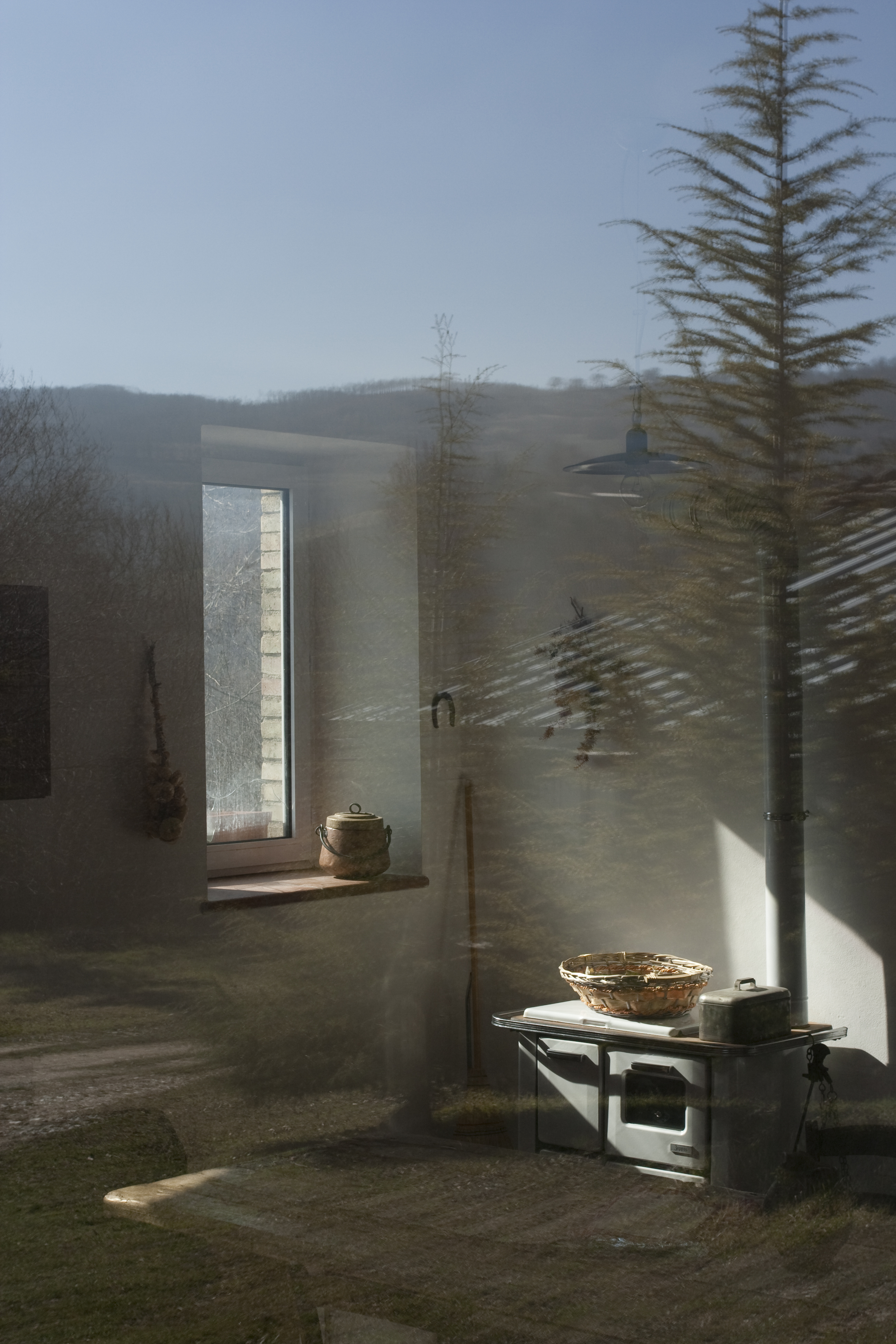
Marina’s hopes for the future of Ginestrelle involve another kind of opening. She would like a permanent space in Assisi where current and former residents could meet, show their work, give poetry readings and concerts. For now, Ginestrelle organizes an annual exhibition. A year-round space would allow the community that has accumulated around the residency to become visible.
Ginestrelle has been self-funded by Marina and her family since it began. Marina writes invitation letters so that artists can seek grants from universities and cultural organizations in their own countries, but sustaining the residency—and imagining what else it could become—remains a challenge.
Hospitality seems to happen at another scale. Marina used a phrase when describing what the mountain residency gave artists. “Slow down, slowing down,” she said. Then she corrected herself, or deepened it. “We say in Italian, piano, piano, but very deeply. It’s not a superficial approach. It’s something to go inside of you. And to dedicate time for yourself, for your projects, but without rush.”
A room is made available. The walls are left mostly bare. Someone arrives and fills them, temporarily, with whatever they have come there to do. Then they leave. The room remains open for the next person.
Piano, piano: slowly, gently, little by little.
—Ellena Basada, ACA Communications Manager
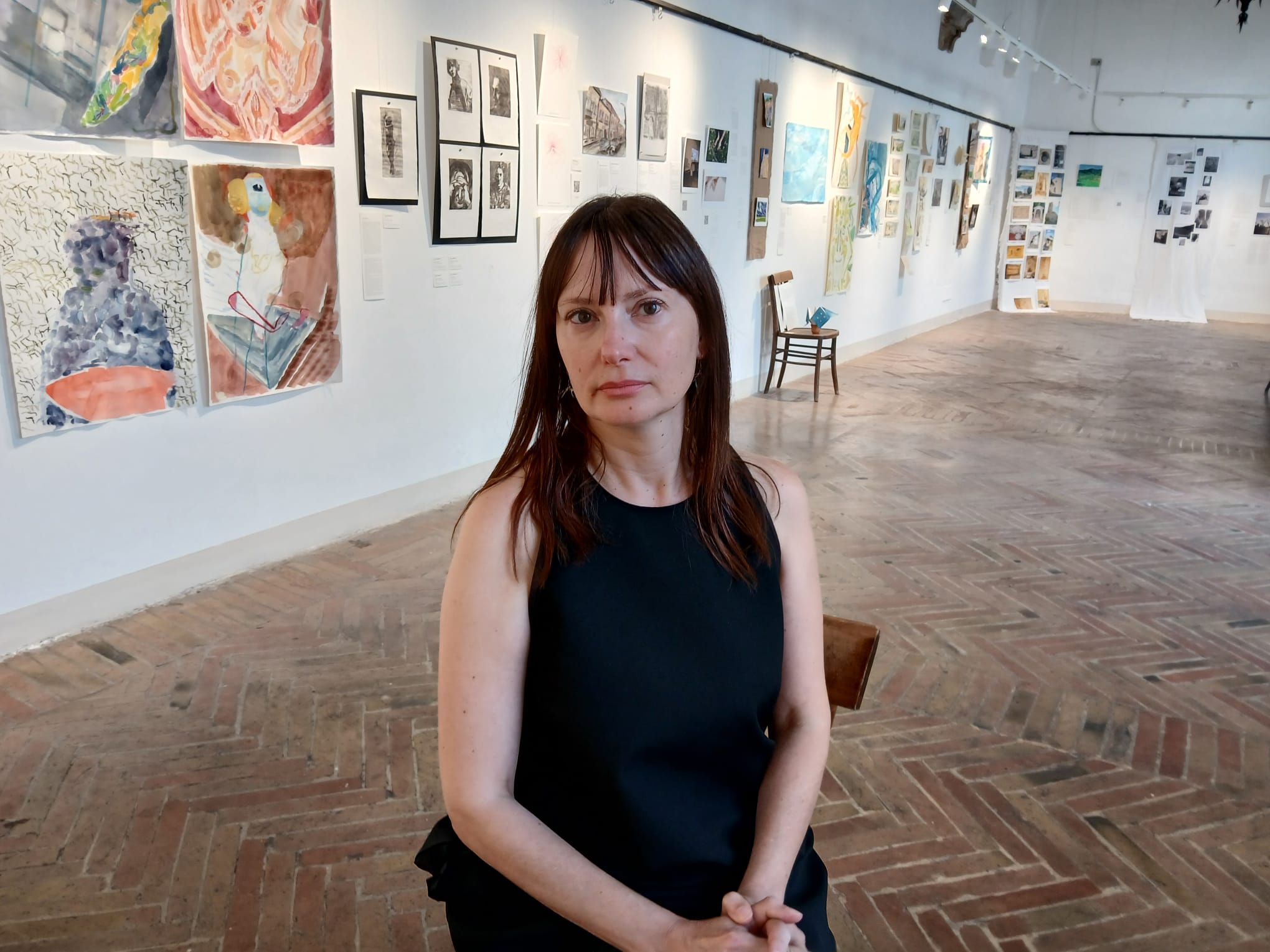
Marina Merli is an Art Historian and Director of the Arte Studio Ginestrelle for international artists and writers, developed in 2008. A longtime member of ACA, Ginestrelle is a small artist residency set within the historic town of Assisi, Italy, a UNESCO World Heritage Site.
|
We’d love to hear from you. Send your questions or reflections to ebasada@artistcommunities.org for a chance to be featured in an upcoming issue.