

As part of ACA’s ongoing reflection on our history and evolution over the past few decades, we remain guided and inspired by the leaders who have shaped this field. In this column, we speak with members and colleagues whose perspectives illuminate the past, present, and future of artist communities. For this issue, we talk with Joel Garcia, artist, culture leader, educator, and ACA Board Member.
ACA: You’ve spoken about reciprocity and anti-colonial practice as guiding principles in your work. When you hear the word “responsibility,” what does it mean to you in the context of cultural work?
JOEL GARCIA: For me, someone who stewards an organization, a space for artists, and creates work that interacts with culture-keeping and building, responsibility carries several charges. First, the disentanglement of harmful behaviors that we’ve learned from white supremacy, many times unknowingly. Secondly, building the capacity of others to accept, if possible, understand, and safeguard culture-keeping and making, and to do so holistically, which requires doing that work internally and externally, as you also need allies to support and sustain this work.
In this context, reciprocity materializes in asking potential allies to accept and understand the realities and needs of Native, Indigenous, and other vulnerable communities. To be effective, we need to provide the necessary information and context for allies to do well. One example is the OXY ARTS team at Occidental College here in Eagle Rock/Highland Park. We’ve had various discussions on the needs of our artist community and the political needs of the larger Indigenous community, but more specifically, the needs of First Peoples. The OXY ARTS team has been able to use that knowledge to advance certain issues and affirm others, processes which usually result in the cultural taxation of our community of artists and Tribal Leaders.
Colonial practices funnel everything towards the capitalist goal of exploitation, which is punitive and inhumane. For me, it's important to invert that and begin from a place where everyone can participate and thrive. That isn’t to say that sustainability is sacrificed or disconnected from this practice. Economics is largely associated with capitalism, and commerce is often equated with capitalism. A sustainable economy is possible, and working from that frame allows for a much more generative arts and culture ecology. Sure, we have pressures coming from capitalism, but it takes little effort and planning to balance things out a bit. Sustaining that balance can take more effort, but this allows for a much more fluid and expansive practice, whether it's at a personal or an organizational level.
ACA: After decades of organizing and program-building, what have you learned about where responsibility tends to lose clarity inside an institution?
JG: I’ve learned that clarity gets lost when successful programs bump up against “measurable impacts.” In short, how much can we save if we cut corners?
One example I can offer is a program we successfully piloted, which was transitioning into a full-time program and was being evaluated by one of the funders. They felt our program wasn’t as impactful as others because the number of youth engaged was lower. We work with a cohort of youth throughout the year. They pushed us to increase the number of youth served, and that increase was being written into our grant extension. We pushed back, had a dialogue with the evaluation team, and we shifted how they were measuring the work we do. We shifted from counting the number of youth to counting the hours spent with youth, and using that metric to measure impact gave a much better picture of overall impact. And we were overachieving.
That metric has now been applied across all other grants in the same youth development initiative.
We train artists to be artists, and the curriculum also focuses on creating cultural shifts or not. And that is what we do. We are clear on that, and we don’t let others project their expectations onto our work because when we do, they will tell our story for us and usually get it wrong. We need to tell our story, and everyone who is part of the organization should know that story.
Otherwise, we evaluate the wrong things and lose clarity.
ACA: What role should boards and governing bodies play in ensuring accountability that goes beyond just oversight?
JG: For me, oversight includes consistently evaluating the connectivity of the organization to the folks it primarily serves. That variable is an important aspect that tells me many things from a grant reviewer perspective, from whether we partner with an organization, from the lens of a community member, and from an equity standpoint as well. For us as an org that is focused on supporting Native and Indigenous artists, having a strong partnership with First Peoples is foundational. We could not do otherwise. I mean, we could be we would also intentionally and unintentionally replicate certain harms.
For us, this part of our value system is ever-present.
“Our work requires a constant reinvestigation of our presence as Indigenous Peoples on lands that are not our ancestral homelands so that we may be guests living in kinship, reciprocity, and doing our best to center these Tribal Nations.”
I’d like to think, or hope, that arts and culture orgs understand the healing power of arts and culture, and also see that the first wounds inflicted on these lands are very present and also need tending to.
ACA: How do we balance serving artists with serving broader community needs?
JG: The work Meztli Projects engages in tries to create cultural shifts, positively impacting folks beyond our core audience of Native and Indigenous artists. To achieve those shifts, small and large, Meztli Projects understands that we need to build the capacity of artists to do work in a way that inches along narratives, strategies, tactics, and tools, such as new language that informs the way society interacts with one another. Artists and artist projects are soft entry points into learning new ideas, new engagements, etc. Personally, this is something I have rooted my work in, studying and researching, hacking, looking at what ingredients, and what is the recipe for these creative practices and projects that allow for that cultural shift to happen so that other artists can replicate it.
Our approach to balancing serving artists with broader community needs is practiced by focusing on the well-being of the artists who are facilitating workshops, projects, etc that engage with the general public. We have a Cultural Worker Apprentice (CWA) program supporting young artists ages 16-24 in developing these skills through independent projects. We have a core group of artists who facilitate programming through our approach. This core group is composed of young artists developed through both the CWA and other experienced artists who are in alignment with our work and have been part of our journey. Its a small ecosystem of people and resources that contribute to the larger whole. Our contribution is resourcing the artists while understanding the larger needs and making sure there is intention, connectivity, and measuring how things impact communities.
We understand our roles as nurturer but also instigator.
ACA: What gives you hope about the ways cultural organizations are evolving?
JG: When Meztli Projects was being conceived and then launched, we imagined doing our work through a mixer harm reduction, confronting settler colonialism, tending to wounds (e.g., mutual aid), a strong connection to First Peoples, centering healing (not just being trauma-informed), using a framework informed by all the many ways Indigenous communities practice what we know as restorative/transformative justice, an intercultural approach (a complete rejection of White Supremacy), and some ceremonial aspects sprinkled in.
We had seen some examples of possible models, but here in Los Angeles, it felt very lonely. It kinda still does. Over the last few years, we have seen more and more cultural orgs embrace some of the approaches that fuel the work we do, and that is wonderful; it makes the work lighter. Even though the term mutual aid has been watered down and absorbed into everyday life, and in some cases professionalized, it is so much better to have that element be a critical part of the arts & culture sector, primarily because it forces a class analysis from folks.
Indigenous Roots Cultural Arts Center in Saint Paul, Minnesota
Indigenous People's Power Project (IP3)
K'é Infoshop in Tséghahoodzaní, Dinéta (Window Rock, Arizona)
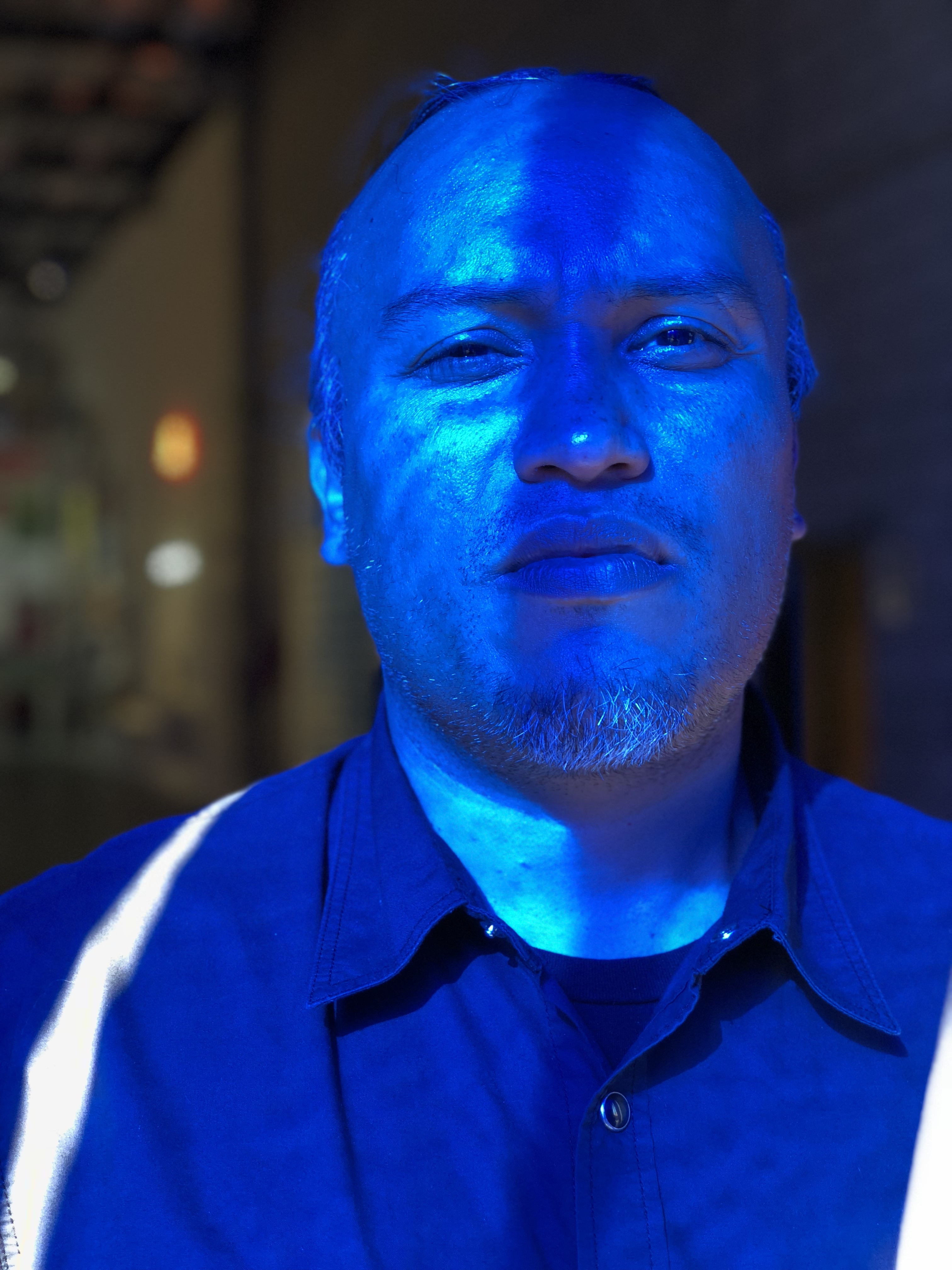
Joel Garcia (Huichol) is an Indigenous artist, cultural organizer, educator, co-founder, and Director of Meztli Projects, an Indigenous-based arts & culture collaborative centering Indigeneity into the creative practice of Los Angeles. In various artistic roles, he’s worked with Indigenous communities across borders to support land, access, and self-determination issues. His art (printmaking, dye making, public programming) explores healing and reconciliation, as well as memory and place, garnering national press in publications such as the LA Times, New Yorker, and Artforum, among others, for his use of art in changing policies in support of Indigenous Peoples and issues. He’s a former Stanton Fellow and artist-in-residence and fellow at Monument Lab ('19, '22), as well as a co-facilitator of the Intercultural Leadership Institute ('21-'23), which aims to create space for cultural production outside of white supremacist frameworks, alongside OXY ARTS and other acclaimed projects.
|
We’d love to hear from you. Send your questions or reflections to ebasada@artistcommunities.org for a chance to be featured in an upcoming issue.