

In this column, ACA staff members reflect on what we are reading, what we are thinking about, how we address the balance between our work lives and our creative lives (and the points at which those intersect). We asked Rashad T. Bailey, ACA’s Director of Development + Partnerships, to share what he’s been thinking about.
Subject: On the field we inherit, and the field we build
From: Rashad T. Bailey, Director of Development + Partnerships, Artist Communities Alliance
Dear ACA community,
When I look at the creative economy of 2026, I see something structurally familiar. Artists are tenants. Tenants of platforms that can demonetize them overnight. Tenants of institutions whose programmatic priorities can shift mid-grant. Tenants of their own intellectual property in an attention economy that has outsourced both ownership and authorship to systems they didn't design. The platforms are new. The structure isn't.
This is the field ACA exists inside. It's also a field we are, together, in a rare position to interrupt.
For thirty-five years, the Artist Communities Alliance has stood for a particular proposition: that artists need protected time and space to make work that doesn't yet have a market. That proposition is still right. What an artist needs to do with that time, though, has shifted. The artists arriving at our 1,500 member programs today are not only making the work — they're publishing it, distributing it, defending it, and maintaining the legal and infrastructural conditions for it to exist at all.
What does a residency owe an artist in 2026?
Time and space, still. Connection to peers. Access to the tools — legal, technical, financial — that turn finished projects into sustained practice. A field that thinks of itself as infrastructure.
This isn't a pivot away from what residencies have always done. It's a deepening of it. Residencies have always functioned as a counter-architecture — places where artists could make work the surrounding economy didn't yet know how to value, and didn't yet know how to take.
We are in another such moment.
What we are building, with this team and with you, is a development practice equal to it. That means deeper partnerships with funders who want to support the field rather than direct it. Donor relationships rooted in trust rather than restriction. And the public case — to policymakers, to press, to the broader culture — that what happens inside an artist's residency is national infrastructure.
There is real work ahead, and a real chance to do it well. I'm glad to be in it with you.
Warmly, Rashad T. Bailey,
References:
The work of Guerrilla Girls has been very inspiring
Ways of Curating by Hans Ulrich Obrist
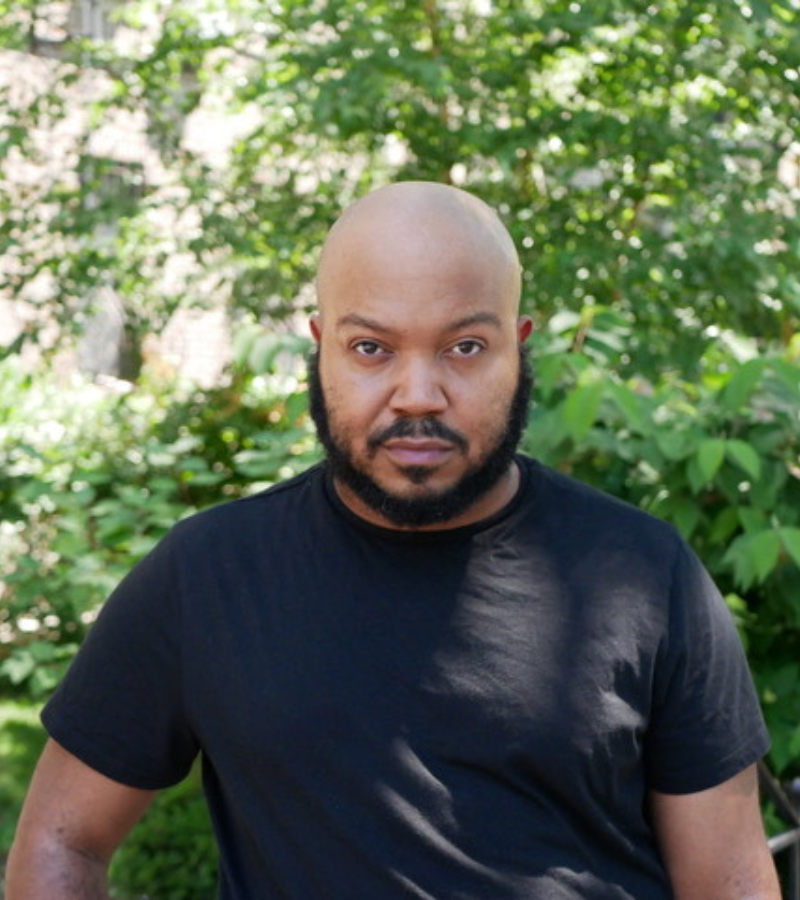
Rashad T. Bailey believes that robust creative infrastructure is essential to transforming the lives of artists. As the Director of Partnerships and Development at ACA, he brings 15 years of experience as a strategic development executive and producer to the residency field. Specializing in revenue growth and stakeholder engagement, Rashad has led advancement initiatives for Asia Society, The New Press, PlayCo, and The Drama League. His approach is grounded in a foundation of economic justice, built during his early advocacy work with the Center for Community Change and the Center for Economic and Policy Research. A multidisciplinary creator and filmmaker, Rashad is the co-founder of the film collective Fine Print——and founder of the experimental creative agency Operation CTRL, launching in 2026. His production credits span award-winning cinema and stage, including the documentary BEBA (NEON), La ENA, and the Broadway production of Slave Play. A third-generation artist, Rashad is a company member of Off-Broadway company Colt Coeur, and an alum of Theater Producers of Color and the School for Poetic Computation. Rashad’s work has been recognized by Playbill, Art Forum, the LA Times and New York Magazine. He is dedicated to expanding the resources and networks available to the global artist community. |
We’d love to hear from you. Send your questions or reflections to ebasada@artistcommunities.org for a chance to be featured in an upcoming issue of our newsletter, Waypoints.