Crosstown Arts Residency Program

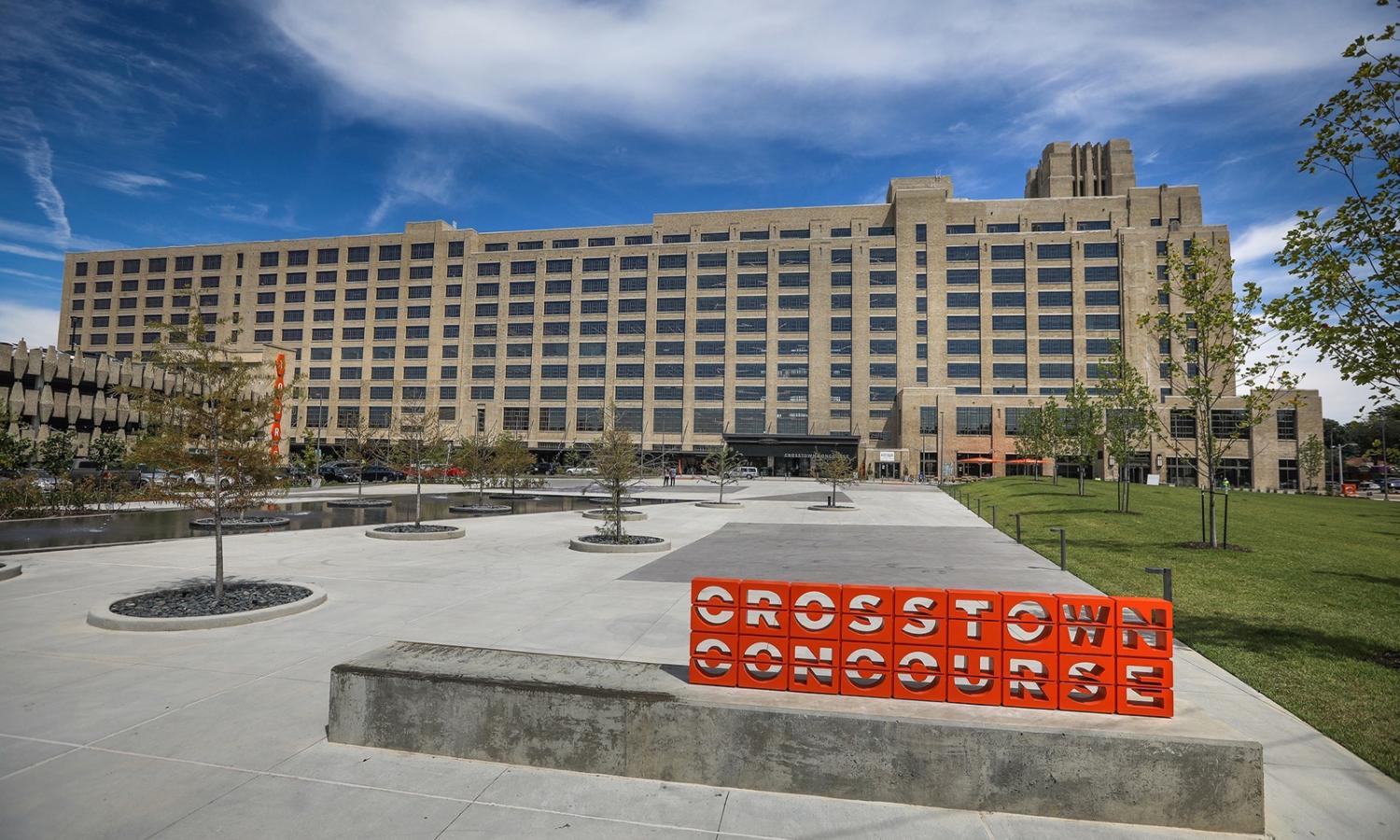
Crosstown Arts is in the Crosstown Concourse building, a 10 story, 1.1 million square foot former Sears distribution center. It has a cement courtyard with young trees and the image shows a bright orange sign in the foreground.

Crosstown Arts is in the Crosstown Concourse building, a 10 story, 1.1 million square foot former Sears distribution center. It has a cement courtyard with young trees and the image shows a bright orange sign in the foreground.

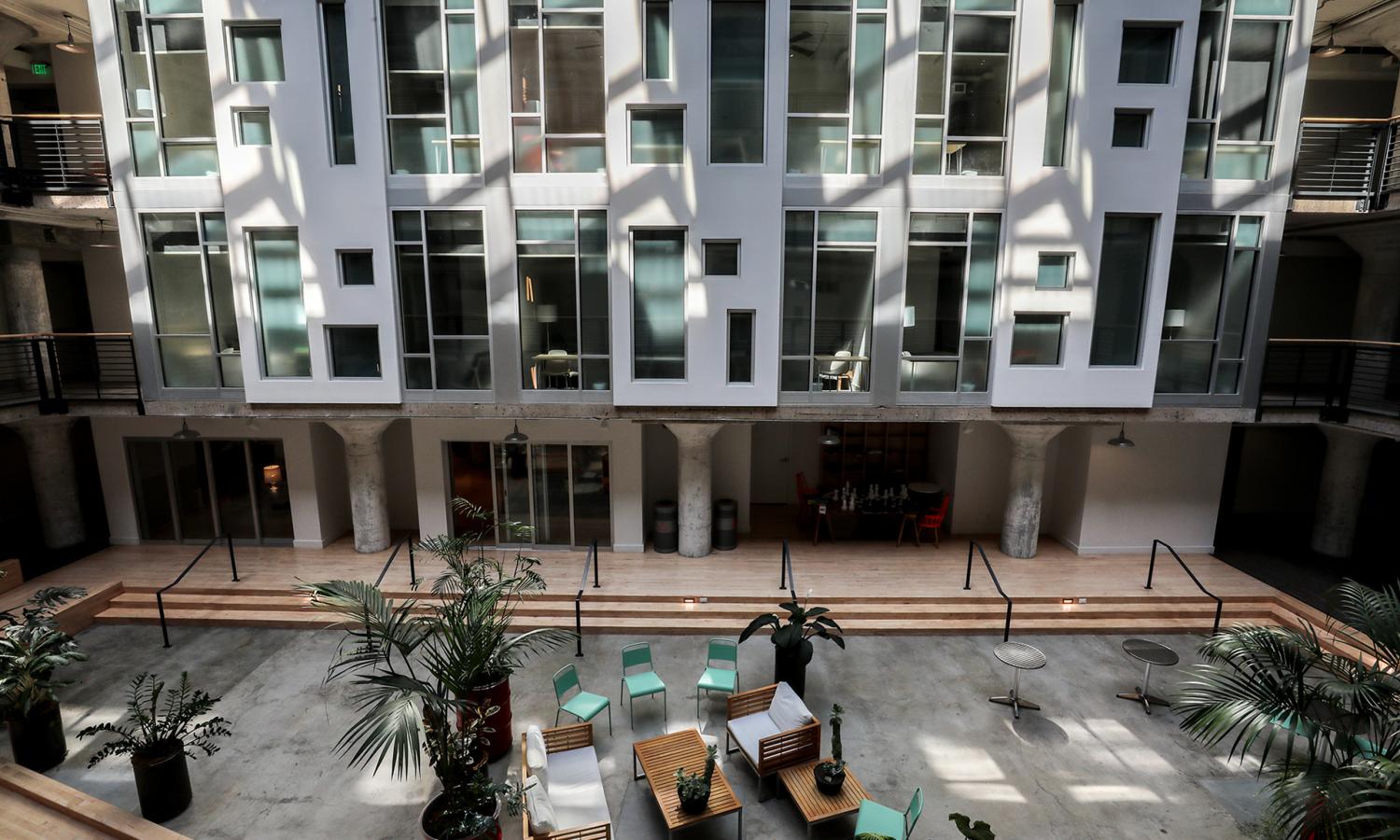
An interior courtyard of the Crosstown Concourse building that has natural light, lounge furniture and various plants. Above this area is a view of the windows of two rows of microunits that are used by residents.

An interior courtyard of the Crosstown Concourse building that has natural light, lounge furniture and various plants. Above this area is a view of the windows of two rows of microunits that are used by residents.

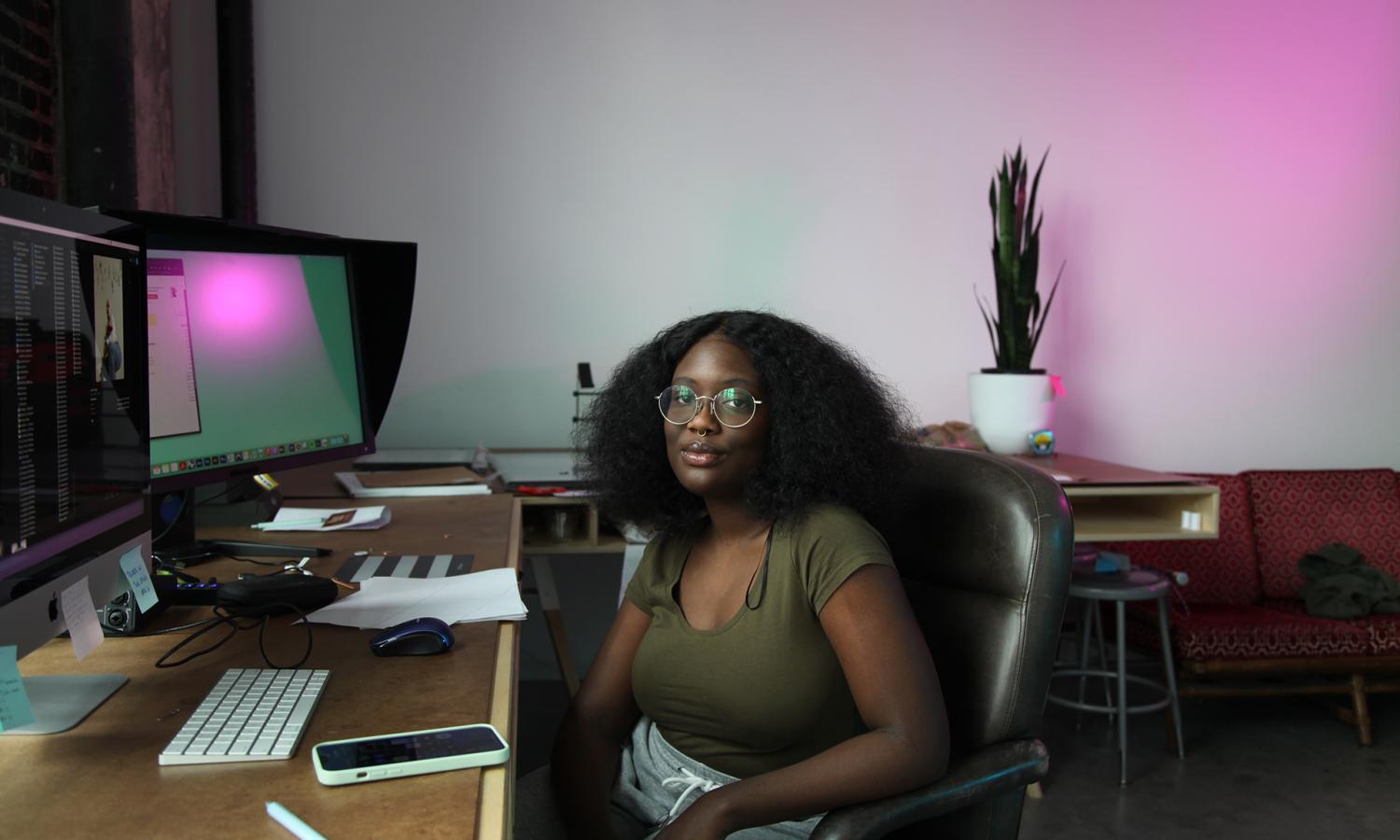
Resident Jasmine Marie sits in her studio at Crosstown Arts with a table to her right with various computer screens and a computer keyboard and a tall spiky plant in the background on her left.

Resident Jasmine Marie sits in her studio at Crosstown Arts with a table to her right with various computer screens and a computer keyboard and a tall spiky plant in the background on her left.

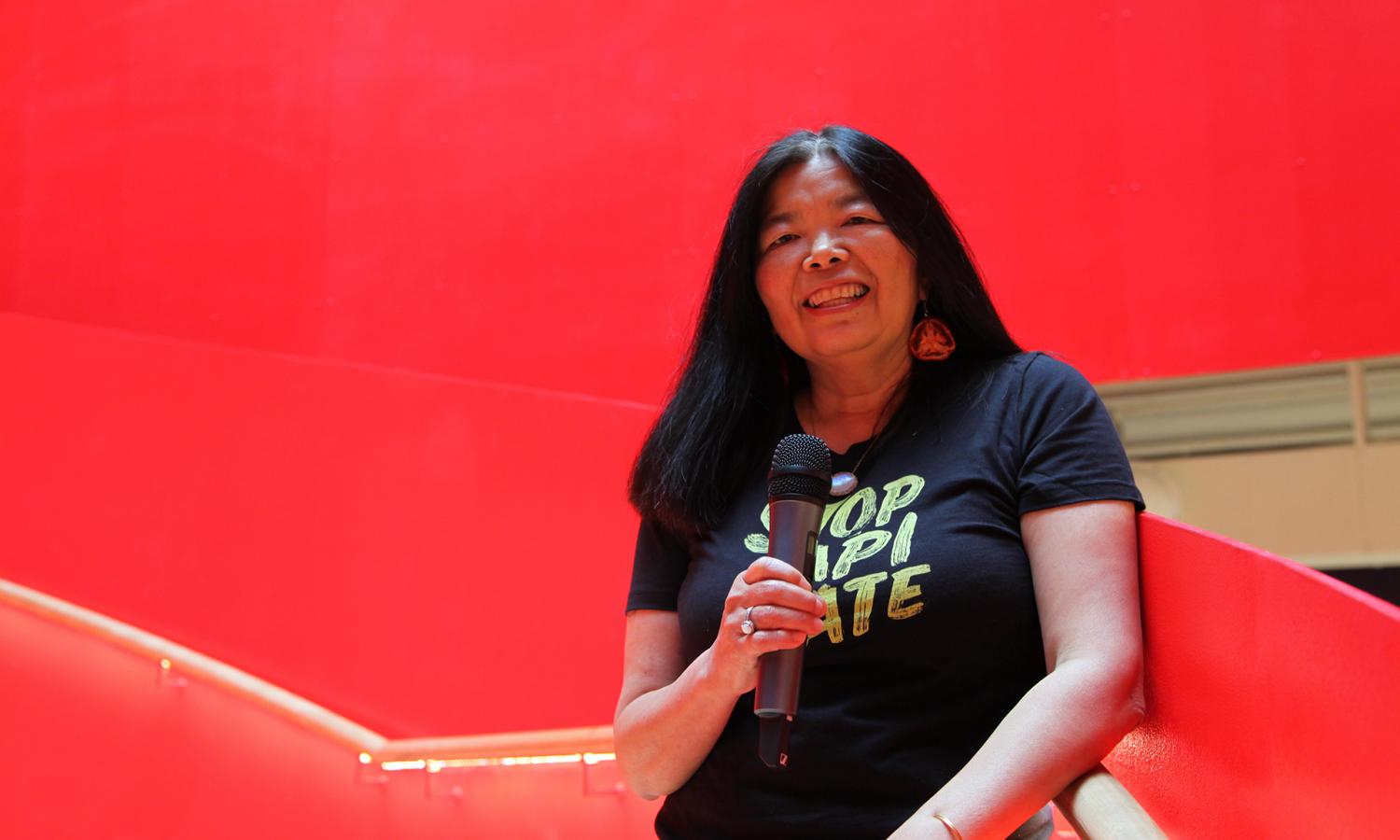
In a ¾ portrait, playwright and comedian Lucy Wang holds a microphone and leans on the banister in a bright red spiral stairwell. Her black t-shirt says “Stop AAPI Hate.”

In a ¾ portrait, playwright and comedian Lucy Wang holds a microphone and leans on the banister in a bright red spiral stairwell. Her black t-shirt says “Stop AAPI Hate.”

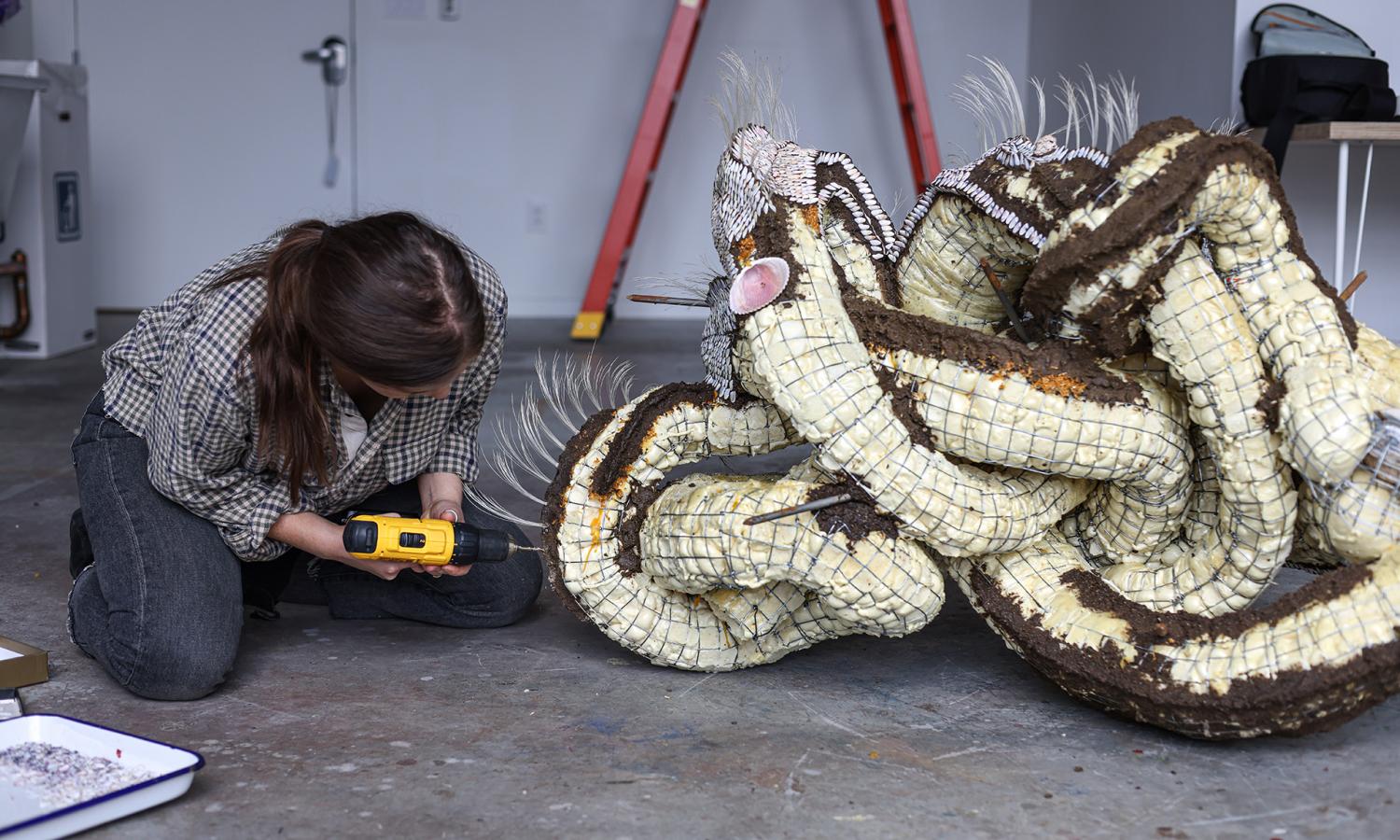
Resident Sarah Elizabeth Cornejo crouches on the cement floor in her studio holding a drill, next to her sculpture. The sculpture is a twisted mass of chicken wire tubes filled with a cream-colored substance and adorned with some dark material and spiky pig hairs.

Resident Sarah Elizabeth Cornejo crouches on the cement floor in her studio holding a drill, next to her sculpture. The sculpture is a twisted mass of chicken wire tubes filled with a cream-colored substance and adorned with some dark material and spiky pig hairs.

Fiber artist, Sharon Havelka is sitting in a chair in her white-walled studio stuffing fiber through holes cut into the back of her white quilt piece.

Fiber artist, Sharon Havelka is sitting in a chair in her white-walled studio stuffing fiber through holes cut into the back of her white quilt piece.

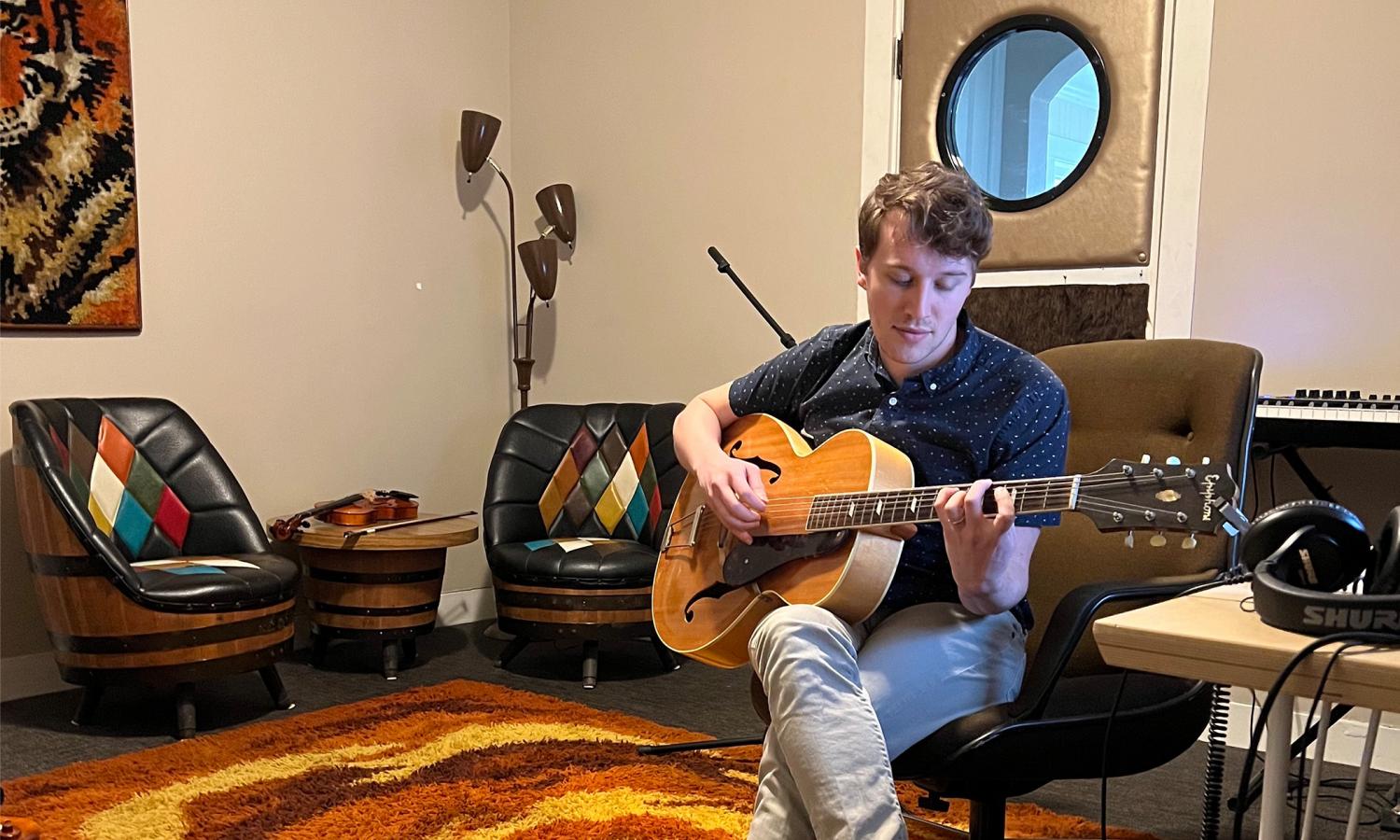
Guitar Gunter Guapp strums a guitar in the sound-dampened space inside a Studio House for Musicians surrounded by various instruments, vintage barrel-chairs upholstered with bright diamonds and a shaggy rug in variegated orange, yellow and brown.

Guitar Gunter Guapp strums a guitar in the sound-dampened space inside a Studio House for Musicians surrounded by various instruments, vintage barrel-chairs upholstered with bright diamonds and a shaggy rug in variegated orange, yellow and brown.

Crosstown Arts Residency Program
Memphis, TN, United States

Crosstown Arts, situated in Memphis, TN, welcomes both visiting and local artists and curators to its multidisciplinary artist residency program, spanning various creative disciplines including visual arts, music, film, and literature. Set in an urban environment with shared spaces, the residency program promotes connection and socialization among residents and encourages engagement with the broader community.

Residencies afford artists 24/7 access to private studio spaces, along with complimentary use of shared art workspaces and music production suites. For live/work residencies, private living quarters are provided, complete with kitchen, laundry, and communal living areas.

Residents gain access to Crosstown Arts’ on-site Shared Art workspace, equipped with a range of analog and digital fabrication tools and production resources.

All residencies are granted without charge, though artists are responsible for their own studio materials, travel expenses to and from Memphis. 2026 residencies sessions will run in Spring (three months), Summer (two months), and Fall (three months).

Applicants must be at least 18 years old at the start of their residency, and there are no specific project requirements, fostering an environment conducive to experimentation and artistic exploration. *Crosstown Arts Residency is not considering applications from alumni for the 2026 application. 

Contact

1350 Concourse Ave
Suite 280
Memphis, TN 38104
United States

Year Founded
2017
Context
Urban
Residency Structure
Embedded in an arts or cultural organization (including theater + gallery)
Residency Program Type
Studio-based (with housing)
Residency Length
2 months - 3 months
Languages
English
Spanish
Average Number of Artists in Residence at a Time
5
Collaborative Residency
Must apply and be accepted individually
Discipline
Acting
Animation
Augmented Reality
Book Arts
Choreography
Computing
Costume/Fashion Design
Criticism
Dance
Digital Media
Documentary
Drawing
Electronic Arts
Fiction
Film
Installation Arts
Interdisciplinary Arts
Journalism
Literary Nonfiction
Literature
Mixed Media
Moving Image
Multimedia Arts
Music
New Genres
Nonfiction
Painting
Paper Arts
Performance Art
Photography
Playwriting
Poetry
Printmaking
Screenwriting
Sculpture
Social Practice
Textile & Fiber Arts/Weaving
Theater
Virtual Reality
Visual Arts
Woodworking
Writing
Companions
Pets are not allowed
Country of Residence
Open to artists based anywhere in the world
Family Friendly
N/A
Stage of Career
Any stage of career
Additional Expectations/Opportunities
Participate in open studio with fellow residents
Give artist talk or presentation
How does your residency program support artists?
Opportunity to be in another context
Opportunity to travel
Immersion in new culture and/context
Unstructured time
Access to studio space to create new work
Access to equipment, specialized facilities and/or technical support
Inspiration from cultural context
Opportunities to collaborate with other artists/residents
Opportunities to develop relationships with other artists/residents
Additional Eligibility Information

Applications are open via Slideroom from May  - July each year for all residencies the following year. Applicants submit 5 - 8 work samples, an artist statement, and residency goals. 

Applications are scored by a rotating selection panel comprised of creative professionals and residencies are offered in early fall, based on the panel’s scores and recommendations with an emphasis on inclusivity and diversity.  


Number of Artists Accepted in Most Current Year
15
Total Applicant Pool in Most Current Year
200
Artist Stipend
Travel Stipend/Material Stipends
Residency Fees
200
US Dollar (USD)
Fee Details

A $200 refundable deposit is required per residents. 

Grant/Scholarship/Other Funding Support
Application Fee
20
US Dollar (USD)
Application Type
Open application
What does your program provide during the residency experience?
Manual / handbook before arrival
Communication before arrival to discuss accommodations, medical conditions, or other health needs
Orientation upon arrival
Contact information and available accommodations for programs, events, and campus
Full description of accessibility on campus
Staff/volunteer providing guidance to help locate facilities or activities
Is your campus wheelchair accessible?
ADA Compliant
Additional Accessibility Information

Crosstown Arts is located in the Crosstown Concourse which was redeveloped and reopened in 2017. The building is ADA compliant and the residency offers some accessible housing including an accessible family apartment. Several apartments also have a doorbell that also flashes a light. Many studios are wheelchair accessible but Studio Houses for Musicians are not currently accessible. 

Caregiver/Aide/PCA
N/A
Accessibility Contact Name
Catie Balsamo
Accessibility Contact Email
Residency@crosstownarts.org
Accessibility Contact Phone Number
How much of the residency experience can artists with limited mobility participate?

Artists with limited mobility can participate in the majority of experiences within the residency and at Crosstown Arts but Studio Houses for Musicians are not currently accessible. 

Please briefly describe the facilities and areas of the campus that are NOT accessible.

Two Studio Houses for Musicians with sound dampened interior rooms that have 4 or fewer stairs required for access are located off-campus. 

Type of Housing
Private housing on campus (individual apartment/cabin/house)
Private housing off campus (individual apartment/cabin/house)
Private bedroom in a shared housing facility on campus
Accessible Housing
ADA Compliant
Partially Accessible (50% or more)
Housing for Companion And/or Caregivers
Case by case consideration
Accessible Communal Spaces
ADA Compliant
Common/Communal Spaces Information

Microunits share accessible laundry, kitchen and living area. 

Additional Housing Information
Access to laundry on campus
Access to laundry in housing
WIFI available in housing
Air Conditioned Housing
Heat and Cool control managed by resident
Meals Provided
Residents have access to shared kitchen
Residents have access to private kitchen
Additional Meals Information
N/A
Computer/Internet Access
Computer and internet connection provided in common area (shared)
Computer and internet connection provided in studio area (private)
Wireless Internet (WIFI)
Ethernet provided in living or studio area
Studios/Facilities Details

All studios are private. One is embedded within the Shared Art facility, others are on the second floor down hallways adjacent to Crosstown Arts facilities. All on-campus studios have large sinks and floor drains and a basic tool kit. Two Studio Houses for Musics with sound-dampened interior rooms are located across the street. Each Studio House for Musicians has an older piano and a variety of spaces that can accommodate bringing in other (non-overnight) musicians.  Residents have the privilege to reserve and utilize the Musician & Artist Services production spaces at no expense.

Studios/Special Equipment
Private Studios
Dedicated Studio/Shop Technicians - Part Time
Performance/Presentation Facilities
Piano
Large Format Printer / Plotter
Large Format Scanner
Printers + Scanner
Photo + Video Editing Suite
Music/Media Studio Non-recording
Easels
Silkscreen Studio
Light Tables
Large Sinks
Dedicated Wood Shop
Woodworking Tools
Tablesaw
Bandsaw
Router Table
Jointer
Planer
Wood Vises And Wood Working Table
Studios/Facilities Accessibility
ADA Compliant
Partially Accessible (50% or more)
Studio Support/Tech
Studio/facility orientation provided
Air Conditioned
Additional Studio Information

Crosstown Arts staff manages and supports facilities spaces but does not offer dedicated project support. Residents have access to Shared Art facilities only during open hours. Shared Art is a community workspace with a range of analog and digital fabrication and production resources, including a woodshop, multiple CNC/laser cutters, a Mac-based computer lab, a large-format digital printing service, and a silkscreen print shop. Residents also have access to various music services and spaces, including a sound mixing studio, that are run by the Music Services Department. 
 

ACRE

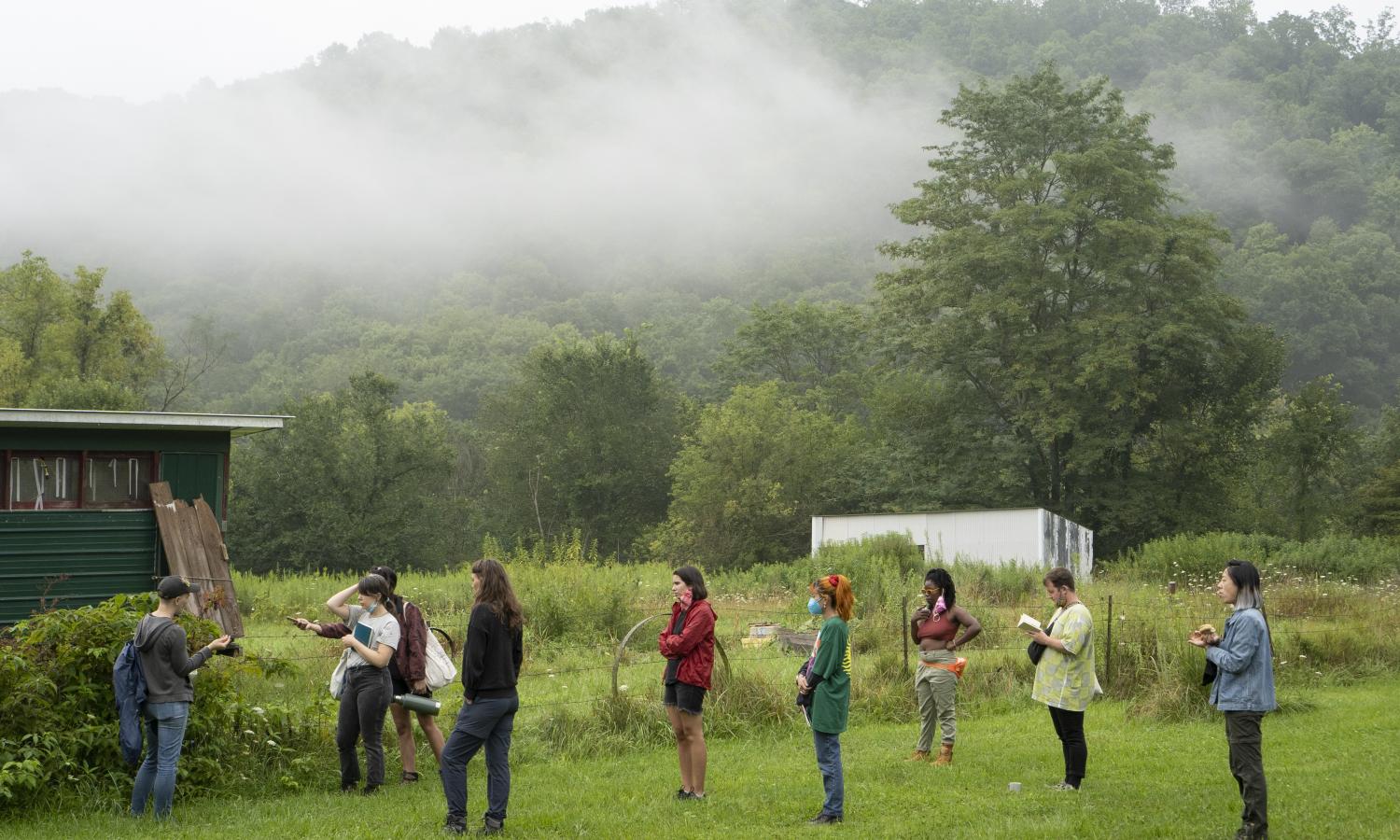
An attentive group faces a speaker in front of a foggy lush green backdrop at the bottom of a sloping hill.

An attentive group faces a speaker in front of a foggy lush green backdrop at the bottom of a sloping hill.

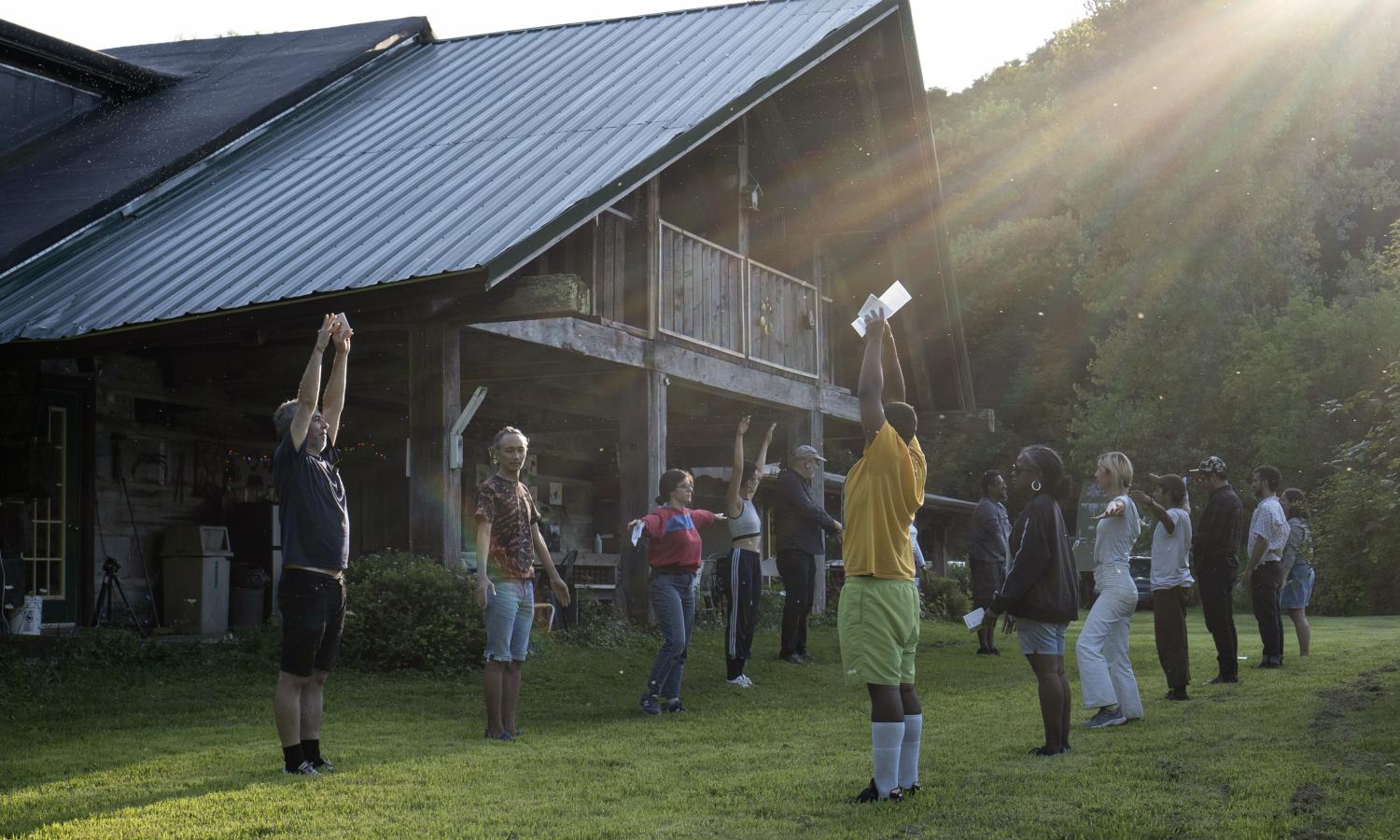
Two rows of people face each other in the grass on a sunny day, each person stretches their arms in a different direction reaching out to the sides or up to the sky.

Two rows of people face each other in the grass on a sunny day, each person stretches their arms in a different direction reaching out to the sides or up to the sky.

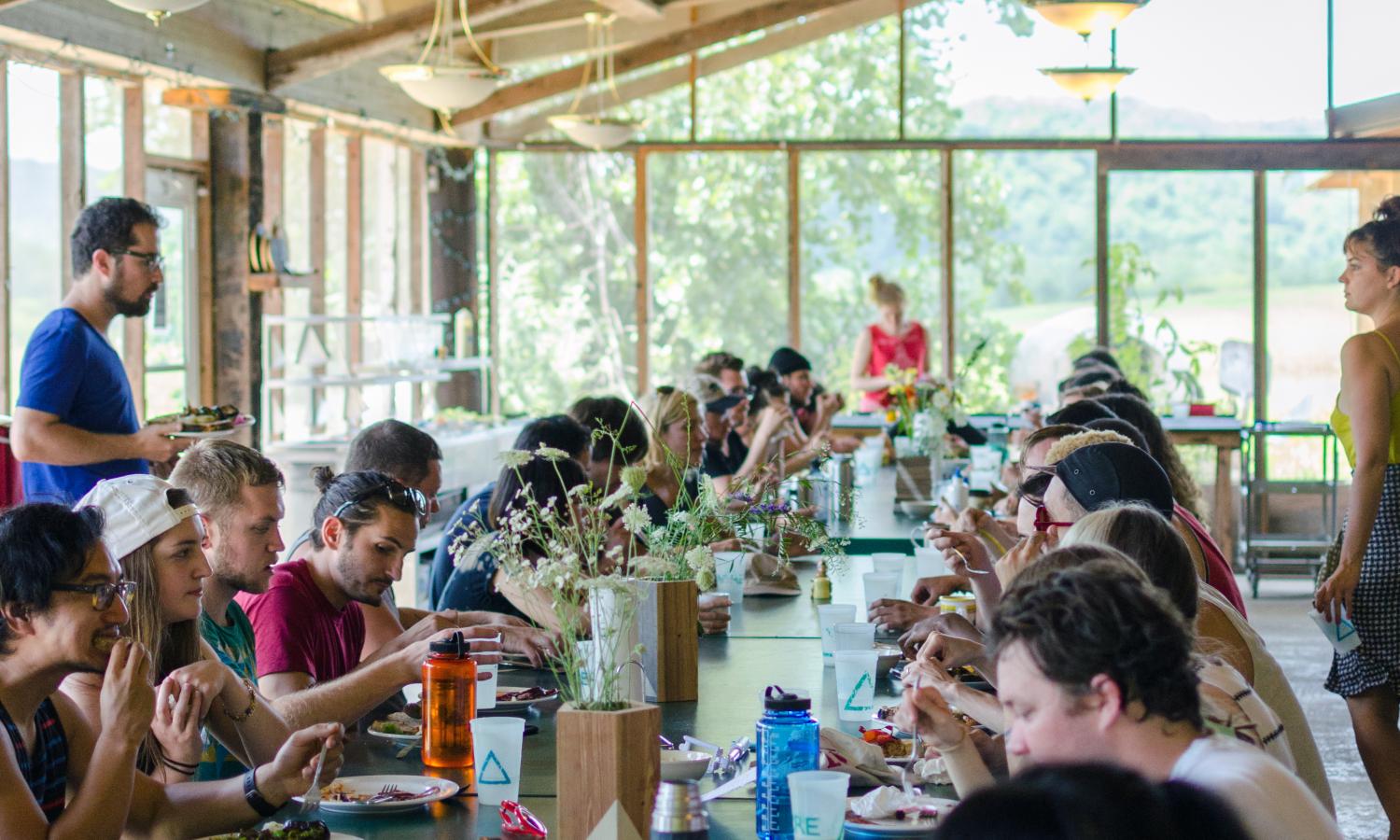
View from the head of a long shared table in a screened-in kitchen flooded with daylight where several people facing one another eat and talk.

View from the head of a long shared table in a screened-in kitchen flooded with daylight where several people facing one another eat and talk.

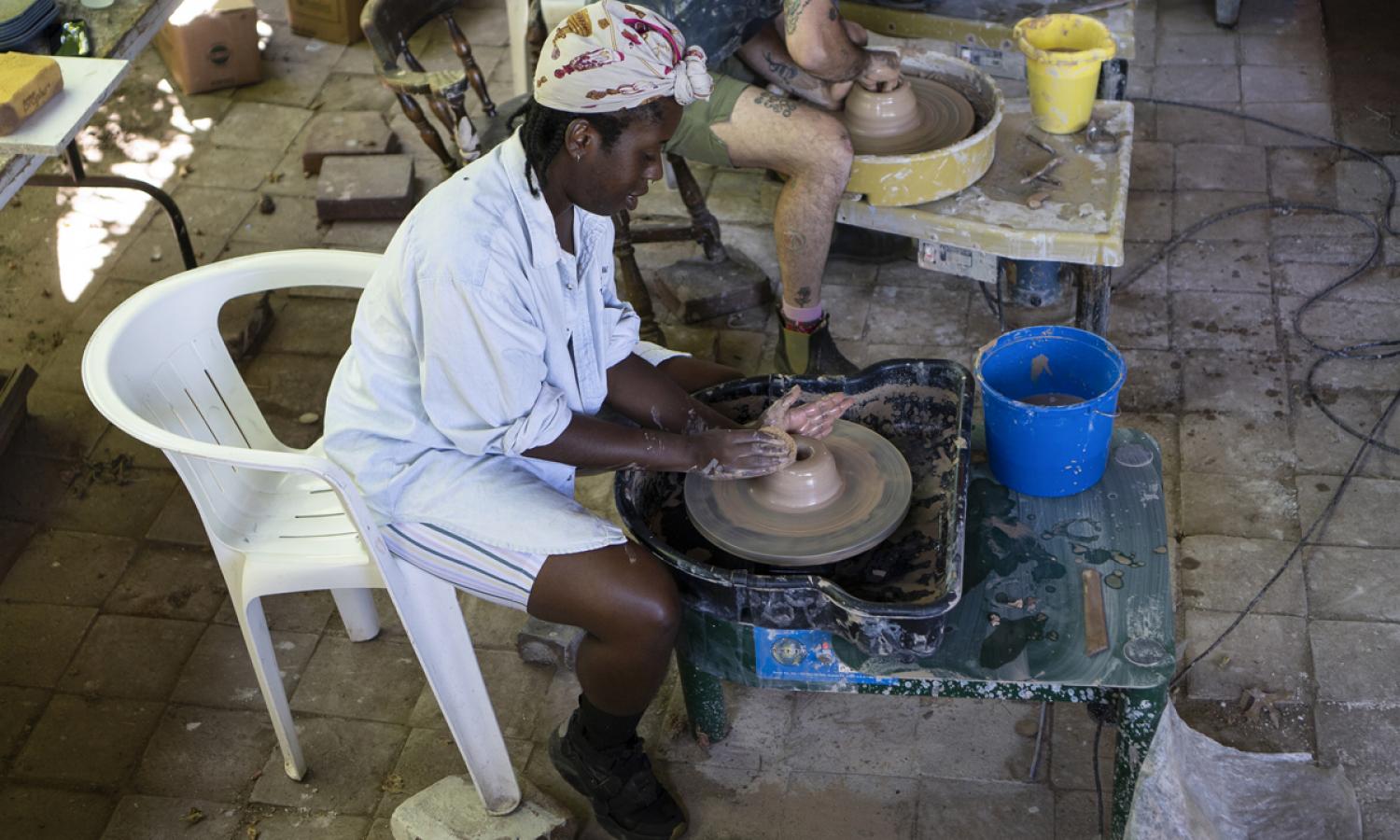
A black person with a head scarf seated at a clay throwing wheel, shaping a ring of wet clay with their hands.

A black person with a head scarf seated at a clay throwing wheel, shaping a ring of wet clay with their hands.

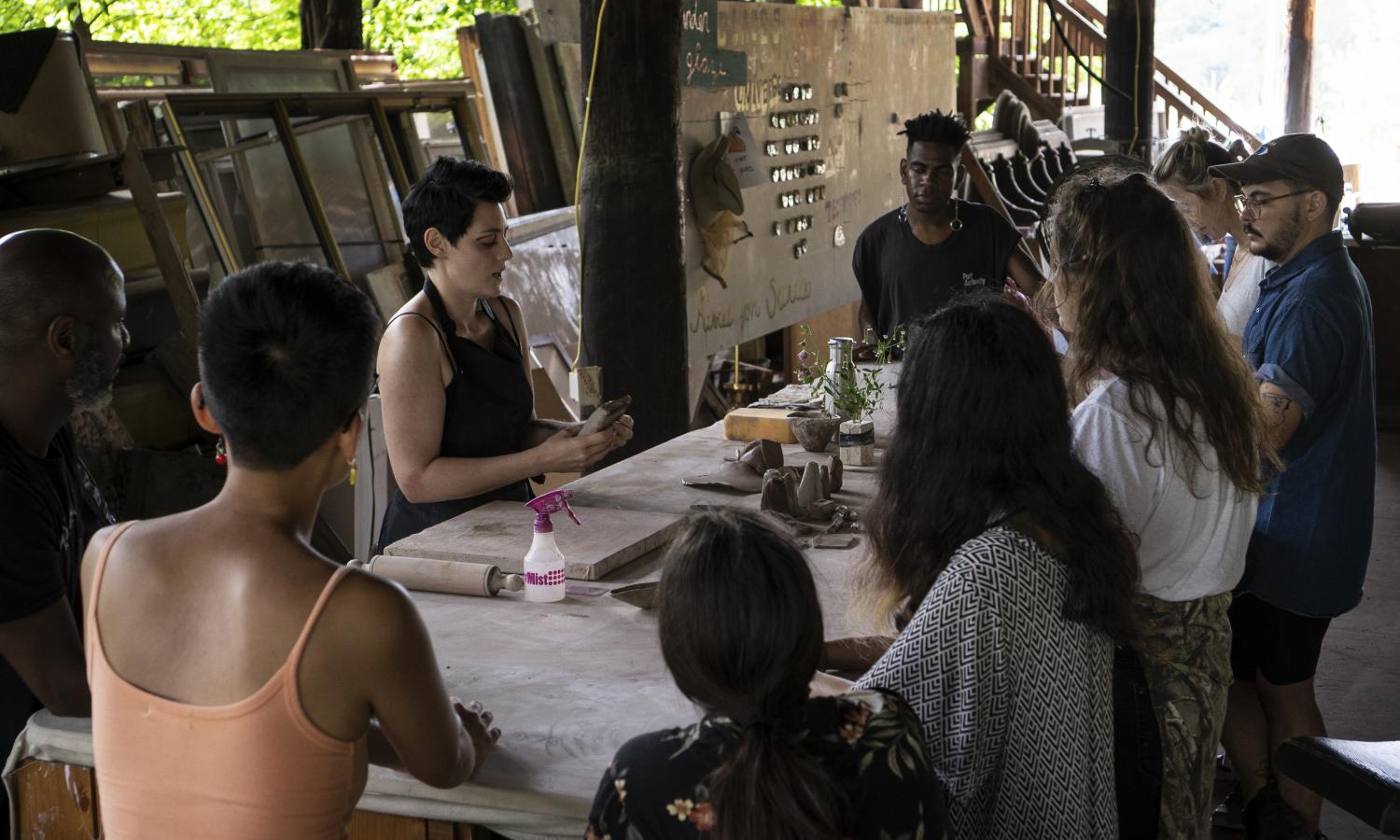
A person with short, dark hair speaks and holds a block of clay in front of a group formed in a semi-circle around a table with several cone-shaped pieces of clay, a spray bottle, and a rolling pin.

A person with short, dark hair speaks and holds a block of clay in front of a group formed in a semi-circle around a table with several cone-shaped pieces of clay, a spray bottle, and a rolling pin.

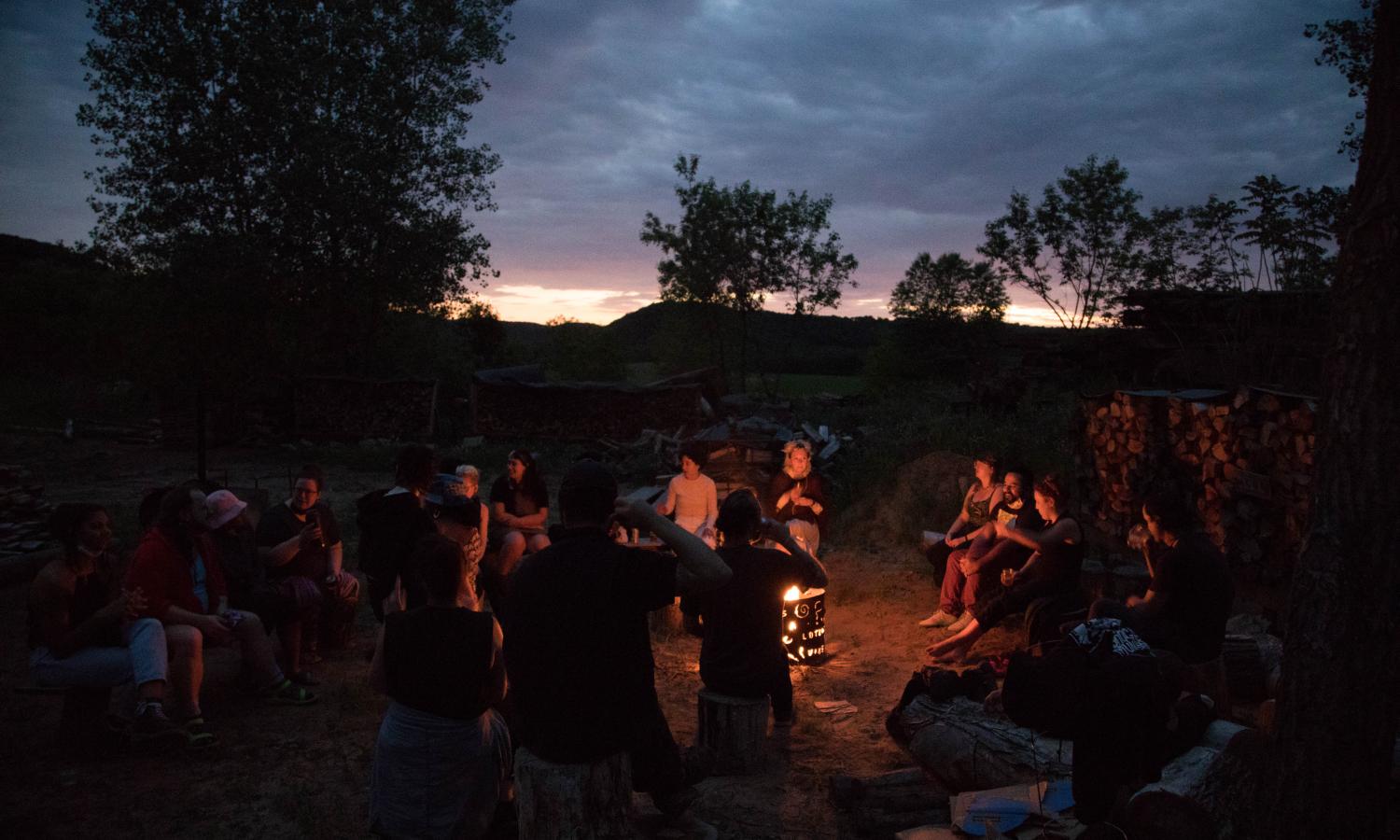
A large group of people gathered at dusk sitting on tree stumps and log benches around a glowing fire pit.

A large group of people gathered at dusk sitting on tree stumps and log benches around a glowing fire pit.

Four people stand over a frame of handmade paper drying on a screen on the ground.

Four people stand over a frame of handmade paper drying on a screen on the ground.

ACRE

Steuben, WI, United States

ACRE’s Residency Program takes place every summer in the Driftless region of Wisconsin. Set on 1,000 acres of wetland, hills, and farmland, the residency hosts artists who live and work in a communal setting that includes expansive work spaces, kitchen serving three meals per day, performance stage, wood shop, art and tech facility, and sound, fiber, screenprinting, metalwork, and ceramics studios. Residents are encouraged to balance their time between producing work, contemplating their practice, and engaging with the community. The Visiting Artist program invites established artists to conduct studio visits and present lectures and other experimental programs. Studio staff also offer demos and in-depth workshops to residents. Each year ACRE welcomes approximately 60 emerging, often underrepresented, artists of all disciplines to attend one of three 14-day residency sessions. Residents are selected through a rigorous review process by respected panelists who work in the visual arts from Chicago and across the country.

ACRE practices a participatory leadership structure that enriches our operations and programs, by inviting participants to become key decision-makers for the organization, facilitating community-centered evaluation, soliciting feedback, and practicing a shared dedication to making iterative improvements. Every artist who has participated in the residency is invited to return as staff, serve on a committee, and ultimately direct the future of the organization.

Contact

48193 County Rd E
Steuben, WI 54657
United States

Year Founded
2010
Context
Rural
Residency Structure
Stand-alone
Residency Program Type
Studio-based (with housing)
Community-engaged
Experiential
Residency Length
2 weeks - 2 weeks
Languages
English
Average Number of Artists in Residence at a Time
25
Collaborative Residency
May apply as a team
Discipline
Drawing
Interdisciplinary Arts
Mixed Media
Painting
Printmaking
Sculpture
Visual Arts
Book Arts
Ceramics/Clay Arts/Pottery
Digital Fabrication
Installation Arts
Paper Arts
Textile & Fiber Arts/Weaving
Woodworking
Criticism
New Genres
Playwriting
Poetry
Writing
Choreography
Dance
Performance Art
Music
Animation
Augmented Reality
Computing
Digital Media
Documentary
Electronic Arts
Film
Moving Image
Multimedia Arts
Photography
Sound Art
TV + Radio
Virtual Reality
Graphic Design
Illustration
Environmental Arts
Public Art
Social Practice
Storytelling
Biology
Ecology
Environmentalism/Conservation
Science
Art Conservation
Art Education
Art History
Philosophy
Companions
Pets are not allowed
Country of Residence
Open to artists based anywhere in the world
Family Friendly
N/A
Stage of Career
Any stage of career
Emerging
Additional Expectations/Opportunities
Participate in open studio with fellow residents
Teach in studio
Lead workshop for fellow residents
Lead a skill share
How does your residency program support artists?
Opportunity to be in another context
Opportunity to travel
Unstructured time
Access to studio space to create new work
Access to equipment, specialized facilities and/or technical support
Access to training on new artistic techniques and/or apprenticeship
Inspiration from natural environment
Opportunities to collaborate with other artists/residents
Opportunities to develop relationships with other artists/residents
Opportunities to exhibit or perform new work
Additional Eligibility Information
Number of Artists Accepted in Most Current Year
60
Total Applicant Pool in Most Current Year
700
Artist Stipend
0
US Dollar (USD)
Travel Stipend/Material Stipends
Residency Fees
700
US Dollar (USD)
Fee Details

Subsidized $50/day residency fee, totaling $700 per 14-day session. 

Grant/Scholarship/Other Funding Support
350
US Dollar (USD)
700
US Dollar (USD)
Grant/Scholarship/Other Funding Support Details

To qualify for a Scholarship, applicants must meet the following requirements:

  • All applicants must be at least 18 years of age.

  • Apply to the ACRE Residency Program by program deadline.

  • Indicate eligibility for Scholarship and complete the financial aid section on the ACRE application form.

Scholarships are not guaranteed. 

Visit our Scholarships page for more information on special scholarship opportunities. 

Application Fee
40
US Dollar (USD)
Application Type
Open application
What does your program provide during the residency experience?
Pre-orientation
Manual / handbook before arrival
Communication before arrival to discuss accommodations, medical conditions, or other health needs
Orientation upon arrival
Contact information and available accommodations for programs, events, and campus
Full description of accessibility on campus
Links to resources, effective practices, grievance procedures, etc.
Materials in large print
Written and or hard copies of text being presented
Accessible seating
Staff/volunteer reading information aloud
Staff/volunteer giving directions
Staff/volunteer providing guidance to help locate facilities or activities
Contact info for accessibility requests for event/programming
Is your campus wheelchair accessible?
Partially Accessible
Additional Accessibility Information

ACRE is committed to being open and accessible to all artists. We are eager to work with you directly to ensure we will be able to meet your needs. 

The residency is located on a 1000-acre farm in Wisconsin’s Driftless Region. Living, dining, and studio spaces are communal.

The residency is comprised of several main buildings and several outbuildings located around the residency property. Residents regularly travel between buildings for meals, to use facilities, or participate in workshops, performances, or other activities during the session.

While the main buildings are wheelchair accessible, the property's terrain and some of the farm structures and outbuildings may not be accessible to everyone. Specifically, a communal studio area and the looms for our fibers department are located on the second floor of a building with no elevator.

Each facility is managed by a volunteer artist tech who is able, to the best of their ability, to help with studio activities and projects that may require physical assistance. There is a volunteer staff person “on-call” at all times to provide assistance to residents including shuttles around campus, assistance with basic navigation, and emergency assistance if necessary. 

All of our sleeping accommodations and the majority of our facilities are ground-floor accessible. The majority of the common areas including our dining hall/kitchen, main lodge, and library are wheelchair accessible.

We are prepared to produce or facilitate accommodations such as large print materials, wheelchair ramps, travel assistance, adjusted or private sleeping accommodations, and any other actions that our volunteer staff are reasonably able to fulfill.

Service animals can be accommodated on a case by case basis. All service animals must have up to date paperwork and a current vet check and flea treatment. 

Environmental Irritants and Allergies Notice:

ACRE’s location is a rural farm, which means that there is increased exposure to the ample flora and fauna on our campus, including in our many open air buildings. In addition, a farm dog and a number of farm cats live on the property. Along with potential animal dander, those with moderate to severe allergies should be prepared to encounter insects, plants and grasses. 

The buildings at ACRE are constructed with a majority of recycled materials, primarily constructed with salvaged wood. When in combination with humid summer conditions some building spaces can become musty and may be uncomfortable for guests with strong sensitivities to dust and odors. Every room is cleaned before each session and has access to fresh air via screened windows. Additional cleaning supplies are available to use at any time. 


Caregiver/Aide/PCA
Housing available on campus
Accessibility Contact Name
Kate Bowen
Accessibility Contact Email
kate@acreresidency.org
Accessibility Contact Phone Number
Other Services/Aids Offered in Residency + Other Programming

We work with each artist to discuss one on one how we can best work together to ensure that their time at ACRE is a full experience. This is an opportunity to set expectations, discuss needs, and open communication. We aim to make necessary material changes to the space in advance and address needs as they arise in the moment. 

Please briefly describe the facilities and areas of the campus that are NOT accessible.

While the main buildings are wheelchair accessible, the property's terrain and some of the farm structures and outbuildings may not be accessible to everyone. Specifically, a communal studio area and the looms for our fibers department are located on the second floor of a building with no elevator.

Type of Housing
Shared bedroom
Accessible Housing
ADA Compliant
Housing for Companion And/or Caregivers
Housing available
Accessible Communal Spaces
ADA Compliant
Common/Communal Spaces Information

Most residents stay in the sprawling Steuben Lodge, which houses around 30 people and contains a large central area that includes a library with limited wireless internet, breakfast area, computers, printers and scanners for everyone’s use.

The lodge contains 12 two-story rooms that can sleep two-three at a time, each with its own bathroom and kitchenette. Each room opens onto a porch that can be used for outdoor studio space. 

All of our sleeping accommodations and the majority of our facilities are ground-floor accessible. The majority of the common areas including our dining hall/kitchen, main lodge, and library are wheelchair accessible.

All common restrooms and a selection of private restrooms within sleeping accommodations are wheelchair accessible. Additionally, all common restrooms are gender-inclusive. 

**If you are interested in learning more about ACRE's COVID protocols and how we are safely operating, please email info@acreresidency.org for an informational document.**

Additional Housing Information
No laundry access
WIFI available in housing
Meals Provided
All meals
Some meals (at least 2 meals provided)
Additional Meals Information
Vegan meal options can be requested
Vegetarian meal options can be requested
Gluten-free meal options can be requested
Food allergies and restrictions can be accommodated
Snack and beverage provided
Computer/Internet Access
Computer and internet connection provided in common area (shared)
Wireless Internet (WIFI)
Studios/Facilities Details

ACRE Residency Program Informational Brochure

The majority of ACRE studio facilities are outdoors or partially outdoors and communal. The facilities, equipment, and tools have been purchased, donated, gathered, and/or built over time by the evolving and rotating community that produces the residency each year. The residency staff are volunteers who are alumni of the program. These artists manage, maintain, operate, and curate the residency's technical areas, kitchen, and programming. The staff changes each session and each year. Each area has a basic (or introductory) set of tools and materials in addition to more specialized tools and materials depending on the expertise and experience of the artists who have contributed to the department over the year and during each session. This model produces opportunities to collaborate, exchange, and experiment with new materials and processes. Artists seeking "state of the art" facilities for finished production may find our offerings limiting or insufficient for their needs. 

Studios/Special Equipment
Shared Studios
Dedicated Studio/Shop Technicians - Full Time
Performance/Presentation Facilities
Ceramics Workspace
Electric Wheels
Slab Roller
Clay Mixers
Raku Kiln
Electric Kiln
Soldering Workspace
Lighting Studio/Green Screen
Printers + Scanner
Photo + Video Editing Suite
Music/Media/Recording Facilities
Easels
Printmaking Workspaces
Drying Racks
Hot Plates
Silkscreen Studio
Large Exposure Unit
Washout Room
Textiles Workspace
Floor Looms
Fiber Arts Workspace
Padded Screen Print Tables
Dedicated Wood Shop
Woodworking Tools
Tablesaw
Bandsaw
Router Table
Jointer
Planer
Wood Vises And Wood Working Table
Studios/Facilities Accessibility
ADA Compliant
Partially Accessible (50% or more)
Studio Support/Tech
Studio/facility orientation provided
Studio support provided by staff
Studio support provided by dedicated tech
Tech hours

The Bowers House Creative Retreat

Location

100 Depot Street
The Bowers House #74
Canon, GA 30520
United States

Providing a peaceful affordable member workspace and lodging for individual artists, musicians and writers as well as academic and co-op arts residency programs and grant-funded stays/workshops. Situated in a 1920s railway town hotel that time forgot, residents are expected to contribute to our arts programming arm, 'Bowers Hour', the focus of their creative output. Offering several fee-assisted guest residencies for promising artists who might not have the chance or financial means to visit.

Tag Words
Artist-led
Artist-founded
BIPOC-founded (Black, Indigenous and People of Color)
Open to artists based anywhere in the world
BIPOC-led (Black, Indigenous and People of Color)
Partial Funding Available
Communities Served
Adults
Elders
General Public
LGBTQI2A+ Populations
School Groups
Languages
English

ACA Mentoring Artist-in-Residency Program

ACA Mentoring Artist-in-Residency Program

New Smyrna Beach, FL, United States

Atlantic Center for the Arts offers an immersive, inter-disciplinary, tuition-free residency with artists only paying for room and board. Financial assistance is available for those who qualify.

The three-week Residency Program brings together three “Mentoring Artists” from different disciplines, such as the visual arts (painting, sculpture, photography, film/video, and multimedia), architecture, music (composition and performance), literature, choreography, dance, performance art, and theater. Each Mentoring Artist determines the requirements and basic structure of their residency, and through an online application process, they each may select up to eight “Associate Artists” to participate in the three-week program. The essence of the program is to provide a collegial environment for artists of all disciplines where they can engage in meaningful interaction and stimulating discussions, while pursuing individual or group projects. It is an ideal setting for the exchange of ideas, the inspiration for new work, and the cross-fertilization of disciplines. The programs can include formal classes, discussions, individual meetings, individual and group critiques, collaboration, and studio time. The award-winning Leeper Studio Complex provides residents with resources such as a painting studio, sculpture studio, digital media studio, dance studio, music/recording studio, writers’ studio, black box theatre and library.

Contact

1414 Art Center Ave.
New Smyrna Beach, FL 32168
United States

Year Founded
1982
Context
Rural
Residency Structure
Stand-alone
Residency Program Type
Studio-based (with housing)
Thematic
Community-engaged
Research
Experiential
Residency Length
3 weeks - 3 weeks
Languages
English
Average Number of Artists in Residence at a Time
27
Collaborative Residency
May apply as a team
Discipline
Architecture
Choreography
Criticism
Dance
Digital Media
Documentary
Drawing
Environmental Arts
Fiction
Graphic Design
Illustration
Installation Arts
Interdisciplinary Arts
Journalism
Literary Nonfiction
Literature
Mixed Media
Multimedia Arts
Music
New Genres
Nonfiction
Opera
Painting
Paper Arts
Photography
Playwriting
Poetry
Screenwriting
Social Practice
Sound Art
Storytelling
Symphony
Theater
Virtual Reality
Visual Arts
Writing
Companions
Pets are not allowed
Country of Residence
Open to artists based anywhere in the world
Family Friendly
N/A
Stage of Career
Any stage of career
Additional Expectations/Opportunities
Participate in open studio with fellow residents
How does your residency program support artists?
Opportunity to be in another context
Unstructured time
Access to studio space to create new work
Inspiration from natural environment
Inspiration from cultural context
Opportunities to collaborate with other artists/residents
Opportunities to develop relationships with other artists/residents
Additional Eligibility Information

Applicants must be over the age of 21 and must speak English. 

Number of Artists Accepted in Most Current Year
72
Artist Stipend
0
US Dollar (USD)
Travel Stipend/Material Stipends
0
US Dollar (USD)
Residency Fees
2700
US Dollar (USD)
Fee Details

The residency fee covers room and board for the artist for all three weeks. Travel, transportation, and artist materials are the responsibility of the artist. 
Scholarships are available that can reduce the residency fee.

Grant/Scholarship/Other Funding Support
0
US Dollar (USD)
Application Fee
25
US Dollar (USD)
Application Type
Open application
What does your program provide during the residency experience?
Pre-orientation
Manual / handbook before arrival
Communication before arrival to discuss accommodations, medical conditions, or other health needs
Orientation upon arrival
Contact information and available accommodations for programs, events, and campus
Full description of accessibility on campus
Captions for videos
Accessible seating
Is your campus wheelchair accessible?
Partially Accessible
Additional Accessibility Information

Of the 28 rooms, four are designed to be handicap accessible suites with required accessibility features as well as an extra bed for a caretaker. Please notify an ACA staff member if you require the use of one of these units during a program, or if you have further questions about housing.

Caregiver/Aide/PCA
Housing available on campus
Accessibility Contact Name
ren morrison
Accessibility Contact Email
rmorrison@atlanticcenterforthearts.org
Accessibility Contact Phone Number
How much of the residency experience can artists with limited mobility participate?

Much of our studio complex, restrooms, and housing is accessible with limited mobility, including handicap parking. We don't have handicap-operated door openers thought our complex.

Please briefly describe the facilities and areas of the campus that are NOT accessible.

Going into remote areas of our property is not accessible.

Type of Housing
Private housing on campus (individual apartment/cabin/house)
Accessible Housing
Partially Accessible (50% or more)
Housing for Companion And/or Caregivers
Housing available
Accessible Communal Spaces
Universally designed
Additional Housing Information
Access to laundry on campus
WIFI available in housing
Air Conditioned Housing
Heat and Cool control managed by resident
Meals Provided
All meals
Additional Meals Information
Food allergies and restrictions can be accommodated
Computer/Internet Access
Wireless Internet (WIFI)
Ethernet provided in common area
Studios/Facilities Details

The Doris Leeper Studio Complex include the following: 

Joan James Harris Theater: The 2,500 square feet black box theater acts as a functional work and performance space for artists-in-residence. The design concept is to provide a space that can be manipulated to fit the changing needs of each residency. Events and performances are held in the round, as well as in a traditional theater-style seating arrangement. The theater is equipped with a professional lighting grid that can also be customized for each residency and performance. 

Charlotte Battle Everbach Painting Studio: The 1,885-square foot Painting Studio is fitted with large northern exposure windows and light monitors that can be opened to provide natural ventilation and light. Replaceable homosote panels let artists attach or mount many materials to the walls. Work tables and portable walls make the space extremely versatile and accommodating. Typically the painting studio is organized into a collegiate style arrangement of 6-8 cubicles with multiple clamp lights for each space.

Jim and Alexis Pugh Sculpture Studio: The 1,233 square foot Sculpture Studio gives artists-in-residence the space and equipment required to undertake ambitious projects. The space is the only concrete studio in the complex, which is symbolic of the enduring materials used by sculptors. The roof is designed with a long overhang that shelters an outdoor work patio. With its three roll-up doors opened, the space flows easily from interior to exterior. Large glass windows and louvers maximize working light, while wind scoops provide ventilation for an active studio. There are many tools in this studio for working with wood, metal, and many other materials. Other specialized tools can also be requested during ACA Residencies.

Helene B. Roberson Dance Studio: The 2,609 square foot dance studio is outfitted with a sprung wood floor and an expansive, wall-length mirror. The space also features magnificent sliding glass doors, which offer a great view to the lush landscape, access to a semi-private deck, and options for controlling the climate of the studio. The sides of the studio adjacent to more public areas are built with sand-blasted windows to provide privacy and diffuse lighting for dancers and choreographers.

Ruth Scorgie Hubbard Music Studio: The 1,000 square-foot Music Studio was designed to be both insular and uplifting. The tall, vertical space is outfitted with a large skylight that connects the musician to the Florida sky. Permanent and mobile sound panels are installed to reduce reverberation and to allow musicians to control the aural qualities of the room. Another smaller, isolated recording room allows multiple musicians to work on multiple projects simultaneously.

The Music Studio is equipped with a Steinway Model B Grand Piano and a wide range of recording equipment for musicians and multimedia artists. For a complete list of audio equipment, please contact Residency Coordinator Ivan Riascos iriascos@atlanticcenterforthearts.org.

Jean and Fredrick Raffa Writing Studio: The Jean and Fredrick Raffa Writing Studio was named in honor of longtime ACA friends, members, and supporters Jeanie and Fredrick Raffa in 2013. The studio was remodeled and includes all the amenities needed for writers of all disciplines. The 540 sq ft room features a 12 foot tall window overlooking the nature of ACA, a coffee bar, reading loft, conference table with seating for 10 and equipment for research and printing materials.

Wilkinson Resource Library: Overlooking Turnbull Bay, the 876-square foot library, provides a large reading room surrounded by shelves of books, periodicals, scores, CD’s, and videos. A spiral staircase leads to a loft that provides comfortable seating and a view of the tranquil bay. The library also contains a computer and wireless internet for online research, as well as a video viewing station. The library’s collection is continually growing through generous donations from artists in residence and members of the ACA community.

Thompson Field House Media Lounge: The Field House is one of the original working and living spaces of artists in residence. After the construction of the Leeper Studio Complex, the Field House has evolved into a media lounge that offers a 50” HDTV connected to popular streaming services allowing artists to share their multimedia projects and favorite films in a comfortable setting.


Studios/Special Equipment
Shared Studios
Performance/Presentation Facilities
Theater
Dance Studio With Sprung Floor
Piano
Printers + Scanner
Music/Media Studio Non-recording
Music/Media/Recording Facilities
Painting Workspace (Oil)
Woodworking Tools
Tablesaw
Studios/Facilities Accessibility
Partially Accessible (50% or more)
Studio Support/Tech
Studio/facility orientation provided
Studio support provided by staff
Air Conditioned

BOOM Concepts

Location

5139 Penn Avenue
Pittsburgh, PA 15224
United States

BOOM Concepts is a space for field building, knowledge sharing, mentorship, and storytelling.

Vision: Where all people are encouraged and have the tools / resources to live sustainable lives and have ownership over their ideas, crafts and community.

Mission: To provide a creative hub dedicated to the expansion of activity by artists and entrepreneurs representing black, brown, femme and queer communities.

Phone
Tag Words
Artist-led
Artist-founded
BIPOC-founded (Black, Indigenous and People of Color)
Open to artists based anywhere in the world
BIPOC-led (Black, Indigenous and People of Color)
Priority given to BIPOC artists (Black, Indigenous and People of Color)
ADA Compliant Campus + Facilities
Priority given to LGBTQI2A+ artists
Communities Served
Adults
Elders
Families
General Public
Indigenous/Native American Community
LGBTQI2A+ Populations
School Groups
Teens
Languages
English

Lucid Art Foundation

Ark Studio

Ark Studio

Lucid Art Foundation

Inverness, CA, United States

The goal of the Lucid Art Residency Program is to provide artists with a serene, retreat-like natural environment for creative exploration and inquiry into arts and consciousness.


The Lucid Art Foundation encourages exploration of art through multimedia, conceptual, ecological, and interdisciplinary approaches. During the residency (generally taking place from March to November of each year), artists will have the opportunity to explore the practice of lucid art, with special emphasis on the integration of art, process, and inner awareness. Through this practice, a deeper foundation is created that fosters individual artistic growth and development as well as the understanding of the artist's role in society.


Contact

1 Bishop Pine Preserve
Inverness, CA 94937
United States

Year Founded
1998
Context
Rural
Residency Structure
Stand-alone
Associated with a foundation
Residency Program Type
Studio-based (with housing)
Retreat
Research
Experiential
Residency Length
3 weeks - 3 weeks
Languages
English
Average Number of Artists in Residence at a Time
1
Collaborative Residency
May apply as a team
Discipline
Drawing
Mixed Media
Painting
Printmaking
Sculpture
Visual Arts
Installation Arts
Paper Arts
Textile & Fiber Arts/Weaving
Woodworking
New Genres
Poetry
Writing
Performance Art
Music
Film
Photography
Companions
Pets are not allowed
Family Friendly
Residents granted leave during residency
N/A
Stage of Career
Any stage of career
Additional Expectations/Opportunities
N/A
How does your residency program support artists?
Opportunity to be in another context
Opportunity to travel
Immersion in new culture and/context
Unstructured time
Access to studio space to create new work
Access to equipment, specialized facilities and/or technical support
Inspiration from natural environment
Inspiration from cultural context
Opportunities to develop relationships with local or regional artists/arts organizations
Other
Number of Artists Accepted in Most Current Year
9
Total Applicant Pool in Most Current Year
75
Artist Stipend
0
US Dollar (USD)
Travel Stipend/Material Stipends
0
US Dollar (USD)
Residency Fees
0
US Dollar (USD)
Grant/Scholarship/Other Funding Support
0
US Dollar (USD)
Application Fee
40
US Dollar (USD)
Application Type
Open application
What does your program provide during the residency experience?
Pre-orientation
Communication before arrival to discuss accommodations, medical conditions, or other health needs
Orientation upon arrival
Contact information and available accommodations for programs, events, and campus
Full description of accessibility on campus
Staff/volunteer giving directions
Is your campus wheelchair accessible?
Inaccessible
Additional Accessibility Information

The campus is not ADA complaint and we do not provided accessibility services.

Caregiver/Aide/PCA
N/A
Accessibility Contact Name
t.c. moore
Accessibility Contact Email
moore@lucidart.org
Accessibility Contact Phone Number
Other Services/Aids Offered in Residency + Other Programming

We do not provided accessibility services

Please briefly describe the facilities and areas of the campus that are NOT accessible.

The site is heavily wooded, steep in parts with unpaved walkways and all buildings entrances have multiple steps and stairways.

Type of Housing
Private housing on campus (individual apartment/cabin/house)
Accessible Housing
Inaccessible
Housing for Companion And/or Caregivers
N/A
Accessible Communal Spaces
N/A
Additional Housing Information
Access to laundry on campus
WIFI available in housing
Heat and Cool control managed by resident
Meals Provided
Residents have access to private kitchen
No meals are provided
Additional Meals Information
N/A
Computer/Internet Access
Wireless Internet (WIFI)
Studios/Facilities Details

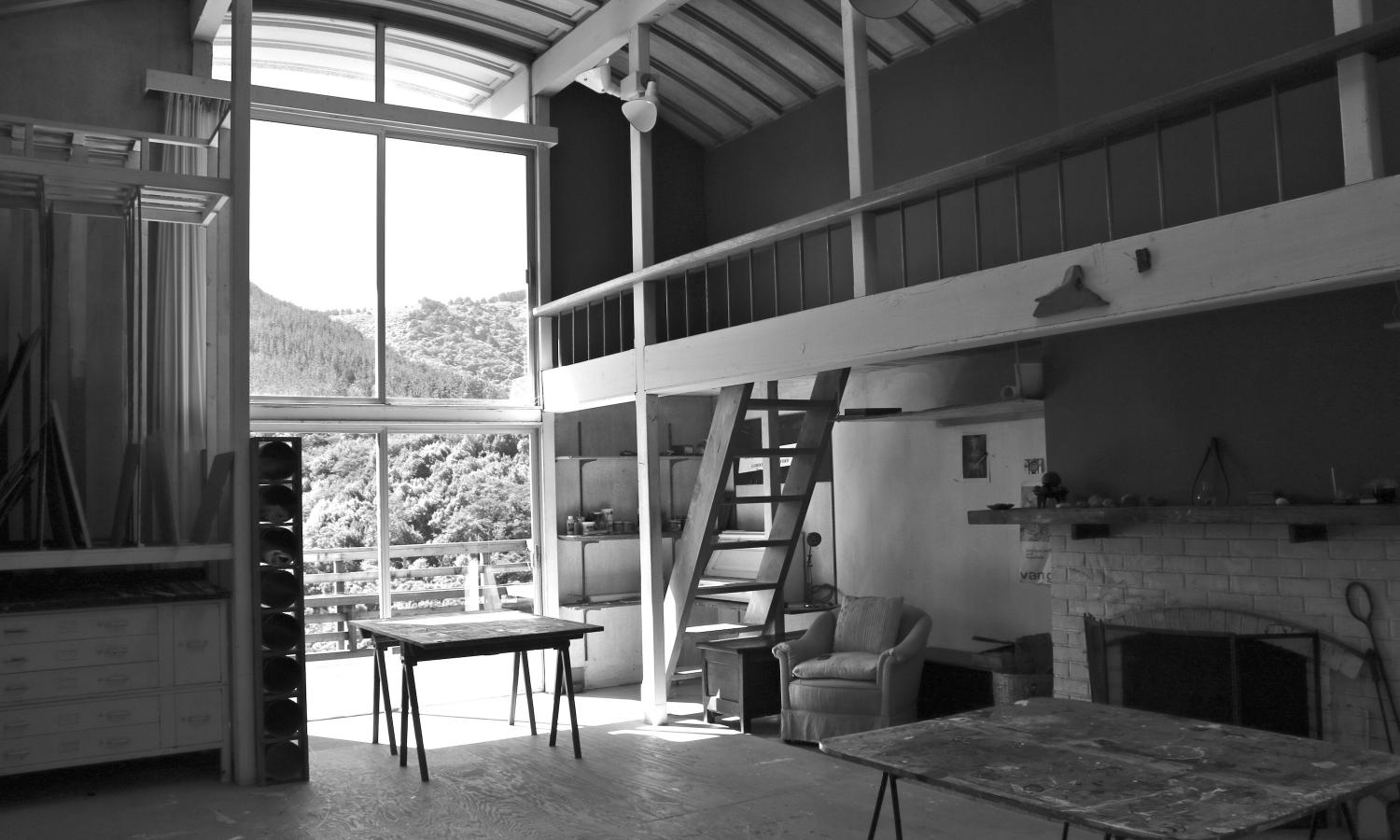
Artists-in-residence are provided with a space to live (the former studio of late writer Jacqueline Johnson) and a 650-square-foot art studio called “the Ark.” The Ark was built in 1960 and was a former studio of painter Gordon Onslow Ford and mixed media artist Fariba Bogzaran. The large studio (pictured above) has a wood burning fireplace, restroom, sink, high ceilings with upper loft, wood walls, skylights, and a private deck off the sliding glass patio doors. The cottage has WiFi, a bedroom, living room, bathroom, wood burning stove, continuous wooden deck, and a full kitchen stocked with necessary cooking utensils. Parking and laundry facilities are onsite. There is also a print shop with a Sturges press available for use by artists who are experienced printmakers. Only water-based mediums may be used on the press.

Studios/Special Equipment
Private Studios
Printers + Scanner
Printmaking Workspaces
Drying Racks
Hot Plates
Paper Soaking Sinks
Paper Tearing Table
Washer And Dryer
Studios/Facilities Accessibility
Inaccessible
Studio Support/Tech
Studio/facility orientation provided
Studio support provided by staff
On-call Studio support provided
Heat and Cool control access

Tournesol Award

Tournesol Award

Contact
Context
Urban
Remote
Residency Structure
Embedded in a national park or land trust
Residency Program Type
Studio-based (no housing)
Residency Length
1 year - 1 year
Languages
English
Average Number of Artists in Residence at a Time
1
Collaborative Residency
Must apply and be accepted individually
Discipline
Painting
Companions
Pets are not allowed
Country of Residence
Only open to artists based in country the program is located
Family Friendly
Residents granted leave during residency
Stage of Career
Emerging
Additional Expectations/Opportunities
Participate in public programming
Participate in open studio with fellow residents
How does your residency program support artists?
Opportunity to be in another context
Unstructured time
Unrestricted funding
Access to studio space to create new work
Access to equipment, specialized facilities and/or technical support
Inspiration from natural environment
Opportunities to develop relationships with local or regional artists/arts organizations
Opportunities to develop relationships with other artists/residents
Opportunities to exhibit or perform new work
Additional Eligibility Information

The Tournesol Award recognizes an emerging Bay Area painter in support of establishing and maintaining a career in the region. The Award supports a full year of artistic development, and includes a $10,000 stipend, a private studio, and a culminating exhibition or project of the artist’s choice.

Number of Artists Accepted in Most Current Year
1
Artist Stipend
10000
US Dollar (USD)
Travel Stipend/Material Stipends
Residency Fees
Grant/Scholarship/Other Funding Support
Application Fee
Application Type
Open application
What does your program provide during the residency experience?
Pre-orientation
Communication before arrival to discuss accommodations, medical conditions, or other health needs
Orientation upon arrival
Contact information and available accommodations for programs, events, and campus
Full description of accessibility on campus
Staff/volunteer giving directions
Staff/volunteer providing guidance to help locate facilities or activities
Is your campus wheelchair accessible?
Partially Accessible
Additional Accessibility Information

While a good deal of Headlands' campus and housing facilities are on ground floors and wheelchair accessible, not all aspects of Headlands' buildings, campus and surrounding park are fully accessible. There are no elevators in Headlands' buildings and there are unpaved trails and paths throughout the campus and park. Headlands can and has accommodated artist residents using wheelchairs in ground floor living spaces and with ground floor studios. Artist meals are shared in a ground floor space. Headlands is committed to being open to and accessible to all artists.

First-floor spaces in Building 944 (Mess Hall, Key Room, and Latrine) are accessible to people with mobility aids. Second- and third-floor spaces (Westwing, Eastwing, Rodeo Room, and Project Space) are currently accessible only by stairs. Note that there is a steep hill from the MUNI 76X bus stop up to the Headlands campus. During our seasonal Open Houses, special accommodations can be made for those arriving via public transportation.

Caregiver/Aide/PCA
No housing accommodations available
Accessibility Contact Name
Holly Blake
Accessibility Contact Email
hblake@headlands.org
Other Services/Aids Offered in Residency + Other Programming

We offer 2 communal artist cars for local trips.

How much of the residency experience can artists with limited mobility participate?

Dining, woodshop, and some studio spaces are accessible.

Please briefly describe the facilities and areas of the campus that are NOT accessible.

Some studio spaces, the artist library and public rooms on the upper floors of buildings are not currently accessible.

Type of Housing
No housing provided
Accessible Housing
N/A
Housing for Companion And/or Caregivers
N/A
Accessible Communal Spaces
N/A
Common/Communal Spaces Information

Dining hall, bathroom, outdoor gathering area are accessible.

Meals Provided
Some meals (at least 2 meals provided)
Additional Meals Information
Vegan meal options can be requested
Vegetarian meal options can be requested
Gluten-free meal options can be requested
Kosher and halal options can be requested
Food allergies and restrictions can be accommodated
Computer/Internet Access
Computer and internet connection provided in common area (shared)
Computer and internet connection provided in studio area (private)
Wireless Internet (WIFI)
Studios/Facilities Details

Artists Studios are located within several buildings on campus. Former military barracks, Buildings 944 and 945 boast 13-foot ceilings, large windows, period detail, and hardwood floors and house 100 to 1800 square foot studios.

Studios/Special Equipment
Private Studios
Dedicated Studio/Shop Technicians - Part Time
Soldering Workspace
Bench Grinder
Printers + Scanner
Painting Workspace (Oil)
Dedicated Wood Shop
Woodworking Tools
Tablesaw
Bandsaw
Router Table
Planer
Wood Vises And Wood Working Table
Studios/Facilities Accessibility
Partially Accessible (50% or more)
Studio Support/Tech
Studio/facility orientation provided
On-call Studio support provided

Penland Resident Artist Program

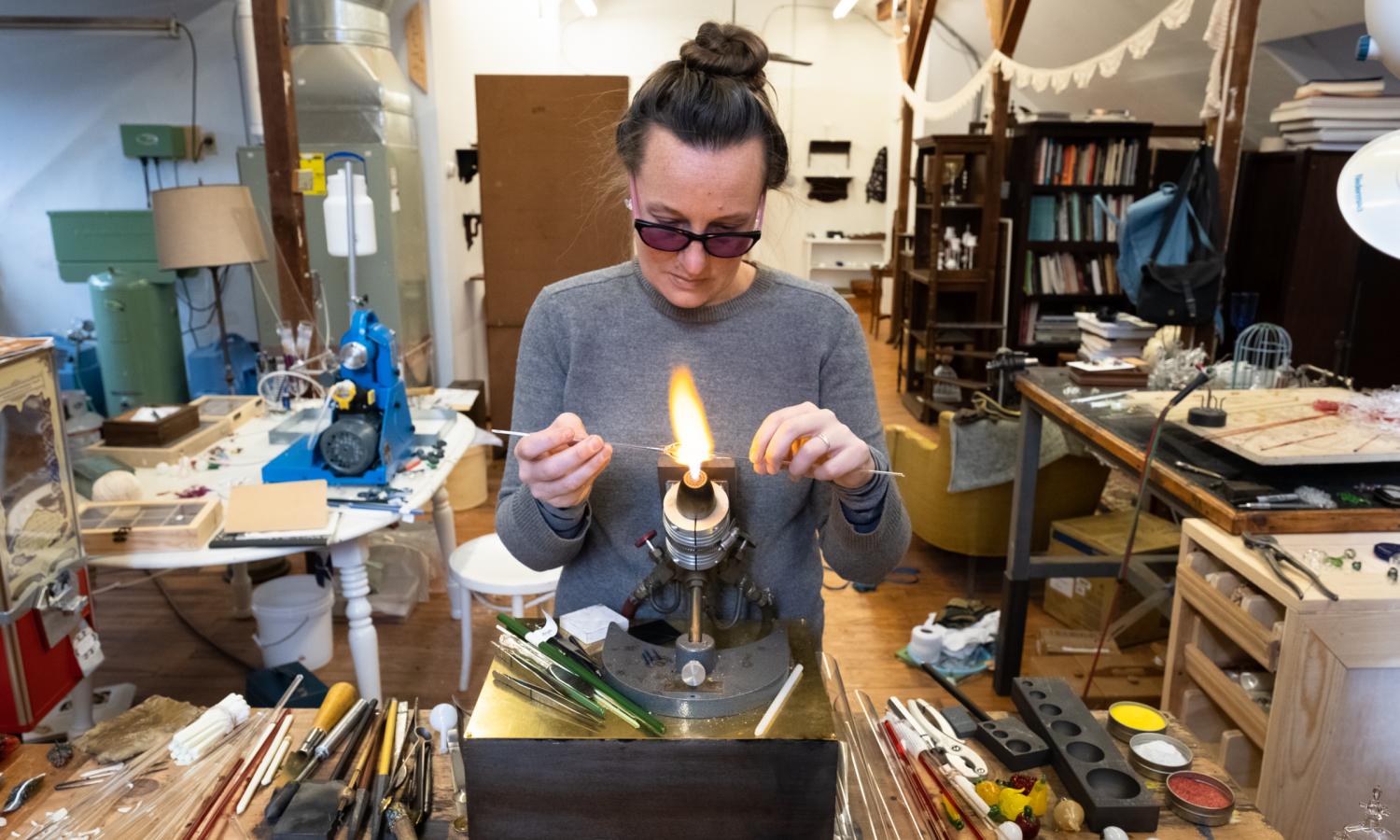
Glass artist Kit Paulson works at the torch in her studio

Glass artist Kit Paulson works at the torch in her studio

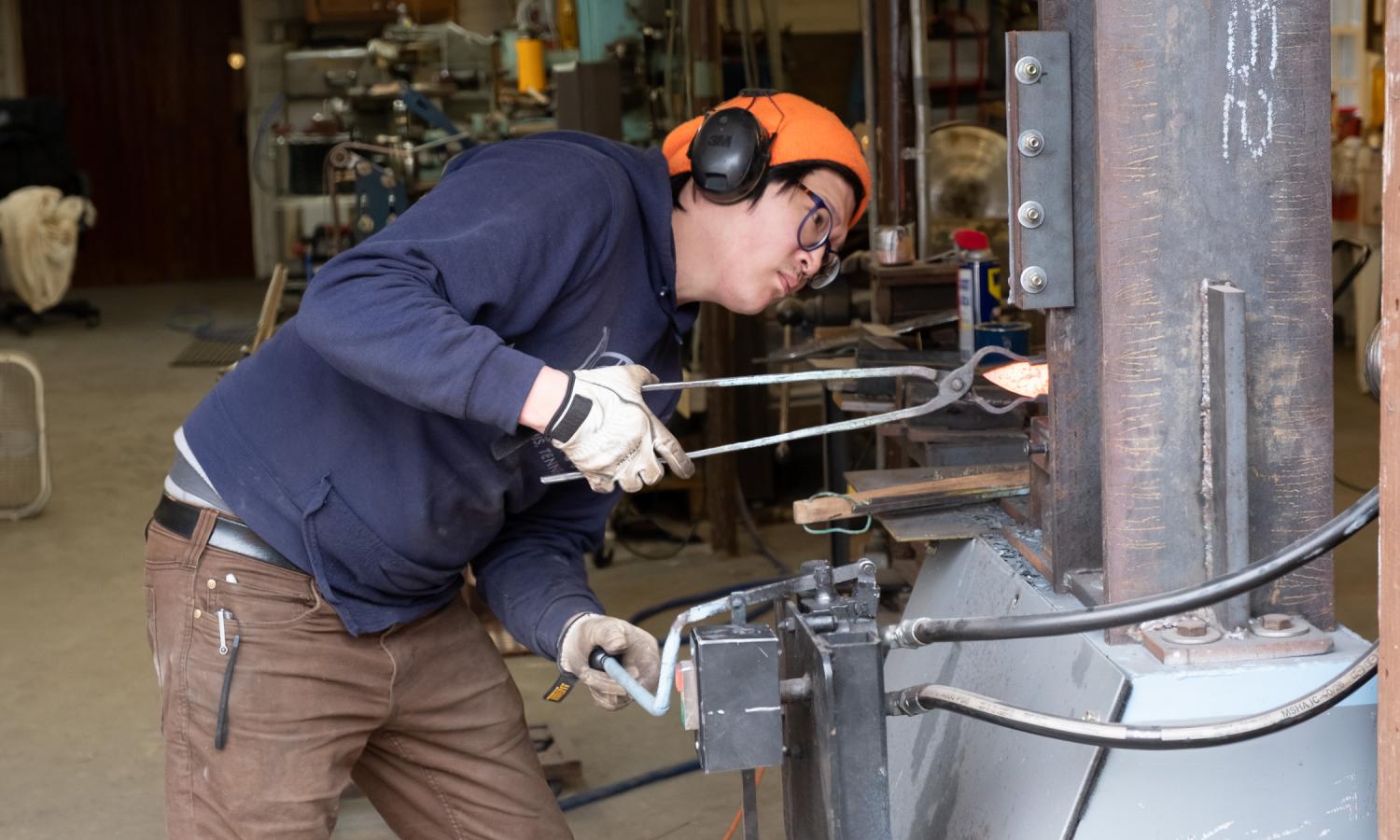
Resident artist Andrew Meers forms hot steel

Resident artist Andrew Meers forms hot steel

Silversmith Adam Whitney hammers a copper form over a series of stakes

Silversmith Adam Whitney hammers a copper form over a series of stakes

Penland Resident Artist Program

Penland, NC, United States

Penland’s Resident Artist Program, established in the 1960s, is one of the longest running residencies in the US. The program is designed for professional craft artists who are at a pivotal moment in their creative practice or career—the residency is an opportunity for them to pursue objectives that will have a lasting effect on their work and their lives. Depending on the nature of an applicant’s goals, we now offer two options for interested candidates.

  • 1-year project based residency; artists submit a project proposal and may use the time  to push technical and conceptual boundaries, to conduct research and development in a particular topic or process, or to explore an entirely new aspect of their work.  
  • 3-year career transition residency; artists submit objectives to advance their studio practice, to work out the practicalities of making a living, or to make a formative transition in their career path.
Contact

PO Box 37
Penland, NC 28765
United States

Year Founded
1968
Context
Rural
Remote
Residency Structure
Embedded in an arts or cultural organization (including theater + gallery)
Embedded in a craft school
Embedded in historic site
Residency Program Type
Studio-based (with housing)
Residency Length
1 year - 3 years
Languages
English
Average Number of Artists in Residence at a Time
7
Collaborative Residency
May apply as a team
Discipline
Blacksmithing
Book Arts
Ceramics/Clay Arts/Pottery
Drawing
Fine Metals/Jewelry
Glass Arts
Installation Arts
Mixed Media
Painting
Paper Arts
Photography
Printmaking
Public Art
Sculpture
Textile & Fiber Arts/Weaving
Woodworking
Companions
Pets (Non-service animals)
Country of Residence
Open to artists based anywhere in the world
Family Friendly
Residents granted leave during residency
Spouses/partners allowed for full stay (non-collaborators)
Children allowed for full stay
Stage of Career
Mid-career
Established
Additional Expectations/Opportunities
Donate a work of art
Participate in public programming
Participate in open studio with fellow residents
Give artist talk or presentation
How does your residency program support artists?
Opportunity to be in another context
Immersion in new culture and/context
Unstructured time
Art production support
Access to studio space to create new work
Access to training on new artistic techniques and/or apprenticeship
Inspiration from natural environment
Inspiration from cultural context
Professional development support and/or trainings
Opportunities to develop relationships with local or regional artists/arts organizations
Opportunities to collaborate with other artists/residents
Opportunities to develop relationships with other artists/residents
Opportunities for work with the local community
Opportunities to exhibit or perform new work
Additional Eligibility Information

We encourage self-motivated, focused individuals working in traditional and nontraditional studio crafts to apply for a residency. No prior connection to the school is required to apply. Penland celebrates varied ideas, world views, and personal characteristics, and is committed to being an organization that welcomes and respects everyone regardless of age, ability, ethnicity, race, religion, philosophical or political beliefs, sexual orientation, gender identity or expression, nationality, geographic origin, and socioeconomic status.

Applications are reviewed by a national committee of artist peers, curators, educators, and other arts professionals who are knowledgeable about material-based work and the craft field in general and/or understand what it takes to be successful in a self-directed residency. Panelists rotate frequently to bring a range of new perspectives to the application process, and creating a diverse group of residents is one of the stated goals of selection. 

 Applications are evaluated using the following criteria:

  • We factor equity and diversity into all of our decision making.
  • Portfolios are scored in these three areas: innovation, intention, and skill.
  • Applications must present a clear, compelling proposal for a 1-year project or 3-year objectives that can be well supported, informed, and inspired by a residency at Penland.
  • CVs are reviewed to determine if a candidate is actively engaged in professional artistic practices.
  • The particular qualities of the available studios and a balance of media will also be a factor.

All media taught at Penland are considered appropriate for the Resident Artist Program: books, clay, drawing/painting, glass, letterpress, iron, metals, papermaking, photography, printmaking, textiles, wood. Most resident studios are not media specific; however, the particular qualities of the available studios and the balance of media represented by the current group of resident artists sometimes limits each year’s openings to a range of media.

The experience of living at Penland is shaped in many ways by its rural location, its mountainous terrain, and by the age and nature of the facility. A successful residency depends in part on expectations consistent with what Penland has to offer.


Number of Artists Accepted in Most Current Year
4
Total Applicant Pool in Most Current Year
119
Artist Stipend
0
US Dollar (USD)
Travel Stipend/Material Stipends
0
US Dollar (USD)
Residency Fees
0
US Dollar (USD)
Fee Details

There is no cost to residents for housing, studio space, or utilities.

Artists are responsible for providing tools and equipment vital to their daily studio practices; resident artist studios are simply raw studio spaces. 

Artists are responsible for travel expenses to and from Penland

Grant/Scholarship/Other Funding Support
0
US Dollar (USD)
Application Fee
30
US Dollar (USD)
Application Type
Open application
What does your program provide during the residency experience?
Pre-orientation
Manual / handbook before arrival
Communication before arrival to discuss accommodations, medical conditions, or other health needs
Orientation upon arrival
Full description of accessibility on campus
High contrast, clear way-finding and/or signage
Is your campus wheelchair accessible?
Partially Accessible
Additional Accessibility Information

The Penland campus is located on uneven, hilly terrain that poses accessibility challenges. The following studios are wheelchair accessible: books, clay, drawing and painting, glass, iron, letterpress and printmaking, lower metals, photography, papermaking, and wood. The upper metals studio and both textiles studios have stairs that limit access; both are made partially accessible by stair lifts that will lift a person but not a wheelchair or other mobility aids.

Housing that meets ADA standards is available in Arbor House and in some units in The Roost, Dorm 54, Radcliffe, and the Sleeping Cabins. Accessible parking is found at the dining hall and at all studios. Several golf carts are available for use on campus.

While we do our best to accommodate all students, we know that our campus is not accessible for everyone. We are happy to talk with you about what our campus can or cannot do in this regard. Please contact our registrar to discuss in more depth how we can help you come to Penland: 828-765-2359, ext. 1306 or registrar@penland.org. And please know that improved access is part of our long-range campus planning.

We are working on adding more detailed accessibility information to this page. Please check back.

Caregiver/Aide/PCA
Case by case consideration by staff
Accessibility Contact Name
Leslie Noell
Accessibility Contact Email
creativedirector@penland.org
Accessibility Contact Phone Number
Type of Housing
Private housing on campus (individual apartment/cabin/house)
Accessible Housing
ADA Compliant
Partially Accessible (50% or more)
Inaccessible
Housing for Companion And/or Caregivers
Case by case consideration
Accessible Communal Spaces
ADA Compliant
Inaccessible
Additional Housing Information
Access to laundry on campus
Access to laundry in housing
WIFI available in housing
Heat and Cool control managed by resident
Meals Provided
Some meals (at least 2 meals provided)
Residents have access to private kitchen
Additional Meals Information
Vegan meal options can be requested
Vegetarian meal options can be requested
Computer/Internet Access
Computer and internet connection provided in common area (shared)
Computer and internet connection provided in studio area (private)
Wireless Internet (WIFI)
Studios/Facilities Details

The Resident Artist studios are clustered in and around a converted historic dairy barn and are located about half a mile down the road (a five minute walk) from Penland’s main campus. All studios have an open floor plan with one or two smaller areas for storage or dedicated use. Each studio is unique and each has its own idiosyncratic features in keeping with the age of the building and the fact that it wasn’t originally designed to be artists’ studios. Five of the studios are on the ground floor and have concrete floors; two of the studios are only accessible by stairs and have wood floors; each studio has a utility sink and access to a shared restroom. The average studio size is about 800 square feet. Each artist enjoys 24-hour access to their private studio.


Residents are responsible for outfitting their studios with equipment and tools relevant to their daily studio practice. Studios are not furnished, and each new resident will find a blank slate when they arrive. One-year residents must bring the tools and equipment they need to pursue their proposed project. Three-year residents bring everything they need to produce work and usually spend the first several weeks of their residencies setting up their studios before they begin to produce work. Our staff works closely with each new resident artist to make sure their studio meets basic needs in terms of utilities and safety; staff can also provide support for installing specialized or heavy equipment, accepting freight deliveries, and troubleshooting electrical or ventilation needs.

Studios/Special Equipment
Private Studios
Studios/Facilities Accessibility
Partially Accessible (50% or more)

Studio Workspace Residency

Studio Workspace Residency

Kingston, NY, United States

The Studio Workspace Residency is an opportunity for artists to create new work and fully immerse themselves in WSW’s supportive environment. We invite applications from artists at any stage of their careers. This residency gives artists the gift of time, an uninterrupted period to live and work away from the stresses of daily life. Artists may choose to work in any one or more of our studios: intaglio, letterpress, papermaking, screenprinting, darkroom photography, or ceramics (facilities reopen 2026).

Artists receive a thorough studio orientation and are expected to work independently, although studio staff is available to provide assistance. Deep technical assistance can be arranged for an additional fee. Artists must provide their own materials, some of which can be purchased from WSW.

As of 2019, all workspace residencies are fully subsidized! This means that while artists are still responsible for their own travel, materials, meals, and other personal incidentals while in residence, WSW provides housing and studio space at no cost.

Contact

PO Box 489
Rosendale, NY 12472
United States

Year Founded
1974
Context
Rural
Residency Structure
Embedded in an arts or cultural organization (including theater + gallery)
Embedded in historic site
Residency Program Type
Studio-based (with housing)
Residency Length
4 weeks - 6 weeks
Languages
English
Average Number of Artists in Residence at a Time
4
Collaborative Residency
May apply as a team
Discipline
Book Arts
Interdisciplinary Arts
Multimedia Arts
Paper Arts
Printmaking
Visual Arts
Companions
Pets are not allowed
Country of Residence
Open to artists based anywhere in the world
Family Friendly
N/A
Stage of Career
Any stage of career
Additional Expectations/Opportunities
Give artist talk or presentation
How does your residency program support artists?
Opportunity to be in another context
Unstructured time
Restricted funding
Access to studio space to create new work
Access to equipment, specialized facilities and/or technical support
Opportunities to collaborate with other artists/residents
Opportunities to develop relationships with other artists/residents
Additional Eligibility Information

Since our founding in 1974, Women’s Studio Workshop has been a professional artist studio dedicated to the creation of community, opportunity, empowerment, and development for women artists in all stages of their careers.  As we continue to serve this mission, we believe that we can honor our core values and address gender equity more fully by explicitly expanding our concept of gender beyond patriarchal frames of reference. 

WSW supports all women, trans, intersex, nonbinary, and genderfluid people in residencies and internships. Classes, studio rentals, and public events are open to all.

What does this mean when you visit the studio and stay on campus? 

  • we intentionally create space to honor pronouns and names
  • we uphold a set of community guidelines and have systems in place to report conflict
  • we firmly believe in fostering an environment of communication, exploration, and bold expression that is respectful, safe, and accepting of all the members of our community.
Number of Artists Accepted in Most Current Year
6
Total Applicant Pool in Most Current Year
175
Artist Stipend
0
US Dollar (USD)
Travel Stipend/Material Stipends
0
US Dollar (USD)
Residency Fees
0
US Dollar (USD)
Grant/Scholarship/Other Funding Support
0
US Dollar (USD)
Application Fee
0
US Dollar (USD)
Application Type
Open application
What does your program provide during the residency experience?
Manual / handbook before arrival
Communication before arrival to discuss accommodations, medical conditions, or other health needs
Orientation upon arrival
Contact information and available accommodations for programs, events, and campus
Full description of accessibility on campus
Staff/volunteer providing guidance to help locate facilities or activities
Contact info for accessibility requests for event/programming
Is your campus wheelchair accessible?
Partially Accessible
Caregiver/Aide/PCA
Case by case consideration by staff
Accessibility Contact Name
Carlie Waganer
Accessibility Contact Email
carlie@wsworkshop.org
Accessibility Contact Phone Number
How much of the residency experience can artists with limited mobility participate?

Intaglio, papermaking, book arts, and letterpress studios are wheelchair accessible.

Please briefly describe the facilities and areas of the campus that are NOT accessible.

Some artist apartments are inaccessible, upstairs silkscreen studio and offices are inaccessible.

Type of Housing
Private housing on campus (individual apartment/cabin/house)
Accessible Housing
Partially Accessible (50% or more)
Housing for Companion And/or Caregivers
Case by case consideration
Accessible Communal Spaces
ADA Compliant
Common/Communal Spaces Information

Wheelchair accessible common room, kitchen, bathroom, and laundry spaces.

Additional Housing Information
Access to laundry on campus
Meals Provided
Residents have access to shared kitchen
Residents have access to private kitchen
Additional Meals Information
N/A
Computer/Internet Access
Wireless Internet (WIFI)
Studios/Facilities Details

WSW has been making quality handmade papers since 1979. Our Papermaking studio is designed for sheet-forming processes, low relief, and three-dimensional work.

In 1999, WSW began the ArtFarm program, which allows us to grow our own fibers  for hand papermaking. Through ArtFarm we’ve now tested over one hundred native and invasive species for their fiber strength, coloring capacity, print worthiness, and translucency.

Papermaking Studio Equipment List

  • 1000 sq. ft. studio space
  • Two 1-1/2 lb. Hollander beaters: one David Reina and one custom built
  • 30″ x 40″ hydraulic press
  • Vats up to 22″x 28″
  • 4′ x 6′ custom stainless steel vacuum table
  • A variety of moulds and deckles including small sugetas
  • 30″ x 40″ stack dryer
  • Outdoor cooking facility for fibers and dyes

In WSW’s Silkscreen studio, artists can screenprint on paper or fabric, using traditional or photo techniques. We only use water based/acrylic media. For a fee, we can also make screens for artists who are working on projects outside of our studios.

Silkscreen Studio Equipment List

  • 900 sq. ft. studio space
  • Exposing table 33″ x 45″
  • Drying rack 45″ x 68″
  • Wide range of screens up to 3′ x 4′
  • Power washer
  • Photo facilities for images up to 30″ x 40″
  • 32 linear feet of textile printing surface
  • Squeegees from 4″ to 34″

WSW’s Letterpress studio is equipped to handle projects that employ handset lead or wood type; photopolymer plates; wood or linoleum block; and die cut imagery.

Letterpress Studio Equipment List

  • 11″ x 18″ Chandler and Price platen press
  • Two 14″ x 18″ Vandercook Proof press No. 3 (manual)
  • One 19″ x 26″ Vandercook SP20 (electric)
  • A variety of lead and wooden typefaces
  • 9″ x 12″ magnetic base
  • 13″ x 24″ Line-O-Scribe proof press
  • Vacuum platemaker 23.5″ x 29.5″

Rather than use traditional acids to etch plates, Women’s Studio Workshop uses non-toxic materials: ferric chloride for copper and salt etch for aluminum and zinc. We generally stock copper and plastic plates, along with a selection of fine print and handmade papers.

Etching Studio Equipment List

  • 1200 sq. ft. studio space
  • Two Charles Brand press, 30″ x 50″ and 26″ x 48″
  • 18″ x 22″ viscosity rollers
  • A separate ventilated acid room with a 4’ x 29” workspace and stainless steel sink
  • Hot plate 20”x 24”
  • Flexible shaft rotary tool
  • 18″ x 24″ vertical tank with Ferric Chloride
  • Etching trays up to 25″ x 30″
  • Drying rack 30″ x 46″
  • Damp/dry box 28″ x 42″
  • Glass top inking table 26″ x 8′
  • Photopolymer platemaking capacity up to 23″ x 29″

WSW’s Book Arts equipment allow artists to create and bind work, ranging from the simplest saddle-stitched book to the finest codex.

Book Arts Studio Equipment List

  • Electric guillotine 33″ throat
  • Board shear (Jacques) 40″
  • Two book presses: 10″ x 13″ and 11″ x 16″
  • English sewing frame
  • English cutting frame
  • Standard wooden press
  • Cradles
  • Spiral binder
  • Saddle stitcher

WSW maintains a complete black and white darkroom, as well as limited digital facilities that may be used by special request. Artists can comfortably print up to 16”x 20” in this space.

Darkroom Studio Equipment List

  • Two Omega D2 enlargers with 35mm to 4″ x 5″ negative capacity
  • Omega B22XL enlarger
  • Bessler 4″ x 5″
  • Dry mount facilities
  • Contact frames up to 20″ x 25″
  • Saunders easels 11″ x 14″ and 24″ x 24″
  • Focus scopes
  • 100″ sink
  • Trays to 20″ x 24″

Artists working in any of our studios have access to the digital resources in our studio with assistance from a trained staff person. Additional resources are available through our relationship with the SUNY New Paltz Digital Fabrication Lab, and can be arranged on a case-by-case basis.

In-Studio Digital Resources List

  • 28″ Vinyl Plotter and Editing Software
  • 24″ Epson Printer
  • Large format scanner
  • HP Color Laser Printer
  • Kyocera Black and White Inkjet Printer
  • Xerox Machine
  • Adobe Creative Suite
Studios/Special Equipment
Shared Studios
Exhibition / Installation Space
Darkroom (Black And White)
Darkroom (Color)
Large Format Printer / Plotter
Large Format Scanner
Printers + Scanner
Photo + Video Editing Suite
Printmaking Workspaces
Book Arts Facilities
Etching Press
Glass Inking Table
Drying Racks
Hot Plates
Paper Soaking Sinks
Paper Tearing Table
Acid Room
Silkscreen Studio
Light Tables
Large Sinks
Large Exposure Unit
Washout Room
Papermaking Studio
Dye Area
Other
Studios/Facilities Accessibility
Partially Accessible (50% or more)
Studio Support/Tech
Studio/facility orientation provided
Studio support provided by staff
Studios/facilities Details

Penland Core Fellowship Program

Core fellow Lars Shimabukuro working in the Penland wood studio

Core fellow Lars Shimabukuro working in the Penland wood studio

Core fellows Daniel Beck and Seth Gould working together in a blacksmithing workshop

Core fellows Daniel Beck and Seth Gould working together in a blacksmithing workshop

Core Fellow Tony Santoyo working between a large painting and ceramic surfaces

Core Fellow Tony Santoyo working between a large painting and ceramic surfaces

Penland Core Fellowship Program

Penland, NC, United States

The Penland Core Fellowship Program is a two-year work-study fellowship for early career artists looking to expand technical skills and material fluency while working to support the day-to-day operations of a craft school. Artists of all backgrounds who want to advance their educational goals and explore their capacity to contribute to a thriving creative community are encouraged to apply. The goal of the program is to shape the future of contemporary craft by creating opportunity, connection, and immersive education for early career artists who bring a range of perspectives and goals to the school.

Penland core fellows fully engage with Penland by taking several workshops each year in familiar or new media, and performing integral jobs for the school. Penland’s ever-changing learning environment allows core fellows to study with world-class teaching artists from all over the US and abroad; this is a unique opportunity to create an educational path that responds to individual goals. The program can serve as preparation for careers in creative, non-profit, educational, and entrepreneurial sectors. A measure of the program’s success is the number of core fellows who have gone on to make a life in craft. To date over 200 people have participated in the program, and about 80% are practicing artists or professional contributors to the field of craft today.

The work that core fellows do for the school—jobs such as weekend cook, and entertainment coordinator—places them at the heart of Penland’s daily operations and gives them an opportunity to develop leadership skills and connect with artists from all over by working cooperatively towards a common goal. Core fellows are often a bridge between the staff and the studios and serve a unique role in helping others have a meaningful experience at Penland.

Core fellows live and work together and often learn as much from each other as they do from their instructors and mentors. In the process, they have a chance to form close friendships and often become part of each other’s lifelong creative and professional networks.

Contact

PO Box 37
Penland, NC 28765
United States

Year Founded
1970
Context
Rural
Remote
Residency Structure
Embedded in an arts or cultural organization (including theater + gallery)
Embedded in a craft school
Residency program within a school, college or university
Embedded in historic site
Residency Program Type
Studio-based (with housing)
Retreat
Experiential
Residency Length
2 years - 2 years
Languages
English
Average Number of Artists in Residence at a Time
8
Collaborative Residency
N/A
Discipline
Drawing
Mixed Media
Painting
Printmaking
Sculpture
Blacksmithing
Book Arts
Ceramics/Clay Arts/Pottery
Costume/Fashion Design
Fine Metals/Jewelry
Glass Arts
Paper Arts
Textile & Fiber Arts/Weaving
Woodworking
Photography
Companions
Pets are not allowed
Country of Residence
Only open to artists based in country the program is located
Family Friendly
N/A
Stage of Career
Emerging
Additional Expectations/Opportunities
Participate in open studio with fellow residents
Give artist talk or presentation
How does your residency program support artists?
Opportunity to be in another context
Immersion in new culture and/context
Art production support
Access to studio space to create new work
Access to equipment, specialized facilities and/or technical support
Access to training on new artistic techniques and/or apprenticeship
Inspiration from natural environment
Inspiration from cultural context
Professional development support and/or trainings
Opportunities to develop relationships with local or regional artists/arts organizations
Opportunities to collaborate with other artists/residents
Opportunities to develop relationships with other artists/residents
Opportunities for work with the local community
Opportunities to exhibit or perform new work
Additional Eligibility Information

Applications are reviewed by a national panel of curators, educators, and other arts professionals as well as Penland staff. Panelists rotate each year to bring a range of new perspectives to the application process, and creating a diverse group of fellows is one of the stated goals of selection.

Specifically, applications will be reviewed with the following goals in mind:

  1. Program Goals

    We believe the Core Fellowship Program can shape the future of contemporary craft by providing access to artists who can benefit from what this program has to offer—especially artists who have historically been underrepresented at the school and within the field of craft. 
  2. Collaboration and Group Dynamic

    Core fellows share a house and are involved in collaborative tasks and decision-making along with the normal complexities of group living. They also work and take classes with a constantly changing community of instructors and students. We are looking for participants who can thrive as part of a group and community but also know when and how to step away and recharge as needed. Our goal is to bring together a diverse group of artists with a range of experience, perspectives, strengths, and goals. It is also important that the interests of each core group span a range of media taught at Penland.
  3. Relevant Experience

    Core fellows are asked to do many different kinds of work, ranging from basic physical labor to supervisory tasks. They must be adaptive to changing tasks and situations and committed to working cooperatively and confidently, sometimes with minimal direction or supervision. Penland staff will review each candidate’s application, CV, and reference to evaluate relevant experience (employment, internships, or volunteer work) and specific skills and accomplishments (what kind of work you have done, what contributions you have made, the consistency of your commitments, practical and/or supervisory experience). In addition to work experience, life experience and self-motivation are assets for this program. 
  4. Artwork

    We are looking for work that shows a strong foundation and enough direction to tell us that the candidate will be able to take advantage of what this unique program offers. The review panel will score each portfolio in the following areas: proficient and/or intentional execution; clear/unique point of view; inquisitiveness and versatility; their interest in the work and its potential for growth. Candidates must be interested in working with materials and processes that are at the heart of our immersive workshops.
Number of Artists Accepted in Most Current Year
4
Total Applicant Pool in Most Current Year
130
Artist Stipend
13000
US Dollar (USD)
Travel Stipend/Material Stipends
0
US Dollar (USD)
Residency Fees
Grant/Scholarship/Other Funding Support
0
US Dollar (USD)
Application Fee
25
US Dollar (USD)
Application Type
Open application
What does your program provide during the residency experience?
Pre-orientation
Manual / handbook before arrival
Communication before arrival to discuss accommodations, medical conditions, or other health needs
Orientation upon arrival
Contact information and available accommodations for programs, events, and campus
Full description of accessibility on campus
Links to resources, effective practices, grievance procedures, etc.
High contrast, clear way-finding and/or signage
Is your campus wheelchair accessible?
Partially Accessible
Additional Accessibility Information

The Penland campus is located on uneven, hilly terrain that poses accessibility challenges. The following studios are wheelchair accessible: books, clay, drawing and painting, glass, iron, letterpress and printmaking, lower metals, photography, papermaking, and wood. The upper metals studio and both textiles studios have stairs that limit access; both are made partially accessible by stair lifts that will lift a person but not a wheelchair or other mobility aids.

Housing that meets ADA standards is available in Arbor House and in some units in The Roost, Dorm 54, Radcliffe, and the Sleeping Cabins. Accessible parking is found at the dining hall and at all studios. Several golf carts are available for use on campus.

While we do our best to accommodate all students, we know that our campus is not accessible for everyone. We are happy to talk with you about what our campus can or cannot do in this regard. Please contact our registrar to discuss in more depth how we can help you come to Penland: 828-765-2359, ext. 1306 or registrar@penland.org. And please know that improved access is part of our long-range campus planning.

We are working on adding more detailed accessibility information to this page. Please check back.

Caregiver/Aide/PCA
Case by case consideration by staff
Accessibility Contact Name
Ian Henderson
Accessibility Contact Email
operationsdir@penland.org
Accessibility Contact Phone Number
Type of Housing
Private bedroom in a shared housing facility on campus
Accessible Housing
ADA Compliant
Housing for Companion And/or Caregivers
No housing accommodations available
Accessible Communal Spaces
ADA Compliant
Additional Housing Information
Access to laundry in housing
WIFI available in housing
Heat and Cool control managed by resident
Meals Provided
Some meals (at least 2 meals provided)
Residents have access to shared kitchen
Additional Meals Information
N/A
Vegan meal options can be requested
Vegetarian meal options can be requested
Computer/Internet Access
Computer and internet connection provided in common area (shared)
Computer and internet connection provided in studio area (private)
Wireless Internet (WIFI)
Studios/Special Equipment
Shared Studios
Dedicated Studio/Shop Technicians - Full Time
Exhibition / Installation Space
Ceramics Workspace
Electric Wheels
Kick Wheels
Slab Roller
Clay Mixers
Plaster Room
Raku Kiln
Electric Kiln
Gas Kiln
Glass Blowing Workspace
Glass Casting
Dedicated Metal Shop
Heavy Metals / Blacksmithing
Fine Metals / Jewelry Making
Jeweler’s Bench
Anvils, Stakes + Hammers
Hydraulic Press
Soldering Workspace
Gas/Oxy Torches
Acetylene/Air Torches
Soldering Picks+Tweezers
Solderite Boards
Finishing Room
Bench Grinder
Buffing Machine
Bead Blaster
Casting Room
Enameling Kilns
Electroforming + Etching Room
Darkroom (Black And White)
Lighting Studio/Green Screen
Large Format Printer / Plotter
Printers + Scanner
Photo + Video Editing Suite
Painting Workspace (Oil)
Easels
Drawing Benches
Printmaking Workspaces
Book Arts Facilities
Etching Press
Glass Inking Table
Drying Racks
Aquatint Box
Hot Plates
Metal Plate Shear
Paper Soaking Sinks
Paper Tearing Table
Acid Room
Silkscreen Studio
Lithography Studio
Large Sinks
Large Exposure Unit
Washout Room
Papermaking Studio
Textiles Workspace
Floor Looms
Fiber Arts Workspace
Dye Area
Padded Screen Print Tables
Hooded Dye Mixing Station
Drying Room
Washer And Dryer
Dedicated Wood Shop
Woodworking Tools
Tablesaw
Bandsaw
Router Table
Wood Bending Equipment
Jointer
Planer
Wood Vises And Wood Working Table
Studios/Facilities Accessibility
Partially Accessible (50% or more)
Studio Support/Tech
Studio/facility orientation provided
Studio support provided by staff
Studios/facilities Details