Penland Core Fellowship Program

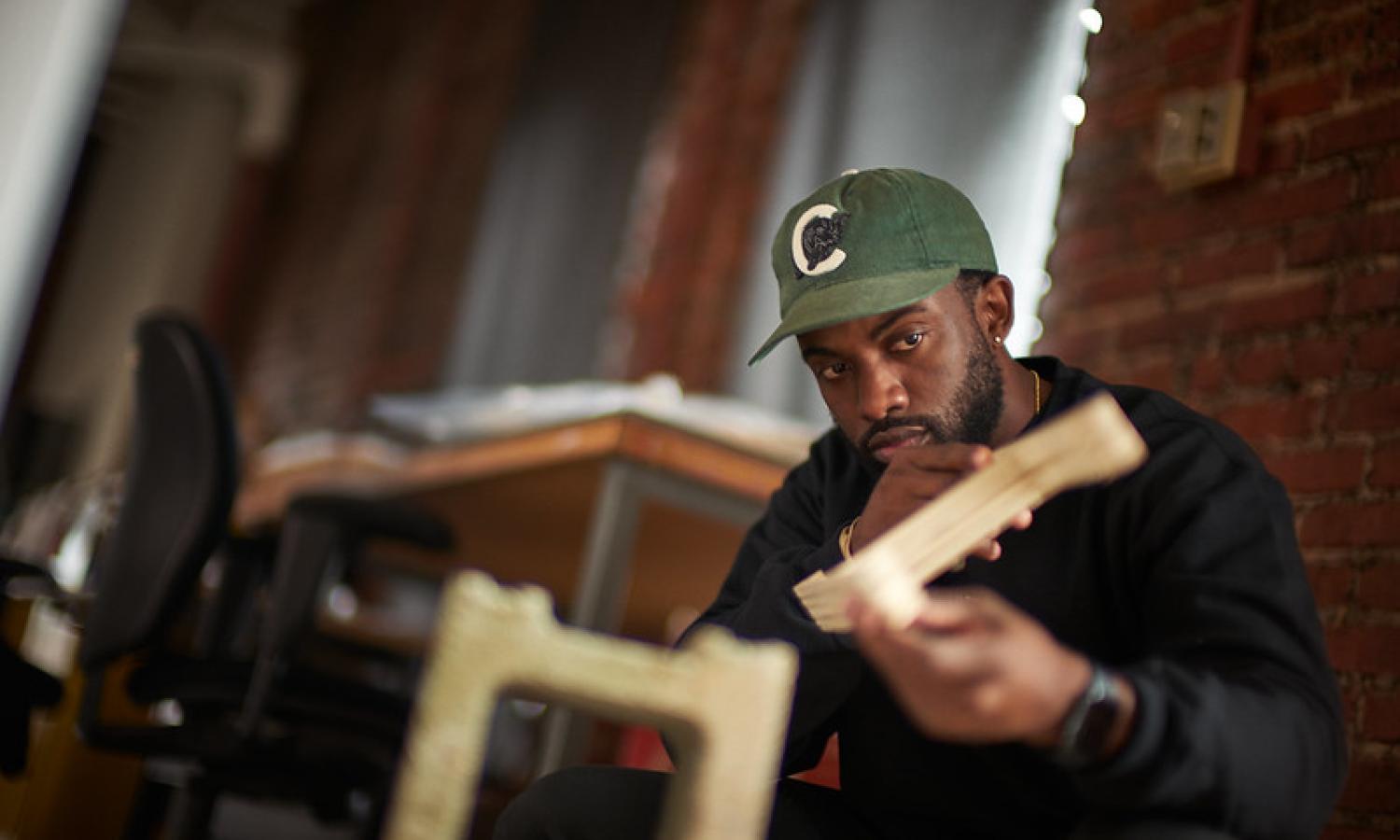
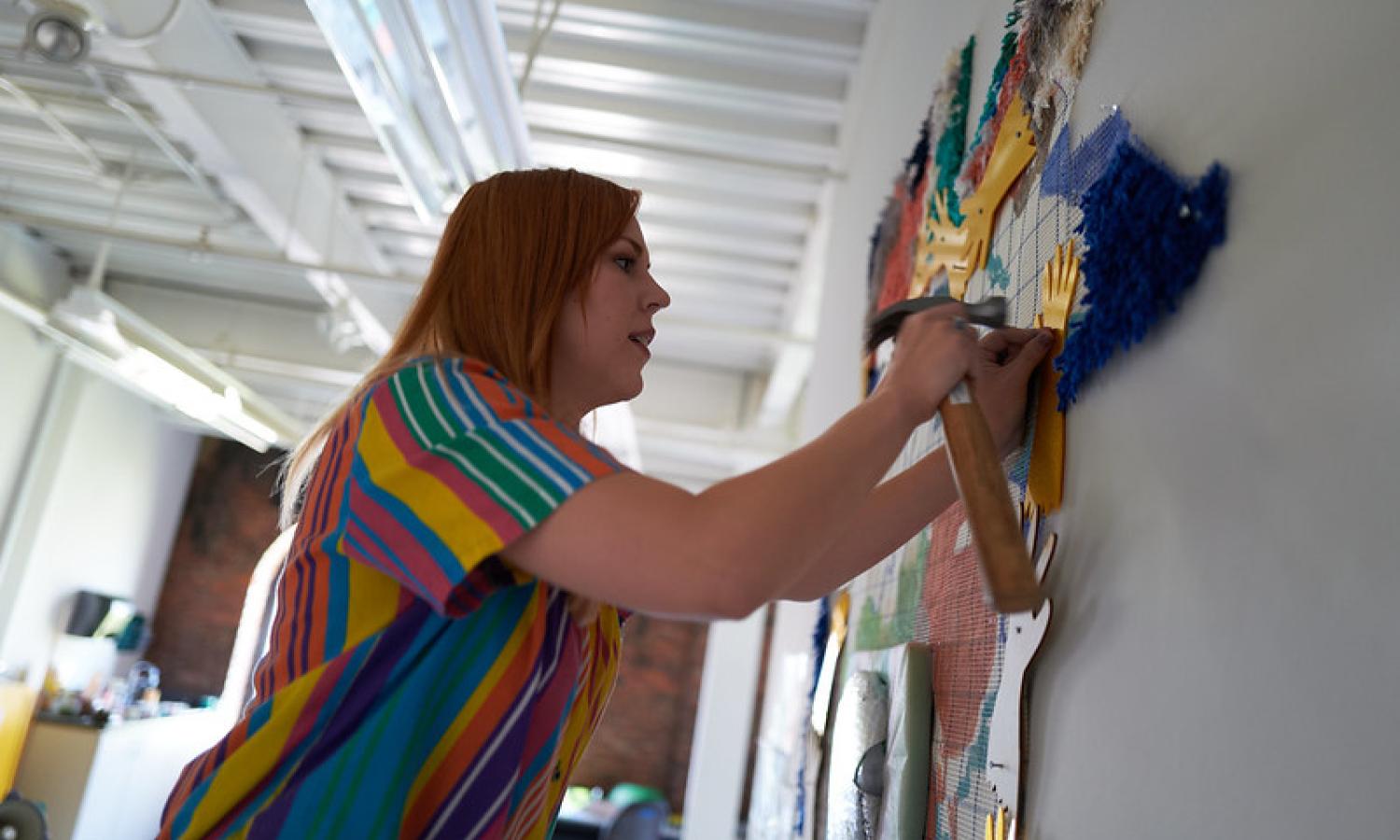
Core fellow Lars Shimabukuro working in the Penland wood studio

Core fellow Lars Shimabukuro working in the Penland wood studio

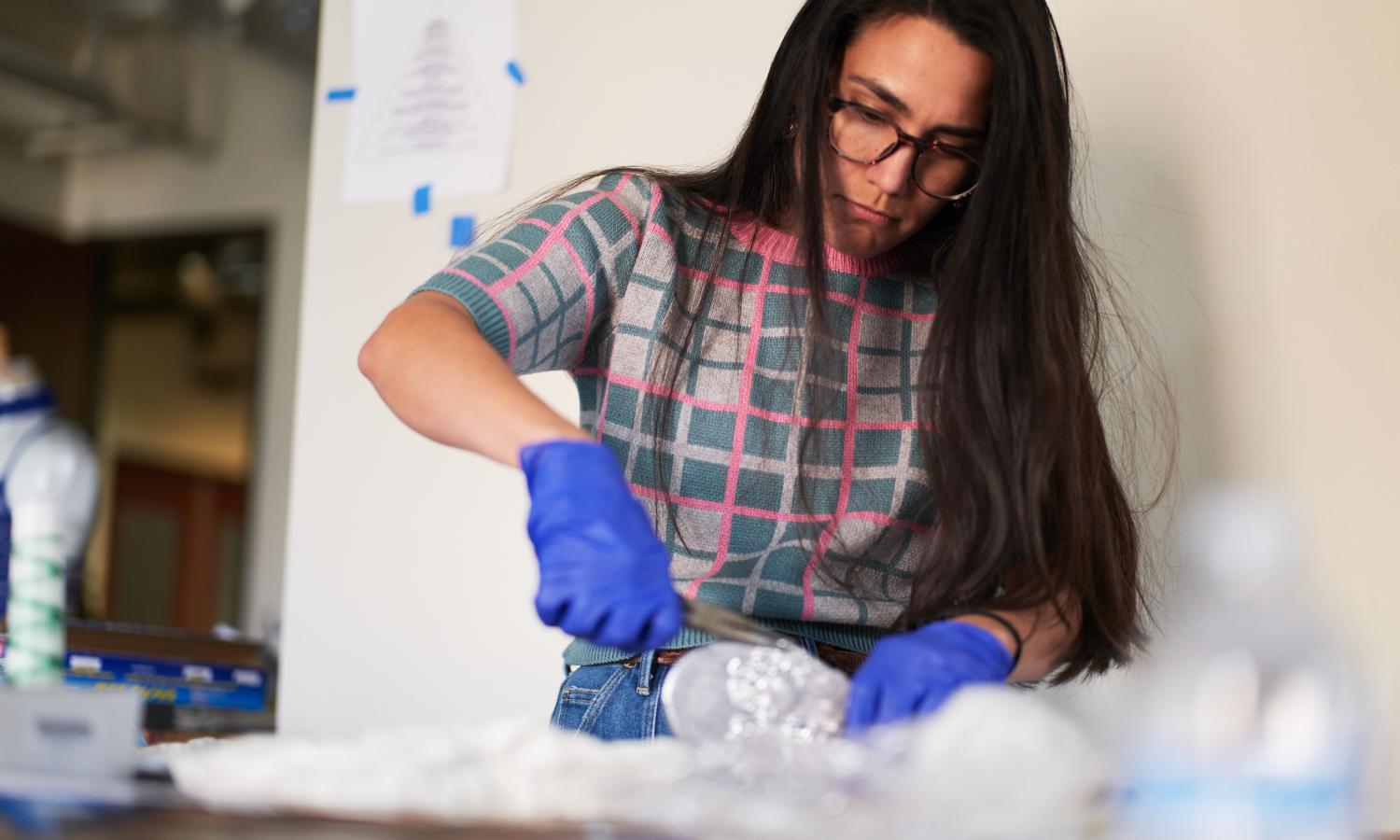
Core fellows Daniel Beck and Seth Gould working together in a blacksmithing workshop

Core fellows Daniel Beck and Seth Gould working together in a blacksmithing workshop

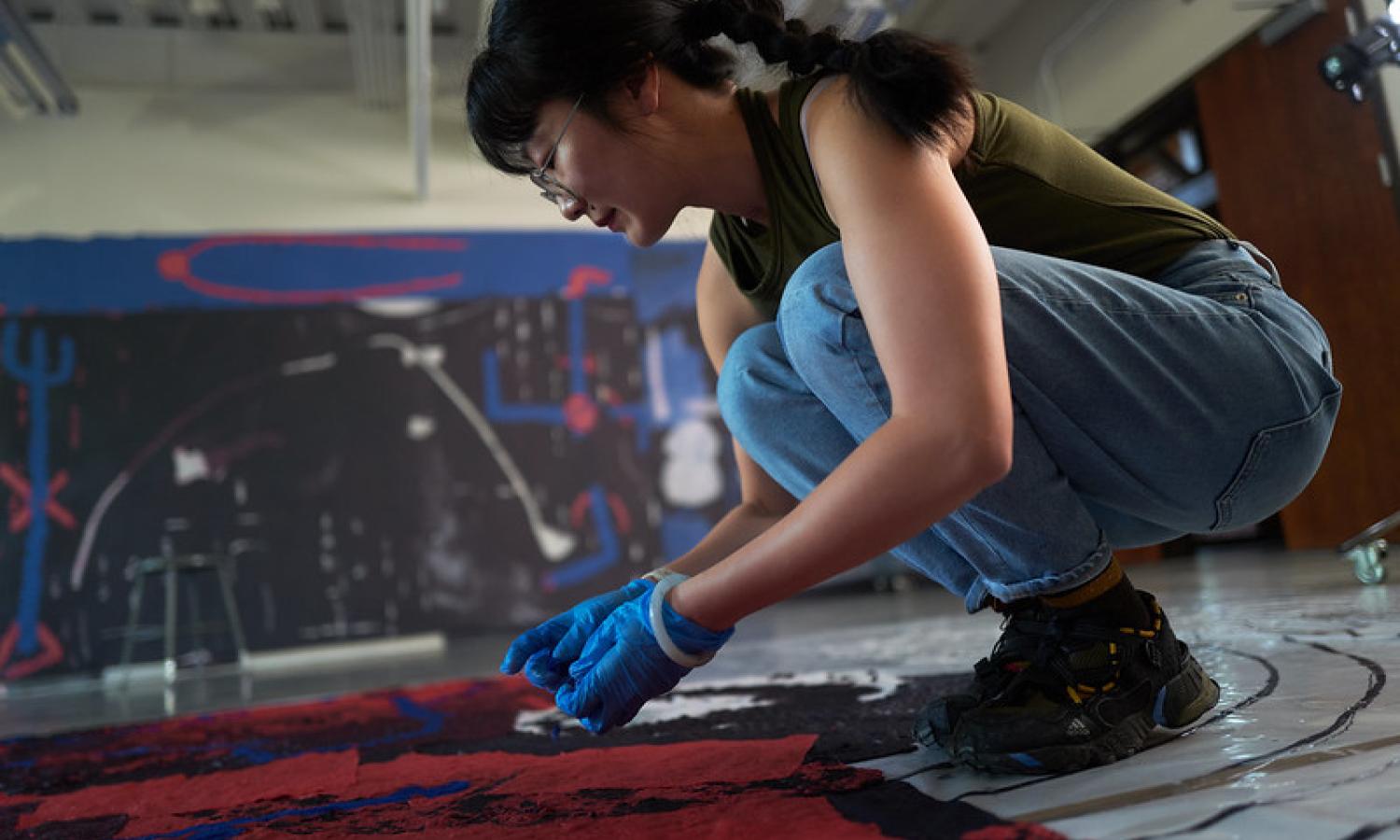
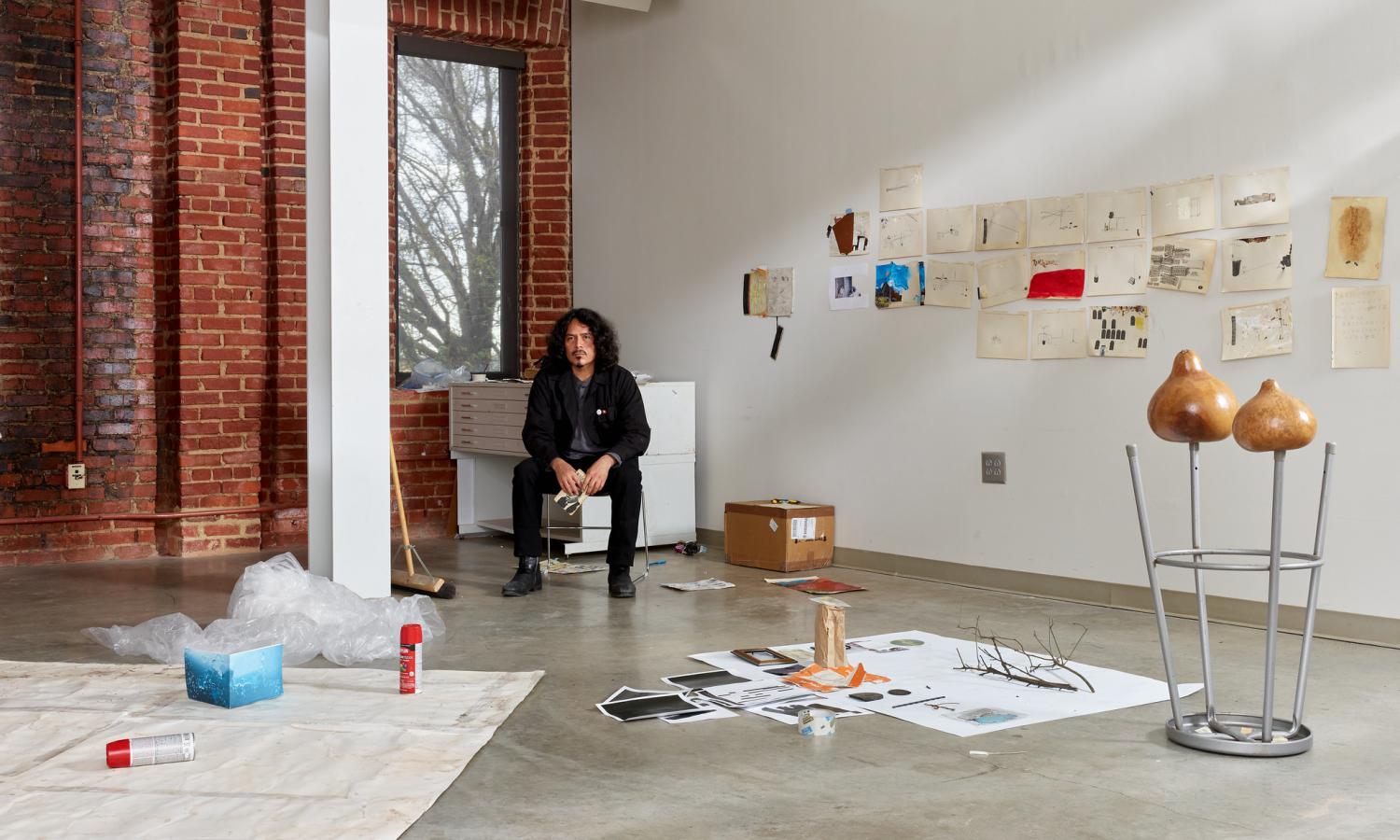
Core Fellow Tony Santoyo working between a large painting and ceramic surfaces

Core Fellow Tony Santoyo working between a large painting and ceramic surfaces

Penland Core Fellowship Program

Penland, NC, United States

The Penland Core Fellowship Program is a two-year work-study fellowship for early career artists looking to expand technical skills and material fluency while working to support the day-to-day operations of a craft school. Artists of all backgrounds who want to advance their educational goals and explore their capacity to contribute to a thriving creative community are encouraged to apply. The goal of the program is to shape the future of contemporary craft by creating opportunity, connection, and immersive education for early career artists who bring a range of perspectives and goals to the school.

Penland core fellows fully engage with Penland by taking several workshops each year in familiar or new media, and performing integral jobs for the school. Penland’s ever-changing learning environment allows core fellows to study with world-class teaching artists from all over the US and abroad; this is a unique opportunity to create an educational path that responds to individual goals. The program can serve as preparation for careers in creative, non-profit, educational, and entrepreneurial sectors. A measure of the program’s success is the number of core fellows who have gone on to make a life in craft. To date over 200 people have participated in the program, and about 80% are practicing artists or professional contributors to the field of craft today.

The work that core fellows do for the school—jobs such as weekend cook, and entertainment coordinator—places them at the heart of Penland’s daily operations and gives them an opportunity to develop leadership skills and connect with artists from all over by working cooperatively towards a common goal. Core fellows are often a bridge between the staff and the studios and serve a unique role in helping others have a meaningful experience at Penland.

Core fellows live and work together and often learn as much from each other as they do from their instructors and mentors. In the process, they have a chance to form close friendships and often become part of each other’s lifelong creative and professional networks.

Contact

PO Box 37
Penland, NC 28765
United States

Year Founded
1970
Context
Rural
Remote
Residency Structure
Embedded in an arts or cultural organization (including theater + gallery)
Embedded in a craft school
Residency program within a school, college or university
Embedded in historic site
Residency Program Type
Studio-based (with housing)
Retreat
Experiential
Residency Length
2 years - 2 years
Languages
English
Average Number of Artists in Residence at a Time
8
Collaborative Residency
N/A
Discipline
Drawing
Mixed Media
Painting
Printmaking
Sculpture
Blacksmithing
Book Arts
Ceramics/Clay Arts/Pottery
Costume/Fashion Design
Fine Metals/Jewelry
Glass Arts
Paper Arts
Textile & Fiber Arts/Weaving
Woodworking
Photography
Companions
Pets are not allowed
Country of Residence
Only open to artists based in country the program is located
Family Friendly
N/A
Stage of Career
Emerging
Additional Expectations/Opportunities
Participate in open studio with fellow residents
Give artist talk or presentation
How does your residency program support artists?
Opportunity to be in another context
Immersion in new culture and/context
Art production support
Access to studio space to create new work
Access to equipment, specialized facilities and/or technical support
Access to training on new artistic techniques and/or apprenticeship
Inspiration from natural environment
Inspiration from cultural context
Professional development support and/or trainings
Opportunities to develop relationships with local or regional artists/arts organizations
Opportunities to collaborate with other artists/residents
Opportunities to develop relationships with other artists/residents
Opportunities for work with the local community
Opportunities to exhibit or perform new work
Additional Eligibility Information

Applications are reviewed by a national panel of curators, educators, and other arts professionals as well as Penland staff. Panelists rotate each year to bring a range of new perspectives to the application process, and creating a diverse group of fellows is one of the stated goals of selection.

Specifically, applications will be reviewed with the following goals in mind:

  1. Program Goals

    We believe the Core Fellowship Program can shape the future of contemporary craft by providing access to artists who can benefit from what this program has to offer—especially artists who have historically been underrepresented at the school and within the field of craft. 
  2. Collaboration and Group Dynamic

    Core fellows share a house and are involved in collaborative tasks and decision-making along with the normal complexities of group living. They also work and take classes with a constantly changing community of instructors and students. We are looking for participants who can thrive as part of a group and community but also know when and how to step away and recharge as needed. Our goal is to bring together a diverse group of artists with a range of experience, perspectives, strengths, and goals. It is also important that the interests of each core group span a range of media taught at Penland.
  3. Relevant Experience

    Core fellows are asked to do many different kinds of work, ranging from basic physical labor to supervisory tasks. They must be adaptive to changing tasks and situations and committed to working cooperatively and confidently, sometimes with minimal direction or supervision. Penland staff will review each candidate’s application, CV, and reference to evaluate relevant experience (employment, internships, or volunteer work) and specific skills and accomplishments (what kind of work you have done, what contributions you have made, the consistency of your commitments, practical and/or supervisory experience). In addition to work experience, life experience and self-motivation are assets for this program. 
  4. Artwork

    We are looking for work that shows a strong foundation and enough direction to tell us that the candidate will be able to take advantage of what this unique program offers. The review panel will score each portfolio in the following areas: proficient and/or intentional execution; clear/unique point of view; inquisitiveness and versatility; their interest in the work and its potential for growth. Candidates must be interested in working with materials and processes that are at the heart of our immersive workshops.
Number of Artists Accepted in Most Current Year
4
Total Applicant Pool in Most Current Year
130
Artist Stipend
13000
US Dollar (USD)
Travel Stipend/Material Stipends
0
US Dollar (USD)
Residency Fees
Grant/Scholarship/Other Funding Support
0
US Dollar (USD)
Application Fee
25
US Dollar (USD)
Application Type
Open application
What does your program provide during the residency experience?
Pre-orientation
Manual / handbook before arrival
Communication before arrival to discuss accommodations, medical conditions, or other health needs
Orientation upon arrival
Contact information and available accommodations for programs, events, and campus
Full description of accessibility on campus
Links to resources, effective practices, grievance procedures, etc.
High contrast, clear way-finding and/or signage
Is your campus wheelchair accessible?
Partially Accessible
Additional Accessibility Information

The Penland campus is located on uneven, hilly terrain that poses accessibility challenges. The following studios are wheelchair accessible: books, clay, drawing and painting, glass, iron, letterpress and printmaking, lower metals, photography, papermaking, and wood. The upper metals studio and both textiles studios have stairs that limit access; both are made partially accessible by stair lifts that will lift a person but not a wheelchair or other mobility aids.

Housing that meets ADA standards is available in Arbor House and in some units in The Roost, Dorm 54, Radcliffe, and the Sleeping Cabins. Accessible parking is found at the dining hall and at all studios. Several golf carts are available for use on campus.

While we do our best to accommodate all students, we know that our campus is not accessible for everyone. We are happy to talk with you about what our campus can or cannot do in this regard. Please contact our registrar to discuss in more depth how we can help you come to Penland: 828-765-2359, ext. 1306 or registrar@penland.org. And please know that improved access is part of our long-range campus planning.

We are working on adding more detailed accessibility information to this page. Please check back.

Caregiver/Aide/PCA
Case by case consideration by staff
Accessibility Contact Name
Ian Henderson
Accessibility Contact Email
operationsdir@penland.org
Accessibility Contact Phone Number
Type of Housing
Private bedroom in a shared housing facility on campus
Accessible Housing
ADA Compliant
Housing for Companion And/or Caregivers
No housing accommodations available
Accessible Communal Spaces
ADA Compliant
Additional Housing Information
Access to laundry in housing
WIFI available in housing
Heat and Cool control managed by resident
Meals Provided
Some meals (at least 2 meals provided)
Residents have access to shared kitchen
Additional Meals Information
N/A
Vegan meal options can be requested
Vegetarian meal options can be requested
Computer/Internet Access
Computer and internet connection provided in common area (shared)
Computer and internet connection provided in studio area (private)
Wireless Internet (WIFI)
Studios/Special Equipment
Shared Studios
Dedicated Studio/Shop Technicians - Full Time
Exhibition / Installation Space
Ceramics Workspace
Electric Wheels
Kick Wheels
Slab Roller
Clay Mixers
Plaster Room
Raku Kiln
Electric Kiln
Gas Kiln
Glass Blowing Workspace
Glass Casting
Dedicated Metal Shop
Heavy Metals / Blacksmithing
Fine Metals / Jewelry Making
Jeweler’s Bench
Anvils, Stakes + Hammers
Hydraulic Press
Soldering Workspace
Gas/Oxy Torches
Acetylene/Air Torches
Soldering Picks+Tweezers
Solderite Boards
Finishing Room
Bench Grinder
Buffing Machine
Bead Blaster
Casting Room
Enameling Kilns
Electroforming + Etching Room
Darkroom (Black And White)
Lighting Studio/Green Screen
Large Format Printer / Plotter
Printers + Scanner
Photo + Video Editing Suite
Painting Workspace (Oil)
Easels
Drawing Benches
Printmaking Workspaces
Book Arts Facilities
Etching Press
Glass Inking Table
Drying Racks
Aquatint Box
Hot Plates
Metal Plate Shear
Paper Soaking Sinks
Paper Tearing Table
Acid Room
Silkscreen Studio
Lithography Studio
Large Sinks
Large Exposure Unit
Washout Room
Papermaking Studio
Textiles Workspace
Floor Looms
Fiber Arts Workspace
Dye Area
Padded Screen Print Tables
Hooded Dye Mixing Station
Drying Room
Washer And Dryer
Dedicated Wood Shop
Woodworking Tools
Tablesaw
Bandsaw
Router Table
Wood Bending Equipment
Jointer
Planer
Wood Vises And Wood Working Table
Studios/Facilities Accessibility
Partially Accessible (50% or more)
Studio Support/Tech
Studio/facility orientation provided
Studio support provided by staff
Studios/facilities Details

Kimmel Harding Nelson Center for the Arts

Kimmel Harding Nelson house bathed in low, evening light

Kimmel Harding Nelson house bathed in low, evening light

Kimmel Harding Nelson Center for the Arts

Nebraska City, NE, United States

Since 2001, KHN has hosted more than 50 working artists each year. Each has found privacy in which to create along with ample opportunities to interact with fellow residents in the vibrant rural town of Nebraska City, Nebraska. KHN's facilities house up to five residents at a time, generally in the mix of two visual artists, two writers, and one composer. Residency awards are 2 to 8 weeks in length. Each awardee receives a $175 stipend per week, housing, and a private studio. 

Contact

801 Third Corso
Nebraska City, NE 68410
United States

Year Founded
2001
Context
Rural
Residency Structure
Stand-alone
Associated with a foundation
Residency Program Type
Studio-based (with housing)
Residency Length
2 weeks - 8 weeks
Languages
English
Average Number of Artists in Residence at a Time
5
Collaborative Residency
Must apply and be accepted individually
Discipline
Animation
Augmented Reality
Book Arts
Costume/Fashion Design
Criticism
Digital Fabrication
Digital Media
Documentary
Drawing
Ecology
Electronic Arts
Environmental Arts
Environmentalism/Conservation
Fiction
Film
Graphic Design
Illustration
Installation Arts
Interdisciplinary Arts
Journalism
Literary Nonfiction
Literature
Mixed Media
Moving Image
Multimedia Arts
Music
New Genres
Nonfiction
Opera
Painting
Paper Arts
Performance Art
Photography
Playwriting
Poetry
Printmaking
Screenwriting
Sculpture
Social Practice
Sound Art
Storytelling
Symphony
Textile & Fiber Arts/Weaving
Translation
Visual Arts
Writing
Companions
Pets are not allowed
Country of Residence
Open to artists based anywhere in the world
Family Friendly
Residents granted leave during residency
Stage of Career
Any stage of career
Additional Expectations/Opportunities
Participate in open studio with fellow residents
Give artist talk or presentation
How does your residency program support artists?
Opportunity to be in another context
Immersion in new culture and/context
Unstructured time
Access to studio space to create new work
Opportunities to develop relationships with other artists/residents
Additional Eligibility Information

KHN hosts two application cycles each year: March 1st and September 1st. The March deadline determines awards for the second half of the current year (July – December), and the September deadline determines the first half of the following year (January – June). All applications must be submitted through our online application portal (via Slideroom), and there is a $35 fee to apply.

Number of Artists Accepted in Most Current Year
70
Total Applicant Pool in Most Current Year
580
Artist Stipend
175
US Dollar (USD)
Travel Stipend/Material Stipends
0
US Dollar (USD)
Residency Fees
0
US Dollar (USD)
Grant/Scholarship/Other Funding Support
0
US Dollar (USD)
Application Fee
35
US Dollar (USD)
Application Type
Open application
What does your program provide during the residency experience?
Manual / handbook before arrival
Orientation upon arrival
Contact information and available accommodations for programs, events, and campus
Staff/volunteer providing guidance to help locate facilities or activities
Is your campus wheelchair accessible?
Partially Accessible
Caregiver/Aide/PCA
No housing accommodations available
Accessibility Contact Name
Amy Smith
Accessibility Contact Email
info@khncenterforthearts.org
Accessibility Contact Phone Number
Type of Housing
Private bedroom in a shared housing facility on campus
Accessible Housing
Partially Accessible (50% or more)
Housing for Companion And/or Caregivers
No housing accommodations available
Accessible Communal Spaces
ADA Compliant
Additional Housing Information
Access to laundry on campus
WIFI available in housing
Air Conditioned Housing
Heat and Cool control managed by resident
Meals Provided
Food stipend provided
Additional Meals Information
N/A
Computer/Internet Access
Computer and internet connection provided in common area (shared)
Wireless Internet (WIFI)
Studios/Facilities Details

Visual artists work in one of three studios, two of which are approximately 425 square feet and one that is 258 square feet, outfitted with work tables, running water, and storage shelves. Donated hand tools and power tools, a bandsaw and compound miter saw, and painting easels are available. The studios feature full-spectrum LED track lighting with moveable fixtures, as well as overhead daylight fluorescent fixtures. The two larger studios have garage doors that may be opened to face the alley. 

For printmakers, KHN offers a letterpress studio with a Vandercook Sp15 press and a standard proof press. The Harry Duncan Letterpress Studio also features a variety of furniture and fonts, as well as a boxcar base for resident use. Please email the KHN staff if you are interested in using the letterpress during your residency. 

Composers are provided a studio equipped with a Hailun HU1 Upright Piano with the Kioshi Silent System, wireless internet, surge protector, two Dynaudio Acoustics BM5A monitors, Sony Monitor headphones, a Mackie 4-channel compact mixer, HP VH240a 23.8” monitor, and cables to connect them. M-Audio 49-key USB controller keyboard. The composer’s studio is spacious, comfortable, and quiet, but not soundproof. 

A private writer’s studio is located within each of the double-occupancy apartments featuring computer desks, wireless internet, and surge protector. A shared printer is available in the residents' lounge.

Studios/Special Equipment
Private Studios
Piano
Printers + Scanner
Music/Media Studio Non-recording
Painting Workspace (Oil)
Easels
Drawing Benches
Printmaking Workspaces
Drying Racks
Large Sinks
Woodworking Tools
Bandsaw
Studios/Facilities Accessibility
Partially Accessible (50% or more)
Studio Support/Tech
No studio support provided
Air Conditioned
Heat and Cool control access

Art in Education Workspace Residency

Art in Education Workspace Residency

Kingston, NY, United States

The Art-in-Education (AIE) Workspace Residency is for artists interested in working with local school students while creating their own work in WSW’s supportive and immersive environment. This is an opportunity for artists with a range of teaching experience, from seasoned teachers and professors, to those with minimal experience and an interest in gaining skills and knowledge.

The Art-in-Education program is a model for arts education and operates in conjunction with the Kingston City School District. AIE provides a high quality arts experience by bringing students to WSW’s professional artists’ workspace and giving them concentrated time to learn. Our staff and AIE program manager work with the school’s teachers and the resident artists to develop and execute a curriculum related to the students’ in-school work.

Resident artists must be able to teach intaglio, silkscreen, or hand papermaking, and are welcome to complete their personal work in any of WSW’s studios: intaglio, letterpress, papermaking, screenprinting, darkroom photography, or ceramics. All artists receive a thorough studio orientation and are expected to work independently, though studio staff is available to provide assistance. Deep technical assistance can be arranged for an additional fee. Artists must provide their own materials, some of which can be purchased from WSW.

Spring residency: During a five-week residency, artists teach fourth and/or eighth graders in WSW’s studios two days/wee

Contact

PO Box 489
Rosendale, NY 12472
United States

Year Founded
1974
Context
Rural
Residency Structure
Embedded in an arts or cultural organization (including theater + gallery)
Embedded in historic site
Residency Program Type
Studio-based (with housing)
Residency Length
4 weeks - 5 weeks
Languages
English
Average Number of Artists in Residence at a Time
4
Collaborative Residency
Must apply and be accepted individually
Discipline
Art Education
Book Arts
Interdisciplinary Arts
Paper Arts
Printmaking
Visual Arts
Companions
Pets are not allowed
Country of Residence
Open to artists based anywhere in the world
Family Friendly
N/A
Stage of Career
Any stage of career
Additional Expectations/Opportunities
Give artist talk or presentation
Teach in studio
How does your residency program support artists?
Opportunity to be in another context
Restricted funding
Access to studio space to create new work
Access to equipment, specialized facilities and/or technical support
Access to training on new artistic techniques and/or apprenticeship
Inspiration from natural environment
Opportunities to collaborate with other artists/residents
Opportunities to develop relationships with other artists/residents
Opportunities for work with the local community
Number of Artists Accepted in Most Current Year
2
Total Applicant Pool in Most Current Year
20
Artist Stipend
Travel Stipend/Material Stipends
Residency Fees
0
US Dollar (USD)
Grant/Scholarship/Other Funding Support
Application Fee
0
US Dollar (USD)
Application Type
Open application
What does your program provide during the residency experience?
Manual / handbook before arrival
Communication before arrival to discuss accommodations, medical conditions, or other health needs
Orientation upon arrival
Contact information and available accommodations for programs, events, and campus
Full description of accessibility on campus
Written and or hard copies of text being presented
Staff/volunteer giving directions
Staff/volunteer providing guidance to help locate facilities or activities
Contact info for accessibility requests for event/programming
Is your campus wheelchair accessible?
Partially Accessible
Caregiver/Aide/PCA
Case by case consideration by staff
Accessibility Contact Name
Carlie Waganer
Accessibility Contact Email
carlie@wsworkshop.org
Accessibility Contact Phone Number
How much of the residency experience can artists with limited mobility participate?

The silkscreen studio and the office are located up a flight of stairs on the second floor. Intaglio, papermaking, book arts, and letterpress studios are wheelchair accessible.

Please briefly describe the facilities and areas of the campus that are NOT accessible.

Some of the artist accommodations are not wheelchair accessible, and the second floor silkscreen studio and office are not wheelchair accessible.

Type of Housing
Private housing on campus (individual apartment/cabin/house)
Accessible Housing
Partially Accessible (50% or more)
Housing for Companion And/or Caregivers
Case by case consideration
Accessible Communal Spaces
ADA Compliant
Common/Communal Spaces Information

There is an accessible communal kitchen, laundry space, and gathering room.

Additional Housing Information
Access to laundry on campus
WIFI available in housing
Meals Provided
Residents have access to shared kitchen
Residents have access to private kitchen
Additional Meals Information
N/A
Computer/Internet Access
Wireless Internet (WIFI)
Studios/Facilities Details

WSW has been making quality handmade papers since 1979. Our Papermaking studio is designed for sheet-forming processes, low relief, and three-dimensional work.

In 1999, WSW began the ArtFarm program, which allows us to grow our own fibers  for hand papermaking. Through ArtFarm we’ve now tested over one hundred native and invasive species for their fiber strength, coloring capacity, print worthiness, and translucency.

Papermaking Studio Equipment List

  • 1000 sq. ft. studio space
  • Two 1-1/2 lb. Hollander beaters: one David Reina and one custom built
  • 30″ x 40″ hydraulic press
  • Vats up to 22″x 28″
  • 4′ x 6′ custom stainless steel vacuum table
  • A variety of moulds and deckles including small sugetas
  • 30″ x 40″ stack dryer
  • Outdoor cooking facility for fibers and dyes

In WSW’s Silkscreen studio, artists can screenprint on paper or fabric, using traditional or photo techniques. We only use water based/acrylic media. For a fee, we can also make screens for artists who are working on projects outside of our studios.

Silkscreen Studio Equipment List

  • 900 sq. ft. studio space
  • Exposing table 33″ x 45″
  • Drying rack 45″ x 68″
  • Wide range of screens up to 3′ x 4′
  • Power washer
  • Photo facilities for images up to 30″ x 40″
  • 32 linear feet of textile printing surface
  • Squeegees from 4″ to 34″

WSW’s Letterpress studio is equipped to handle projects that employ handset lead or wood type; photopolymer plates; wood or linoleum block; and die cut imagery.

Letterpress Studio Equipment List

  • 11″ x 18″ Chandler and Price platen press
  • Two 14″ x 18″ Vandercook Proof press No. 3 (manual)
  • One 19″ x 26″ Vandercook SP20 (electric)
  • A variety of lead and wooden typefaces
  • 9″ x 12″ magnetic base
  • 13″ x 24″ Line-O-Scribe proof press
  • Vacuum platemaker 23.5″ x 29.5″

Rather than use traditional acids to etch plates, Women’s Studio Workshop uses non-toxic materials: ferric chloride for copper and salt etch for aluminum and zinc. We generally stock copper and plastic plates, along with a selection of fine print and handmade papers.

Etching Studio Equipment List

  • 1200 sq. ft. studio space
  • Two Charles Brand press, 30″ x 50″ and 26″ x 48″
  • 18″ x 22″ viscosity rollers
  • A separate ventilated acid room with a 4’ x 29” workspace and stainless steel sink
  • Hot plate 20”x 24”
  • Flexible shaft rotary tool
  • 18″ x 24″ vertical tank with Ferric Chloride
  • Etching trays up to 25″ x 30″
  • Drying rack 30″ x 46″
  • Damp/dry box 28″ x 42″
  • Glass top inking table 26″ x 8′
  • Photopolymer platemaking capacity up to 23″ x 29″

WSW’s Book Arts equipment allow artists to create and bind work, ranging from the simplest saddle-stitched book to the finest codex.

Book Arts Studio Equipment List

  • Electric guillotine 33″ throat
  • Board shear (Jacques) 40″
  • Two book presses: 10″ x 13″ and 11″ x 16″
  • English sewing frame
  • English cutting frame
  • Standard wooden press
  • Cradles
  • Spiral binder
  • Saddle stitcher

WSW maintains a complete black and white darkroom, as well as limited digital facilities that may be used by special request. Artists can comfortably print up to 16”x 20” in this space.

Darkroom Studio Equipment List

  • Two Omega D2 enlargers with 35mm to 4″ x 5″ negative capacity
  • Omega B22XL enlarger
  • Bessler 4″ x 5″
  • Dry mount facilities
  • Contact frames up to 20″ x 25″
  • Saunders easels 11″ x 14″ and 24″ x 24″
  • Focus scopes
  • 100″ sink
  • Trays to 20″ x 24″

Artists working in any of our studios have access to the digital resources in our studio with assistance from a trained staff person. Additional resources are available through our relationship with the SUNY New Paltz Digital Fabrication Lab, and can be arranged on a case-by-case basis.

In-Studio Digital Resources List

  • 28″ Vinyl Plotter and Editing Software
  • 24″ Epson Printer
  • Large format scanner
  • HP Color Laser Printer
  • Kyocera Black and White Inkjet Printer
  • Xerox Machine
  • Adobe Creative Suite
Studios/Special Equipment
Shared Studios
Exhibition / Installation Space
Darkroom (Black And White)
Darkroom (Color)
Large Format Printer / Plotter
Large Format Scanner
Printers + Scanner
Photo + Video Editing Suite
Printmaking Workspaces
Book Arts Facilities
Etching Press
Glass Inking Table
Drying Racks
Hot Plates
Paper Soaking Sinks
Paper Tearing Table
Acid Room
Silkscreen Studio
Light Tables
Large Sinks
Large Exposure Unit
Washout Room
Papermaking Studio
Dye Area
Washer And Dryer
Studios/Facilities Accessibility
Partially Accessible (50% or more)
Studio Support/Tech
Studio/facility orientation provided
Studio support provided by staff

PLAYA Arts and Science Residency Program

Earth art on the playa created by Roger Asay and Rebecca Davis

Earth art on the playa created by Roger Asay and Rebecca Davis

View of main Commons lodge

View of main Commons lodge

Resident dinner on the Commons patio

Resident dinner on the Commons patio

View of resident cabins

View of resident cabins

Resident bonfire

Resident bonfire

View of resident cabins

View of resident cabins

Sandhill Printmaking Studio

Sandhill Printmaking Studio

Sandhill Studio

Sandhill Studio

Full campus view from above

Full campus view from above

PLAYA is located at the edge of this basin

PLAYA is located at the edge of this basin

View of Winter Rim above the PLAYA Commons

View of Winter Rim above the PLAYA Commons

PLAYA Arts and Science Residency Program

Summer Lake, OR, United States

PLAYA’s residencies are open to the global community of scientists, naturalists, biologists, musicians, designers, sustainability leaders, social practice artists, musicians, visual artists, writers, performing artists, and collaborations and individuals engaged in interdisciplinary work or other forms of creative work. PLAYA welcomes a range of participants– from emerging scientists and artists to those with an established history of accomplishment.

Applications for 26, 12 or 5 days residencies are accepted once a year and reviewed by professionals working in each category.

PLAYA is in a remote, rural area of Oregon with wide open vistas and opportunities for field explorations in rich natural settings. Bend, Oregon, is two hours north and Lakeview is one hour south of PLAYA. Paisley with a population of 225 is 17 miles from PLAYA. Summer Lake consists of a gas station, small market, post office and rest area.  

PLAYA’s 76-acre campus sits alongside an intermittent desert lake which is 10 miles wide and 20 miles long. The campus is made up of the Commons building (where the only wi-fi on campus can be accessed), 6 cabins, 2 live/work units with attached studios, 1 homes for staff, three studios, and a small music studio.

Contact

47531 HWY 31
Summer Lake, OR 97640
United States

Year Founded
2011
Context
Rural
Remote
Residency Structure
Stand-alone
Residency Program Type
Studio-based (with housing)
Retreat
Community-engaged
Research
Experiential
Residency Length
12 days - 26 days
Languages
English
Average Number of Artists in Residence at a Time
9
Collaborative Residency
Must apply and be accepted individually
Discipline
Acting
Animation
Architecture
Art Conservation
Art Education
Art History
Augmented Reality
Biology
Book Arts
Choreography
Computing
Costume/Fashion Design
Criticism
Dance
Digital Fabrication
Digital Media
Documentary
Drawing
Ecology
Electronic Arts
Environmental Arts
Environmentalism/Conservation
Fiction
Film
Fine Metals/Jewelry
Graphic Design
History
Illustration
Industrial Design
Installation Arts
Interdisciplinary Arts
Journalism
Landscape Architecture
Literature
Literary Nonfiction
Mathematics
Mixed Media
Moving Image
Multimedia Arts
Music
New Genres
Nonfiction
Opera
Painting
Paper Arts
Performance Art
Philosophy
Photography
Playwriting
Poetry
Printmaking
Public Art
Science
Screenwriting
Sculpture
Social Practice
Sound Art
Storytelling
Symphony
Textile & Fiber Arts/Weaving
Theater
Translation
TV + Radio
Urban Planning/Design
Virtual Reality
Visual Arts
Writing
Companions
Pets are not allowed
Country of Residence
Open to artists based anywhere in the world
Family Friendly
Residents granted leave during residency
N/A
Stage of Career
Any stage of career
Additional Expectations/Opportunities
Donate a work of art
N/A
Participate in public programming
Participate in open studio with fellow residents
Give artist talk or presentation
Lead workshop for the public
Lead workshop for fellow residents
Lead a skill share
How does your residency program support artists?
Opportunity to be in another context
Unstructured time
Access to studio space to create new work
Inspiration from natural environment
Opportunities to collaborate with other artists/residents
Opportunities to develop relationships with other artists/residents
Opportunities for work with the local community
Opportunities to exhibit or perform new work
Additional Eligibility Information

PLAYA’s Awarded Residencies are open to the global community of scientists and artists whose work promotes dialogue and positive change in the environment and the world. We encourage naturalists, biologists, musicians, designers, sustainability leaders, social practitioners, musicians, visual artists, writers and performing artists to apply.

PLAYA welcomes applications from both emerging and seasoned professionals.  Applicants must demonstrate how their work aligns with our mission and how they, or their project, will benefit from time at PLAYA. All residents must be 18 years old or older. Residents’ work must be compatible with PLAYA’s available studio spaces, facilities, and resources, and with PLAYA’s rural setting and community. REAPPLICATION: Past residents or applicants must submit new and complete applications for each cycle. Past residents must wait two years after the date of their last residency to re-apply to PLAYA.

Number of Artists Accepted in Most Current Year
84
Total Applicant Pool in Most Current Year
150
Artist Stipend
0
US Dollar (USD)
Travel Stipend/Material Stipends
0
US Dollar (USD)
Residency Fees
0
US Dollar (USD)
Fee Details

If the application fee prohibits you from applying, please email us to request a waiver by 11:59 pm PT on June 27th at programs@playasummerlake.org. Any requests submitted after June 29th will not have time to be processed. Collaborative teams are also welcome to request fee waivers.

Grant/Scholarship/Other Funding Support
0
US Dollar (USD)
Application Fee
30
US Dollar (USD)
Application Type
Open application
What does your program provide during the residency experience?
Manual / handbook before arrival
Communication before arrival to discuss accommodations, medical conditions, or other health needs
Orientation upon arrival
Contact information and available accommodations for programs, events, and campus
Is your campus wheelchair accessible?
ADA Compliant
Partially Accessible
Additional Accessibility Information

We have one ADA accessible cabin with attached ADA accessible art studio. The main Commons building is also ADA accessible. Our full campus and grounds are not fully accessible. Please reach out if you have questions about whether our residency is the right fit for you.

Caregiver/Aide/PCA
Case by case consideration by staff
Accessibility Contact Name
Kathryn Wilson
Accessibility Contact Email
programs@playasummerlake.org
Accessibility Contact Phone Number
Other Services/Aids Offered in Residency + Other Programming

N/A

How much of the residency experience can artists with limited mobility participate?

An artist with limited mobility can participate in a residency at PLAYA but may be limited on how much of the campus they can enjoy. Gatherings and communal dinners are shared in an accessible space.

Please briefly describe the facilities and areas of the campus that are NOT accessible.

Our campus is large and folks may not be able to visit other residents in their cabins due to the distance between cabins, or enjoy the many trails as they are mowed grass and can be bumpy.   

Type of Housing
Private housing on campus (individual apartment/cabin/house)
Private bedroom in a shared housing facility on campus
Accessible Housing
ADA Compliant
Inaccessible
Housing for Companion And/or Caregivers
Case by case consideration
Accessible Communal Spaces
ADA Compliant
Common/Communal Spaces Information

Our main Commons lodge is spectacular with sitting area, stone fireplace, a library, commercial kitchen that residents can use and dining are. it also has gorgeous windows and patio with views of the Summer Lake playa.

Additional Housing Information
Access to laundry on campus
No WIFI in housing
Heat and Cool control managed by resident
Meals Provided
Some meals (at least 2 meals provided)
Residents have access to shared kitchen
Residents have access to private kitchen
Additional Meals Information
Vegan meal options can be requested
Vegetarian meal options can be requested
Gluten-free meal options can be requested
Food allergies and restrictions can be accommodated
Snack and beverage provided
Computer/Internet Access
Computer and internet connection provided in common area (shared)
Studios/Facilities Details

PLAYA has one printmaking studio and 4 multidisciplinary art studios.

Sandhill, the printmaking studio is an expansive space that houses 3 printing presses, a sink and large movable tables. The studio is 22′ x 22′ with ceilings that are nearly 18′ high. It has large wall space that can support pinned work or use the metal magnetic strip to hang prints. Windows are high on the north wall and there is a garage door facing south that can be opened creating an indoor/outdoor studio.

Avocet Studio has windows and a glass door that faces north. Other windows in the studio face east and south. This studio has a large wall to work on and pin items to and a large moveable table, a smaller table and sink. The ceiling is slanted with a height of 11′ and is approximately 13′ x 22′.

Petroglyph studio has three windows that face east, south and west. It is approximately 10′ x 20′ with a 12′ ceiling. It has a closet with a sink, walls for pinning work to and three work tables. 

Diablo Studio is attached to Diablo cabin. It has a skylight and a sliding glass door that faces east. This studio has a large wall to work on and pin items to and a large moveable table, a smaller table and sink. The ceiling is slanted with a height of 11' and is approximately 16' x 11'.

Wildcat Studio is attached to Wildcat cabin. It has a skylight and a sliding glass door that faces east. This studio has a large wall to work on and pin items to and a large moveable table, a smaller table and sink. The ceiling is slanted with a height of 8' and is approximately 17' x 11'.

Studios/Special Equipment
Private Studios
Exhibition / Installation Space
Performance/Presentation Facilities
Dance Studio Without Sprung Floor
Piano
Ceramics Workspace
Kick Wheels
Electric Kiln
Music/Media Studio Non-recording
Painting Workspace (Oil)
Easels
Printmaking Workspaces
Book Arts Facilities
Etching Press
Drying Racks
Light Tables
Papermaking Studio
Textiles Workspace
Fiber Arts Workspace
Washer And Dryer
Studios/Facilities Accessibility
ADA Compliant
Inaccessible
Studio Support/Tech
Studio/facility orientation provided
Studios/facilities Details
Heat and Cool control access
Additional Studio Information

N/A

James Stevenson Lost and Found Lab

Location

181 Cat Rock Road
Cos Cob, CT 06807
United States

Lost and Found Lab provides a retreat-like living space to visual artists, scholars, curators, writers, composers, and interdisciplinary thinkers drawn to exploring the relationship between visual art and the written word. The Lab is named in honor of New Yorker cartoonist, James Stevenson.

The residency works in partnership with local cultural institutions including the Beinecke Library in New Haven, providing residents with access to archival collections held at the library. 

Phone
Tag Words
Artist-founded
Fully Funded Residency
Communities Served
Adults
Languages
English

City of Asylum Pittsburgh

Location

40 W North Ave
Pittsburgh, PA 15212
United States

City of Asylum builds a just community by protecting and celebrating freedom of creative expression. We provide sanctuary to endangered literary writers and artists, so that that they can continue to create and their voices are not silenced. We offer a broad range of free literary, arts, and humanities programs in a community setting to build social equity through cultural exchange. And by transforming blighted properties into homes for our programs, we anchor neighborhood economic development.

Tag Words
Fully Funded Residency
Communities Served
Adults
Families
Migrant and Immigrant Community
Languages
English

Studios at MASS MoCA

The MASS MoCA complex

The MASS MoCA complex

Hyun Jung Ahn in her studio (2018)

Hyun Jung Ahn in her studio (2018)

Downtown North Adams

Downtown North Adams

studio space

studio space

Ariel Basson Freiberg in her studio (2019)

Ariel Basson Freiberg in her studio (2019)

studio space

studio space

discussing the work of Andrew Fish (2018)

discussing the work of Andrew Fish (2018)

studio space

studio space

Lilliam Nieves and Ivelisse Jimenez at the Studios (2018)

Lilliam Nieves and Ivelisse Jimenez at the Studios (2018)

Jo Cosme, Puerto Rico Artist Fellowship, 2022

Jo Cosme, Puerto Rico Artist Fellowship, 2022

residency bedroom

residency bedroom

residency bedroom

residency bedroom

Charles Humes Jr., Oolite Arts Residency 2023

Charles Humes Jr., Oolite Arts Residency 2023

Maren Jensen, Open Studios 2022

Maren Jensen, Open Studios 2022

Studios at MASS MoCA

North Adams , MA, United States

Since 2015, the Studios at MASS MoCA residency program has hosted over 1,000 artists and writers at all career stages, income levels, and geographic locations on its North Adams campus surrounded by the beautiful Berkshire Mountains.
 

The Studios at MASS MoCA runs year-round, hosts up to 10 artists at a time for stays of 2 or 4 weeks, and primarily seeks applications from visual artists (painters, sculptors, installation artists, photographers, video/new media artists, fiber artists, printmakers, etc.) and writers in all literary disciplines. Artists from around the world are encouraged to apply.

The residency program has several different fellowship programs. For more information, please visit our Applying and Financial Aid page.

Contact

1320 MASS MoCA Way
North Adams , MA 01247
United States

Year Founded
2015
Context
Urban
Rural
Remote
Residency Structure
Embedded in a museum
Residency Program Type
Studio-based (with housing)
Residency Length
2 weeks - 4 weeks
Languages
English
Spanish
Average Number of Artists in Residence at a Time
10
Collaborative Residency
May apply as a team
Discipline
Animation
Augmented Reality
Book Arts
Digital Media
Documentary
Drawing
Electronic Arts
Environmental Arts
Fiction
Film
Illustration
Installation Arts
Interdisciplinary Arts
Landscape Architecture
Literary Nonfiction
Literature
Mixed Media
Moving Image
Multimedia Arts
Music
New Genres
Nonfiction
Painting
Paper Arts
Performance Art
Photography
Playwriting
Poetry
Printmaking
Public Art
Screenwriting
Sculpture
Social Practice
Sound Art
Textile & Fiber Arts/Weaving
Translation
Virtual Reality
Visual Arts
Writing
Companions
Pets are not allowed
Country of Residence
Open to artists based anywhere in the world
Family Friendly
Residents granted leave during residency
Spouses/partners allowed for full stay (non-collaborators)
Children allowed for full stay
Childcare stipend provided
Stage of Career
Any stage of career
Emerging
Mid-career
Established
Additional Expectations/Opportunities
Participate in open studio with fellow residents
Give artist talk or presentation
How does your residency program support artists?
Opportunity to be in another context
Immersion in new culture and/context
Unstructured time
Unrestricted funding
Access to studio space to create new work
Access to equipment, specialized facilities and/or technical support
Inspiration from natural environment
Inspiration from cultural context
Professional development support and/or trainings
Opportunities to develop relationships with local or regional artists/arts organizations
Opportunities to collaborate with other artists/residents
Opportunities to develop relationships with other artists/residents
Additional Eligibility Information

LEARN MORE ABOUT OUR APPLICATION PROCESS HERE

Calls for applications are made four times a year and will open two months prior to the deadline. There are several different ways to apply, learn more about each of them and choose the option that best fits your needs.

General Application

Most applicants apply through the general application, which is typically for residencies 6–9 months out from the award date. In the regular application, candidates can opt to be considered for financial aid or one of the fully funded fellowships. Because the regular application includes financial aid, it is the most competitive option. Artists requesting financial aid typically pay between $0 – $450/week depending on their needs.
La aplicación general también está disponible en español.

Deadlines for General Applications are May 1 and November 1 each year. The application will open two months prior to the deadline. (See table below for details.)

Due to the volume of submissions close to the deadline, please consider submitting your application early to take into account any technical difficulties that may happen. We do not extend the deadline for late submissions.

Learn more about our Financial Aid and Fellowships.

Early Application

The “Early Application” is for artists who could benefit from additional lead time (announcements made 9 to 15 months ahead of residency dates) to plan their stay and to apply for outside funding from sources such as their university or international or regional arts councils. Artists applying with the Early Application will NOT be considered for MASS MoCA’s financial aid budget OR fellowships, applicants should only use this particular application if you are planning to fully fund your stay through outside grants or personal funds at the already subsidized rate of $650 per week.

Deadlines for Early Applications are February 1 and August 1.

Applications will open two months prior to the deadline. 

Alumni Application

If you’re a Studios at MASS MoCA alum, we’re thrilled that you’d like to come back! Twice per year, we have an Alumni application that puts you in a separate pool from the extremely large General Application pools so you’re only competing against fellow alumni. While it’s not as competitive as the General Application pools, we only reserve a few alumni spots each season and acceptance is not guaranteed. We prioritize alumni who have not previously had an Alumni Residency at MASS MoCA, especially alumni who have reached another moment in their career when a residency in the Studios could be particularly beneficial. We ask alums to wait two years after your first residency before applying for the Alumni Residency opportunity. At this time, alumni are not eligible for residency fellowships and instead pay a standard alumni rate of $400/wk for residencies of 4 weeks, or $450/wk for a 2-week residency. (Please note: students who have attended a workshop-in-residence are not considered eligible alumni for this opportunity.)

Deadlines for Alumni Applications are February 1 and August 1. Applications will open two months prior to the deadline. 

Number of Artists Accepted in Most Current Year
120
Total Applicant Pool in Most Current Year
2000
Artist Stipend
0
US Dollar (USD)
Travel Stipend/Material Stipends
0
US Dollar (USD)
Residency Fees
650
US Dollar (USD)
Fee Details

Your financial aid package and residency fees will be outlined in your award letter upon acceptance. The majority of our residents attend with full or partial financial aid. Our financial aid budget allows us to support most participants at some level, with awards determined by both financial need and the artistic merit of the application, as evaluated by our selection committees.

We also offer several fellowships, many of which have specific eligibility criteria established by individual donors. If you are applying for a fellowship, please ensure you meet the outlined qualifications.

Residents who pay the program fee are charged a subsidized rate of $650 per week (the full cost is $1,000+ per week). These residents typically fall into one of three categories: (1) applicants in the Early Application process whose fees are covered by professional development support from their home institution or by an external grant; (2) those who do not require financial assistance and choose to pay in full; or (3) alumni who pay a reduced rate of $400–$450 per week for 2- to 4-week residencies, respectively.

These residency contributions help us provide aid to applicants with financial need. Please refer to our application page for further details.

Grant/Scholarship/Other Funding Support
Grant/Scholarship/Other Funding Support Details

Our fellowship opportunities change every season, so check back regularly, or join our mailing list to keep updated on what funding opportunities we are offering this year.

See what fellowships we are currently offering.

Application Fee
0
US Dollar (USD)
Application Type
Open application
What does your program provide during the residency experience?
Pre-orientation
Manual / handbook before arrival
Communication before arrival to discuss accommodations, medical conditions, or other health needs
Orientation upon arrival
Contact information and available accommodations for programs, events, and campus
Full description of accessibility on campus
Links to resources, effective practices, grievance procedures, etc.
ASL interpretation
Assistive listening devices
Written and or hard copies of text being presented
Staff/volunteer reading information aloud
Staff/volunteer giving directions
Staff/volunteer providing guidance to help locate facilities or activities
Contact info for accessibility requests for event/programming
Is your campus wheelchair accessible?
Partially Accessible
Additional Accessibility Information

The Studios at MASS MoCA has studios in two buildings. Building 13 has an elevator to the studios on the second floor and Building 34 has a ramp to the first floor entrance, though the ramp is not fully ADA-compliant. Stairs are not necessary for either building and both have wheelchair accessible, gender-neutral bathrooms with grab bars around the toilet. Building 13 has a handicap door button to enter the building, Building 34 does not. Housing for the Studios at MASS MoCA is located on the third floor of an apartment building across the street from the museum and requires the ability to climb two flights of stairs. Upon your acceptance, if you have any concerns or questions in regard to housing and accessibility please contact us immediately. While primary housing accommodations are not ADA compliant, MASS MoCA does have limited alternate housing available for these situations. We are happy to work with you to ensure you are able to attend and accept the residency.

MASS MoCA is committed to providing a welcoming environment to all by offering services to make our programs as accessible as possible. Ask about wheelchairs, gallery stools, and event listening devices available to check-out, free of charge, in the museum lobby. While the information here provides a general overview of accessibility features, we encourage you to call or email to address questions or specific needs:
413.662.2111 x8121 or accessibility@massmoca.org


Visit MASS MoCA's webpage to read more about the museum's accessibility.

Caregiver/Aide/PCA
Local arrangements coordinated by resident
Case by case consideration by staff
Accessibility Contact Name
Carolina Porras Monroy
Accessibility Contact Email
cporras@massmoca.org
Other Services/Aids Offered in Residency + Other Programming

We can help provide services if needed on a case-by-case basis. This can include: 

  • ASL interpreters
  • Spanish or other language translations
  • Alternative housing
  • Wheelchairs, gallery stools, wheelchair for around the galleries, listening devices for events.
How much of the residency experience can artists with limited mobility participate?

Residents with limited mobility may need to have separate housing from the cohort but can still participate in all other events and programming. We can work with artists to make sure they have what they need in order to do so. 

Please briefly describe the facilities and areas of the campus that are NOT accessible.

Housing for the Studios at MASS MoCA is located on the third floor of an apartment building across the street from the museum and requires the ability to climb two flights of stairs. Upon your acceptance, if you have any concerns or questions in regard to housing and accessibility please contact us immediately. While primary housing accommodations are not ADA compliant, MASS MoCA does have limited alternate housing available for these situations. We are happy to work with you to ensure you are able to attend and accept the residency.

Type of Housing
Private housing off campus (individual apartment/cabin/house)
Private bedroom in a shared housing facility on campus
Accessible Housing
Inaccessible
Housing for Companion And/or Caregivers
Case by case consideration
Accessible Communal Spaces
ADA Compliant
Common/Communal Spaces Information

Residents receive 24-hour access to private studio space on the MASS MoCA campus, plus lodging in newly renovated, furnished apartments across the street from the museum, right in downtown North Adams. We provide seven communal lunches per week in the company of your fellow residents. We also host a welcome dinner for the group on that first evening. 

Each resident is provided with a private room in one of three newly renovated, four-bedroom apartments. Each bedroom is furnished with a bed and dresser, pillows, bed and bath linens, etc. (No need to bring any bedding unless you prefer to sleep on your favorite pillow, etc.) Each apartment also has its own shared bathroom and kitchen, wifi, and laundry. The kitchen will have some basic cooking equipment and coffee. Residents are responsible for providing their own breakfast, snacks and dinner. The apartments are within easy walking distance of the local grocery.

NOTE: Climbing stairs is required to enter the apartments, which are located on the 2nd and 3rd floors of a walk-up building. If you are not able to use stairs, please contact us immediately so we can discuss alternate accommodations.

Additional Housing Information
Access to laundry on campus
WIFI available in housing
Housekeeping services
Air Conditioned Housing
Heat and Cool control managed by resident
Meals Provided
Some meals (at least 2 meals provided)
Residents have access to shared kitchen
Additional Meals Information
Vegan meal options can be requested
Vegetarian meal options can be requested
Gluten-free meal options can be requested
Food allergies and restrictions can be accommodated
Computer/Internet Access
Computer and internet connection provided in common area (shared)
Wireless Internet (WIFI)
Studios/Facilities Details

Studios are situated in two buildings, Building 13 & Building 34, on the MASS MoCA campus. Each of the spaces and each of their studios have their own dimensions and provisionsSome are better for work made on the floor, some for work made on walls. Every effort is made to pair residents with a studio that matches their practice. The smallest studio is 120 sq ft and the largest is 280 sq ft. The average size is about 172 sq ft. Wall material ranges from drywall to brick. Floors in Building 13 are plywood, while in Building 34 they’re cement. Each artist receives a private and lockable studio space with 24/7 access.Each studio is minimally furnished with a desk or folding table, a chair, and a small shelving unit. Additional folding tables are available. Lighting is overhead LED troffers (typical commercial office lighting) and we have clamp lights to augment. There are shared slop sinks in both buildings. In addition, each building has a small supply closet with the tools listed below and an assortment of leftover art supplies. All necessary art materials and equipment must be provided by the participant.

Learn more on our Facilities page. 

Studios/Special Equipment
Private Studios
Dedicated Studio/Shop Technicians - Part Time
Hydraulic Press
Printers + Scanner
Photo + Video Editing Suite
Easels
Printmaking Workspaces
Etching Press
Glass Inking Table
Drying Racks
Large Sinks
Textiles Workspace
Floor Looms
Fiber Arts Workspace
Studios/Facilities Accessibility
ADA Compliant
Studio Support/Tech
Studio/facility orientation provided
Studio support provided by dedicated tech
Air Conditioned
Additional Studio Information

PRINTMAKING STUDIO

In Building 34, we have two presses available. Each session, a local print technician offers a free hour-long tutorial to the presses. If you would like individual support for special projects, one-on-one assistance is available at $40/hour.

The Martech Etching Press:
A generous donation to the program, this press has the reputation of being a well-designed etching press. Large diameter rollers and a gear reduction hand-crank allows for smooth and easy travel even under extreme pressures and produces less stress to the etching plate and paper. Collagraphs and woodcuts are also possible on this press. The plate bed is 32” x 51” and the maximum recommended paper size is 22” x 30”.

Bradley Flat-bed Hydraulic Press:
The flat-bed press is designed for relief printing, mono-printing and embossing; however, nearly all plates can be printed including etchings. When printing monoprints with movable applications, the downward force keeps everything in place and heavy ink does not spread across the print as it does with an etching press.

Printmaking supplies: We supply a small variety of etching inks and additives as well as an assortment of brayers and etching tools. While limited options of paper are available for sale, artists should come prepared with their own plates, paper, and any specialty tools or inks.

WEAVING LOOMS

We have two looms available in the B.34 studios. Looms can be reserved in advance by both experienced and beginner weavers. Private Instruction is available for beginners at a rate of $40/hr, offered by local weavers. Artists are expected to provide their own yarn.

22-inch Harrisville Loom: Jack-Loom, 4 harness
( set-up with roughly 110 heddles per shaft).

Accompanying equipment for 22” loom:

  • Crank Handle (stored in loom bench)
  • Reeds: 18 dent, 20 in. (currently on loom), 14 dent, 24 inches, 12 dent, 22 inches
  • Raddle: 27 inches with 1 in. spaced nails (attached to back beam)
  • Treadle tie ups: chain, 11 count
  • Lease sticks

45-inch Herald Loom: Jack-Loom, 4 harness
(currently set up with ample heddles)

Accompanying equipment for 45” loom:

  • Reeds: 6 dent, 45 inches, 8 dent, 45 inches, 10 dent, 45 inches
  • Raddle: 48 inches, with 1 inch spaced nails (attached to back-beam)
  • Treadle tie ups: nylon
  • Lease sticks: 2 x 47”

Additional Weaving Equipment

  • Loom bench (23” tall, 24” seat, 37” wide with side compartments)
  • Warping board 35” x 38”
  • Warping board 26” x 38”
  • Stick shuttle
  • Heddles
  • Boat shuttle
  • Assorted Bobbins


Rauschenberg Residency

Tall palm trees surrounding and rising above a white building

Tall palm trees surrounding and rising above a white building

Interior of large white room with tables and equipment and a catwalk

Interior of large white room with tables and equipment and a catwalk

An outdoor sculpture of two chairs facing one another and sitting on a ladder like structure

An outdoor sculpture of two chairs facing one another and sitting on a ladder like structure

Interior of room with wooden floor, high ceilings, and windows with a mirror on one wall

Interior of room with wooden floor, high ceilings, and windows with a mirror on one wall

A white house surrounded by palm trees in the background with sandy dunes in the foreground

A white house surrounded by palm trees in the background with sandy dunes in the foreground

A pathway with trees on both sides

A pathway with trees on both sides

A white house on stilts with a wooden deck leading to it

A white house on stilts with a wooden deck leading to it

Rauschenberg Residency

Captiva , FL, United States

In 2012, the Robert Rauschenberg Foundation initiated a multidisciplinary residency program on the site of Rauschenberg's former home and studio in Captiva, Florida. Inspired by Rauschenberg's early years at Black Mountain College where an artistic community brought out elements central to his art: exploration and collaboration, the residency advances new work, extends practices into diverse mediums, and serves as a research and development lab. It fosters the ideal that artistic practice advances mutual understanding.


The Rauschenberg Residency serves over ~100 emerging and established artists + scholars annually through five-week residencies.  The 20-acre site that spans the island from the Gulf of Mexico to Pine Island Sound stimulates cross-disciplinary collaborations, as well as engenders a focus on the conservation of a sensitive and pristine environment and integration with local surroundings.  The residency supports risk-taking, experimentation and innovation.


Although there are few expectations or requirements, the Rauschenberg Residency aspires to nurture and support the creative spirit, which can be realized only in an atmosphere of mutual trust and respect. The Foundation has a zero tolerance discrimination policy and is deeply committed to fostering a culture of inclusion and equal opportunity for all persons.

Contact

PO Box 54
Captiva , FL 33924
United States

Year Founded
2012
Context
Remote
Residency Structure
Associated with a foundation
Residency Program Type
Studio-based (with housing)
Thematic
Retreat
Community-engaged
Residency Length
5 weeks - 5 weeks
Languages
English
Average Number of Artists in Residence at a Time
11
Collaborative Residency
May apply as a team
Discipline
Acting
Animation
Art Conservation
Art Education
Art History
Biology
Blacksmithing
Book Arts
Ceramics/Clay Arts/Pottery
Choreography
Computing
Costume/Fashion Design
Criticism
Dance
Digital Fabrication
Digital Media
Documentary
Drawing
Ecology
Electronic Arts
Environmental Arts
Environmentalism/Conservation
Fiction
Film
Graphic Design
History
Illustration
Installation Arts
Interdisciplinary Arts
Journalism
Literature
Literary Nonfiction
Mathematics
Mixed Media
Multimedia Arts
Music
New Genres
Nonfiction
Opera
Painting
Paper Arts
Performance Art
Philosophy
Photography
Playwriting
Poetry
Printmaking
Science
Screenwriting
Sculpture
Social Practice
Sound Art
Storytelling
Symphony
Textile & Fiber Arts/Weaving
Theater
Translation
Visual Arts
Woodworking
Writing
Companions
Pets (Non-service animals)
Country of Residence
Open to artists based anywhere in the world
Family Friendly
Spouses/partners allowed for full stay (non-collaborators)
Children allowed for full stay
Stage of Career
Any stage of career
Additional Expectations/Opportunities
N/A
Other
How does your residency program support artists?
Opportunity to be in another context
Opportunity to travel
Immersion in new culture and/context
Unstructured time
Unrestricted funding
Research support
Art production support
Access to studio space to create new work
Access to equipment, specialized facilities and/or technical support
Access to training on new artistic techniques and/or apprenticeship
Inspiration from natural environment
Inspiration from cultural context
Professional development support and/or trainings
Opportunities to develop relationships with local or regional artists/arts organizations
Opportunities to collaborate with local or regional artists/arts organizations
Opportunities to collaborate with other artists/residents
Opportunities to develop relationships with other artists/residents
Opportunities for work with the local community
Opportunities to exhibit or perform new work
Number of Artists Accepted in Most Current Year
85
Total Applicant Pool in Most Current Year
90
Artist Stipend
3000
US Dollar (USD)
Travel Stipend/Material Stipends
0
US Dollar (USD)
Residency Fees
0
US Dollar (USD)
Grant/Scholarship/Other Funding Support
0
US Dollar (USD)
Application Fee
0
US Dollar (USD)
Application Type
Application by invitation only
What does your program provide during the residency experience?
Pre-orientation
Manual / handbook before arrival
Communication before arrival to discuss accommodations, medical conditions, or other health needs
Orientation upon arrival
Contact information and available accommodations for programs, events, and campus
Full description of accessibility on campus
Captions for videos
Links to resources, effective practices, grievance procedures, etc.
Written and or hard copies of text being presented
Use of colored paper for printed materials
High contrast, clear way-finding and/or signage
Accessible seating
Staff/volunteer reading information aloud
Staff/volunteer giving directions
Staff/volunteer providing guidance to help locate facilities or activities
Contact info for accessibility requests for event/programming
Is your campus wheelchair accessible?
ADA Compliant
Partially Accessible
Additional Accessibility Information

We provide a full-campus and local community accessibility guide available as a word document or pdf, or viewable on our Orientation Guide website (password protected).

Caregiver/Aide/PCA
Housing available on campus
Stipend available
Accessibility Contact Name
Ann Brady
Accessibility Contact Email
abrady@rauschenbergfoundation.org
Accessibility Contact Phone Number
Other Services/Aids Offered in Residency + Other Programming

N/A

How much of the residency experience can artists with limited mobility participate?

All but one shared building are accessible accessible. Most pathways are accessible. Golf carts are available. The main communal spaces - dining room, commons area - communal studios - public event space - are ADA Compliant.  

Please briefly describe the facilities and areas of the campus that are NOT accessible.

The Fish House, which is a communal space, on the bay, is not accessible. In inclement weather (a lot of rain) some of the pathways may be challenging to navigate.

Type of Housing
Private bedroom in a shared housing facility on campus
Accessible Housing
ADA Compliant
Housing for Companion And/or Caregivers
Housing available
Accessible Communal Spaces
ADA Compliant
Common/Communal Spaces Information

The main communal spaces - dining room, commons area - communal studios - public event space - are ADA Compliant. There is one communal house-studio that is not accessible.

Additional Housing Information
Access to laundry in housing
WIFI available in housing
Housekeeping services
Air Conditioned Housing
Heat and Cool control managed by resident
Meals Provided
All meals
Groceries provided for residents to prepare their own meals
Residents have access to shared kitchen
Residents have access to private kitchen
Additional Meals Information
Vegan meal options can be requested
Vegetarian meal options can be requested
Gluten-free meal options can be requested
Kosher and halal options can be requested
Food allergies and restrictions can be accommodated
Other
Computer/Internet Access
Computer and internet connection provided in common area (shared)
Computer and internet connection provided in studio area (private)
Wireless Internet (WIFI)
Ethernet provided in common area
Ethernet provided in living or studio area
Studios/Facilities Details

Studios are private, and communal.  Some studios are dedicated to certain disciplines and others are flexible.  Most of the equipment is in communal spaces. 

Studios/Special Equipment
Private Studios
Shared Studios
Dedicated Studio/Shop Technicians - Full Time
Dedicated Studio/Shop Technicians - Part Time
Exhibition / Installation Space
Performance/Presentation Facilities
Dance Studio With Sprung Floor
Piano
Ceramics Workspace
Electric Wheels
Slab Roller
Raku Kiln
Electric Kiln
Glass Casting
Dedicated Metal Shop
Plasma Cutter
Heavy Metals / Blacksmithing
Fine Metals / Jewelry Making
Anvils, Stakes + Hammers
Soldering Workspace
Gas/Oxy Torches
Soldering Picks+Tweezers
Bench Grinder
Darkroom (Black And White)
Large Format Printer / Plotter
Film Scanner
Printers + Scanner
Photo + Video Editing Suite
Music/Media Studio Non-recording
Music/Media/Recording Facilities
Painting Workspace (Oil)
Easels
Printmaking Workspaces
Etching Press
Glass Inking Table
Drying Racks
Hot Plates
Metal Plate Shear
Paper Soaking Sinks
Paper Tearing Table
Silkscreen Studio
Lithography Studio
Light Tables
Large Sinks
Large Exposure Unit
Washout Room
Textiles Workspace
Fiber Arts Workspace
Dye Area
Hooded Dye Mixing Station
Well-ventilated Spray Room
Washer And Dryer
Dedicated Wood Shop
Woodworking Tools
Tablesaw
Bandsaw
Router Table
Jointer
Planer
Wood Vises And Wood Working Table
Other
Studios/Facilities Accessibility
ADA Compliant
Studio Support/Tech
Studio/facility orientation provided
Studio support provided by staff
Studio support provided by dedicated tech
Tech hours
On-call Studio support provided
Studios/facilities Details
Air Conditioned
Heat and Cool control access

Good Hart Artist Residency

Good Hart Artist Residency Main Building

Good Hart Artist Residency Main Building

Good Hart Artist Residency

Harbor Springs, MI, United States

The Good Hart Artist Residency offers 10-21 day residency stays to visual artists, writers, and composers at any stage of their career. Each artist is housed in a private residence with a detached studio and provided with a $500.00 stipend, a kitchen stocked with basic foods, a few home-cooked meals from local hosts, and a quiet setting along the shores of Lake Michigan. Tucked into the woods along the “Tunnel of Trees,” a Scenic Heritage Route, residents can walk into the village of Good Hart, enjoy Lake Michigan and the nearby sand dunes, and explore Northern Michigan’s inland lakes and wetlands. The Good Hart Artist residency generally hosts one resident at a time, offering each artist the time, space, and quiet to focus and create. 

Community is central to the mission of the Good Hart Artist Residency. Open Studio Saturdays offer visual artists an opportunity to share their work with local residents for one Saturday during their stay, and the annual Harbor Springs Festival of the Book connects resident writers to both local and literary communities. Each artist collaborates with a local nonprofit organization during their stay to lead an educational event, workshop, or exhibition. Please visit our local partnerships page for additional information about these collaborations. 

Contact

PO Box 182
Harbor Springs, MI 49740
United States

Year Founded
2014
Context
Rural
Remote
Residency Structure
Stand-alone
Residency Program Type
Studio-based (with housing)
Community-engaged
Residency Length
10 days - 21 days
Languages
English
Average Number of Artists in Residence at a Time
1
Collaborative Residency
Must apply and be accepted individually
Discipline
Animation
Art Education
Book Arts
Digital Media
Documentary
Drawing
Environmental Arts
Environmentalism/Conservation
Fiction
Film
Fine Metals/Jewelry
Graphic Design
Illustration
Installation Arts
Interdisciplinary Arts
Journalism
Literary Nonfiction
Literature
Mixed Media
Moving Image
Multimedia Arts
Music
New Genres
Nonfiction
Painting
Paper Arts
Photography
Playwriting
Poetry
Printmaking
Public Art
Screenwriting
Sculpture
Social Practice
Sound Art
Storytelling
Textile & Fiber Arts/Weaving
Visual Arts
Writing
Companions
Pets are not allowed
Country of Residence
Open to artists based anywhere in the world
Family Friendly
Childcare stipend provided
Stage of Career
Any stage of career
Emerging
Mid-career
Established
Additional Expectations/Opportunities
Participate in public programming
Give artist talk or presentation
Lead workshop for the public
How does your residency program support artists?
Unstructured time
Unrestricted funding
Access to studio space to create new work
Inspiration from natural environment
Inspiration from cultural context
Opportunities for work with the local community
Additional Eligibility Information

Open to artists, writers, and composers. 

Number of Artists Accepted in Most Current Year
13
Total Applicant Pool in Most Current Year
529
Artist Stipend
500
US Dollar (USD)
Travel Stipend/Material Stipends
0
US Dollar (USD)
Residency Fees
0
US Dollar (USD)
Grant/Scholarship/Other Funding Support
Application Fee
25
US Dollar (USD)
Application Type
Open application
What does your program provide during the residency experience?
Pre-orientation
Manual / handbook before arrival
Communication before arrival to discuss accommodations, medical conditions, or other health needs
Orientation upon arrival
Contact information and available accommodations for programs, events, and campus
Full description of accessibility on campus
Links to resources, effective practices, grievance procedures, etc.
Written and or hard copies of text being presented
Accessible seating
Staff/volunteer reading information aloud
Staff/volunteer giving directions
Staff/volunteer providing guidance to help locate facilities or activities
Contact info for accessibility requests for event/programming
Is your campus wheelchair accessible?
Partially Accessible
Additional Accessibility Information

The first floor of our residency building and the studio are accessible. 

Caregiver/Aide/PCA
Housing available on campus
Accessibility Contact Name
Bill Klco
Accessibility Contact Email
bill@goodhartartistresidency.org
How much of the residency experience can artists with limited mobility participate?

Artists with limited mobility can participate in the full program. 

Please briefly describe the facilities and areas of the campus that are NOT accessible.

The main residence has a second-story loft area which is only accessible via a stairway. The rest of the building is accessible. 

Type of Housing
Private housing on campus (individual apartment/cabin/house)
Accessible Housing
Partially Accessible (50% or more)
Housing for Companion And/or Caregivers
Housing available
Accessible Communal Spaces
ADA Compliant
Additional Housing Information
Access to laundry in housing
WIFI available in housing
Air Conditioned Housing
Heat and Cool control managed by resident
Meals Provided
Some meals (at least 2 meals provided)
Groceries provided for residents to prepare their own meals
Residents have access to private kitchen
Additional Meals Information
Vegan meal options can be requested
Vegetarian meal options can be requested
Gluten-free meal options can be requested
Kosher and halal options can be requested
Food allergies and restrictions can be accommodated
Snack and beverage provided
Computer/Internet Access
Computer and internet connection provided in studio area (private)
Wireless Internet (WIFI)
Ethernet provided in common area
Ethernet provided in living or studio area
Studios/Facilities Details

Studio Space

  • Approximately  14 by 24-foot studio space, a 10 by 10-foot outdoor covered porch, 9 by 8-foot studio hydraulic lift door, workbench with basic tools, bathroom/storage area
  • Natural and track lighting
  • Worktables
  • Easels including a travel/field easel
  • Basic miscellaneous art supplies, drop cloth, mineral spirits, rags, waste disposal
  • Studio is available for resident use May – October
Studios/Special Equipment
Private Studios
Printers + Scanner
Painting Workspace (Oil)
Easels
Studios/Facilities Accessibility
ADA Compliant
Studio Support/Tech
No studio support provided

Green Box Artist-In-Residency Program

Exterior shot of "The Shed" - Green Box's dedicated Artist-in-Residence Housing.

Exterior shot of "The Shed" - Green Box's dedicated Artist-in-Residence Housing.

Exterior shot of the view from "The Shed" - Green Box's dedicated Artist-in-Residence Housing

Exterior shot of the view from "The Shed" - Green Box's dedicated Artist-in-Residence Housing

Green Box Artist-in-Residence Sommer Browning reading poems and jokes written in residence.

Green Box Artist-in-Residence Sommer Browning reading poems and jokes written in residence.

Green Box Artist-in-Residence Irby Pace during a field trip of 6th Graders from Ute Pass Elementary School

Green Box Artist-in-Residence Irby Pace during a field trip of 6th Graders from Ute Pass Elementary School

One of the studio spaces at Green Box

One of the studio spaces at Green Box

Use of our outdoor dance studio.

Use of our outdoor dance studio.

Installation by 2023 Resident Artist Nikki Pike

Installation by 2023 Resident Artist Nikki Pike

Installation by 2023 Resident Artist brooke smiley

Installation by 2023 Resident Artist brooke smiley

Resident Artist Amir Amiri working in Green Mountain Falls Skyspace by James Turrell

Resident Artist Amir Amiri working in Green Mountain Falls Skyspace by James Turrell

Green Box Artist-In-Residency Program

Green Mountain Falls, CO, United States

The Green Box Artist in Residency program offers artists of national and international stature, from diverse disciplines, and at any stage in their career the opportunity to develop, create, and/or present new works while living in and engaging with the community of Green Mountain Falls, a beautiful small mountain community located in Ute Pass, by the foothills of Pikes Peak. Launched in February 2020, the program has grown to sponsor artists annually, with as many as eight residencies offered each year. Past artists in residence include Chad Mount, Irby Pace, Denys Drozdyuk & Antonina Skobina, American Ballet Theatre, 600 Highwaymen, Sommer Browning, Emily McDaniel, Alexandra Lockhart, Matthew Jamal, Jessica Kahkoska, Michael KrondlSummation Dance, the Nomadic Photo Ark, Molly Rideout, Stillhouse Junkies, Amir Amiri, brooke smiley, Paula Bohince, Arvin Ramgoolam, Nikki Pike, Edwin Ushiro, Bill Frisell, and Carole d'Inverno

Lodging is provided, and deliverables will be determined during the application process. During their stay, artists are expected to engage with local residents and other cultural organizations to enhance arts offerings in the region. 

Specific residency application requirements may change from year to year, but are released at the beginning of September. See current applications here.

Contact

6990 Lake Street
PO Box 1
Green Mountain Falls, CO 80819
United States

Year Founded
2020
Context
Rural
Remote
Residency Structure
Embedded in an arts or cultural organization (including theater + gallery)
Longterm/embedded in neighborhood
Residency Program Type
Studio-based (with housing)
Community-engaged
Experiential
Residency Length
2 weeks - 1 month
Languages
English
Average Number of Artists in Residence at a Time
2
Collaborative Residency
Must apply and be accepted individually
May apply as a team
Discipline
Drawing
Interdisciplinary Arts
Mixed Media
Painting
Printmaking
Sculpture
Visual Arts
Blacksmithing
Book Arts
Ceramics/Clay Arts/Pottery
Costume/Fashion Design
Digital Fabrication
Fine Metals/Jewelry
Glass Arts
Installation Arts
Paper Arts
Textile & Fiber Arts/Weaving
Woodworking
Criticism
Fiction
Journalism
Literary Nonfiction
Literature
New Genres
Nonfiction
Playwriting
Poetry
Screenwriting
Translation
Writing
Acting
Choreography
Dance
Performance Art
Theater
Music
Opera
Symphony
Animation
Augmented Reality
Computing
Digital Media
Documentary
Electronic Arts
Film
Moving Image
Multimedia Arts
Photography
Sound Art
TV + Radio
Virtual Reality
Graphic Design
Illustration
Industrial Design
Architecture
Environmental Arts
Landscape Architecture
Public Art
Social Practice
Storytelling
Urban Planning/Design
Biology
Ecology
Environmentalism/Conservation
Science
Art Conservation
Art Education
Art History
History
Mathematics
Philosophy
Companions
N/A
Country of Residence
Open to artists based anywhere in the world
Family Friendly
Residents granted leave during residency
Children allowed for full stay
Stage of Career
Any stage of career
Additional Expectations/Opportunities
Participate in public programming
Give artist talk or presentation
Teach in studio
Lead workshop for the public
How does your residency program support artists?
Opportunity to be in another context
Opportunity to travel
Immersion in new culture and/context
Unstructured time
Unrestricted funding
Art production support
Access to studio space to create new work
Access to equipment, specialized facilities and/or technical support
Inspiration from natural environment
Inspiration from cultural context
Professional development support and/or trainings
Opportunities to develop relationships with local or regional artists/arts organizations
Opportunities to collaborate with local or regional artists/arts organizations
Opportunities to collaborate with other artists/residents
Opportunities to develop relationships with other artists/residents
Opportunities for work with the local community
Opportunities to exhibit or perform new work
Number of Artists Accepted in Most Current Year
7
Total Applicant Pool in Most Current Year
150
Artist Stipend
9000
US Dollar (USD)
Travel Stipend/Material Stipends
0
US Dollar (USD)
Residency Fees
0
US Dollar (USD)
Fee Details

Stipends provided along with dedicated private fully-equipped housing and studio space as needed. Individual Artists receive $9,000 Duos receive $12,000 Three or more people working together receive $15,000

Grant/Scholarship/Other Funding Support
0
US Dollar (USD)
Application Fee
0
US Dollar (USD)
Application Type
Open application
What does your program provide during the residency experience?
Pre-orientation
Manual / handbook before arrival
Communication before arrival to discuss accommodations, medical conditions, or other health needs
Orientation upon arrival
Contact information and available accommodations for programs, events, and campus
Full description of accessibility on campus
Use of colored paper for printed materials
High contrast, clear way-finding and/or signage
Accessible seating
Staff/volunteer reading information aloud
Staff/volunteer giving directions
Staff/volunteer providing guidance to help locate facilities or activities
Contact info for accessibility requests for event/programming
Is your campus wheelchair accessible?
Partially Accessible
Caregiver/Aide/PCA
Housing available on campus
Local arrangements coordinated by resident
Case by case consideration by staff
Accessibility Contact Name
Sean O'Connell
Accessibility Contact Email
soconnell@greenboxarts.org
Accessibility Contact Phone Number
How much of the residency experience can artists with limited mobility participate?

Almost all of our spaces are accessible, including studios and housing. Some locations are on hiking trails which are not completely accessible due to the natural environment.

Please briefly describe the facilities and areas of the campus that are NOT accessible.

Some of our spaces are located on hiking trails. Some of these trails are not completely accessible, due to the natural environment, to those with limited mobility or who utilize wheelchairs.

Type of Housing
Private housing on campus (individual apartment/cabin/house)
Private bedroom in a shared housing facility on campus
Accessible Housing
ADA Compliant
Housing for Companion And/or Caregivers
Case by case consideration
Accessible Communal Spaces
ADA Compliant
Additional Housing Information
Access to laundry on campus
WIFI available in housing
Housekeeping services
Heat and Cool control managed by resident
Meals Provided
Residents have access to shared kitchen
Residents have access to private kitchen
No meals are provided
Additional Meals Information
N/A
Computer/Internet Access
Computer and internet connection provided in studio area (private)
Wireless Internet (WIFI)
Studios/Special Equipment
Private Studios
Dedicated Studio/Shop Technicians - Part Time
Exhibition / Installation Space
Performance/Presentation Facilities
Dance Studio With Sprung Floor
Piano
Ceramics Workspace
Anvils, Stakes + Hammers
Printers + Scanner
Music/Media Studio Non-recording
Painting Workspace (Oil)
Easels
Drawing Benches
Large Sinks
Washout Room
Washer And Dryer
Other
Studios/Facilities Accessibility
ADA Compliant
Studio Support/Tech
Studio/facility orientation provided
On-call Studio support provided
Heat and Cool control access